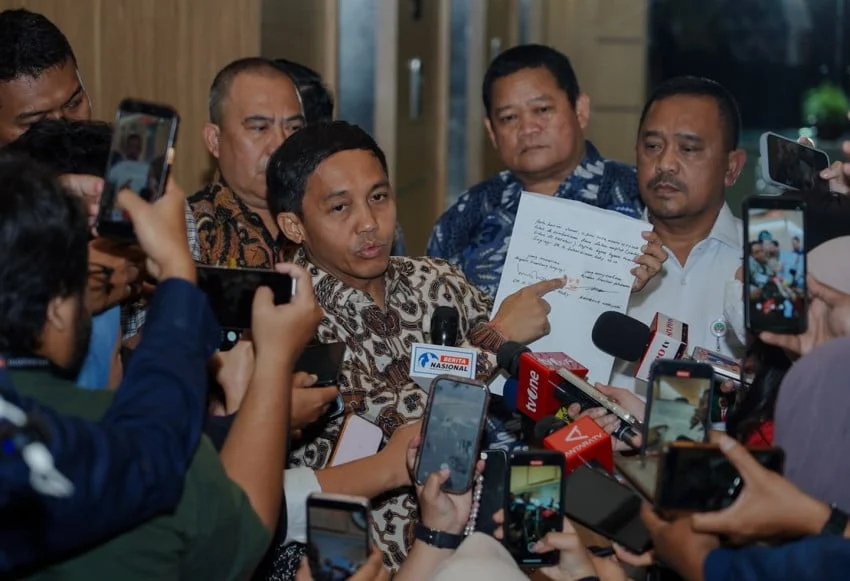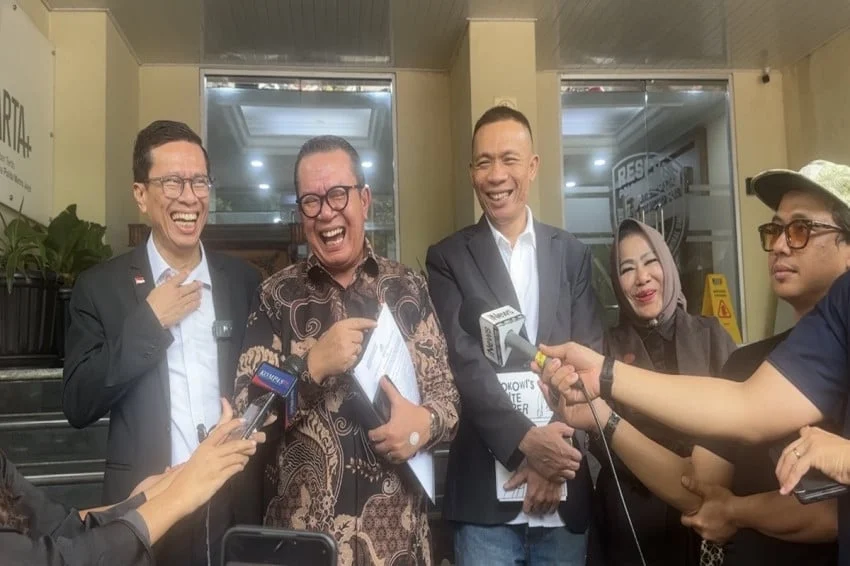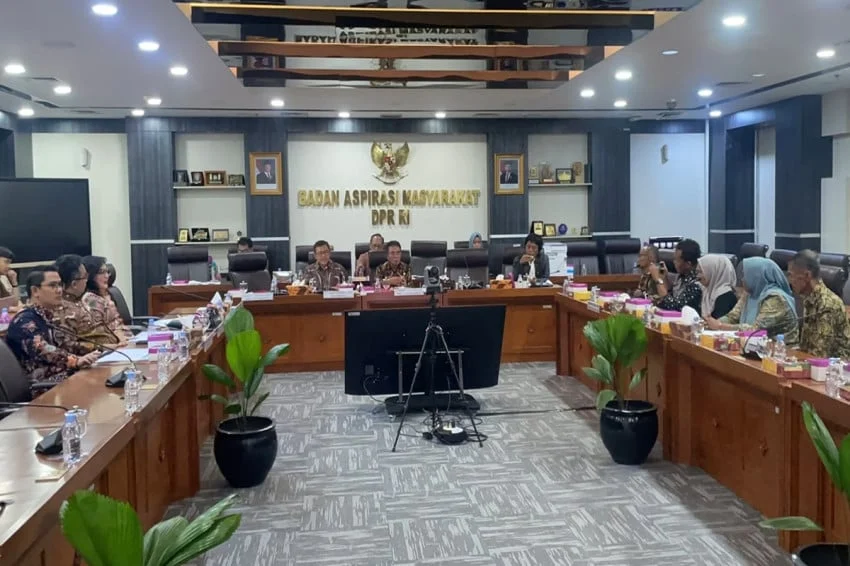
JAKARTA — The House of Representatives’ Public Aspiration Body (Badan Aspirasi Masyarakat or BAMS DPR RI) has officially elevated its scrutiny of a protracted 25-year agrarian dispute in Sungai Bungur, Jambi, marking a decisive turning point in a long-neglected regional conflict. The parliamentary body has announced plans to conduct an on-site investigation and direct mediation mission to address what legislators have termed a systemic failure to protect grassroots economic rights.
The core of the controversy centers on allegations of widespread land-grabbing and overlapping land use permits involving a 1,500-hectare plot designated for state land reform. For a quarter of a century, this extensive tract—intended by the government to foster local economic independence and equitable resource distribution—has allegedly been co-opted by a private oil palm plantation company, leaving local farming communities marginalized and economically disenfranchised.
The escalation of parliamentary attention highlights the enduring vulnerabilities within Indonesia’s agrarian reform framework, where structural bottlenecks, weak enforcement, and conflicting legal jurisdictions frequently trap vulnerable populations in generational legal limbo. As BAMS prepares to deploy a fact-finding delegation to Jambi, stakeholders across the agricultural and legal sectors are closely watching to see whether legislative intervention can successfully break the decades-long deadlock.
Anatomy of a Quarter-Century Stalemate
The agrarian conflict in Sungai Bungur is not an isolated incident but rather a symptom of broader structural challenges that have historically plagued Indonesia’s land redistribution initiatives. Dating back to the late 1990s, the dispute arose when local farmers and indigenous communities laid claim to traditional lands that were subsequently incorporated into commercial concession areas.
According to preliminary briefings reviewed by parliamentary committees, the 1,500-hectare area in question was originally earmarked for land reform initiatives designed to alleviate rural poverty and provide secure land titles to smallholder farmers and landless peasants. However, the subsequent issuance of commercial permits to private agribusiness entities created a complex web of legal contradictions. Over the decades, successive generations of local residents have attempted to reclaim the territory through administrative petitions, peaceful protests, and formal complaints to regional authorities, yielding little more than bureaucratic delays and occasional localized tensions.
The persistence of the conflict for 25 years underscores the historical difficulty in reconciling state-sanctioned commercial concessions with community-based land rights. Critics note that while national administrations have repeatedly prioritized agrarian reform as a cornerstone of equitable economic development, implementation at the regional level frequently falters due to uncoordinated spatial planning, lack of transparency in concession renewals, and inadequate protection for agrarian reform beneficiaries.
Legislative Resolve and the Intervention of BAMS DPR RI
Addressing the plenary session at the parliamentary complex in Jakarta, Adian Napitupulu, Deputy Chairman of BAMS DPR RI and a member of House Commission X representing the Indonesian Democratic Party of Struggle (PDI-P) from West Java, delivered a sharp critique of the systemic inertia that has allowed the crisis to persist.
"This case has run for a quarter of a century without any resolution that favors the realization of popular justice," Adian stated. "The 1,500-hectare plot of land, which should have been dedicated to land reform programs for community welfare, demands direct accountability from the state regarding its decisions affecting the populace."
Adian emphasized that the legislative branch will no longer tolerate administrative foot-dragging that disproportionately harms smallholders. The decision by BAMS to intervene directly reflects a strategic shift within the parliamentary apparatus toward utilizing oversight powers to compel executive agencies, local governments, and corporate entities to reach a legally binding and socially equitable settlement.
As part of its upcoming agenda, the BAMS delegation plans to meet directly with affected community members, local civil society organizations, regional government officials, and representatives of the private plantation firm currently operating on the disputed acreage. The objective is to establish an independent verification of land occupancy, review the legal history of the permits, and construct a roadmap for restitution and land redistribution that aligns with national agrarian reform targets.

The Broader Context of Agrarian Reform in Indonesia
To fully grasp the significance of the Sungai Bungur dispute, it is essential to examine the wider trajectory of land reform policies in Indonesia. Agrarian reform—encompassing asset redistribution and legal certainty over land ownership—has long been framed as a vital instrument to reduce economic inequality, prevent land concentration among corporate conglomerates, and stimulate rural productivity.
Under national land administration frameworks, Tanah Objek Reforma Agraria (TORA)—or Land Objects for Agrarian Reform—represents lands targeted for distribution to citizens, including forest areas released for non-forestry purposes, abandoned lands, and expired commercial cultivation rights (Hak Guna Usaha or HGU). Despite ambitious targets set by successive administrations to distribute millions of hectares of land, the execution phase frequently collides with structural hurdles.
Chief among these hurdles is the prevalence of overlapping permits, where state agencies issue conflicting legal instruments over the same geographic coordinates. In many regions across Sumatra and Kalimantan, land designated for community agriculture or social forestry has simultaneously been licensed to large-scale plantation or mining enterprises. This administrative overlap routinely triggers protracted socio-legal conflicts, straining the judicial system and occasionally resulting in civil unrest or human rights violations.
Economic and Social Implications for Local Communities
The human cost of the Sungai Bungur conflict extends far beyond abstract legal arguments. For roughly 25 years, thousands of heads of households and their dependents have lived under a cloud of legal uncertainty, unable to secure formal land certificates that would otherwise unlock access to formal banking credit, agricultural subsidies, and long-term capital investment.
Agricultural economists note that secure land tenure is a foundational prerequisite for sustainable rural development. Without legal recognition of their land rights, farmers are disincentivized from making capital-intensive improvements to the soil, adopting modern sustainable farming technologies, or investing in multi-year crop cycles. Furthermore, the constant threat of eviction or criminalization creates an atmosphere of psychological distress and social fragmentation within rural communities.
In the case of Sungai Bungur, the conversion of land intended for land reform into commercial oil palm production has also altered the local ecological and economic landscape. While large-scale plantations generate regional export revenues and employment opportunities, local populations often argue that the economic benefits are unequally distributed, leaving indigenous and local farming communities structurally impoverished while environmental degradation increases.
Pathways to Resolution: Legal, Administrative, and Political Avenues
As BAMS DPR RI prepares its field investigation, legal experts and civil society watchdogs have outlined several critical pathways required to achieve a durable resolution in Sungai Bungur:
- Comprehensive Permit Auditing: An independent, transparent audit of all historical and current land titles, HGU concessions, and land reform decrees associated with the 1,500-hectare plot must be conducted to establish the exact chain of legality.
- Restitution and Redistribution: If investigations confirm that land reform allocations were improperly superseded by commercial concessions, mechanisms for revoking or adjusting the disputed permits must be implemented in accordance with prevailing laws, paving the way for formal land redistribution to local farmers.
- Inclusive Mediation: Establishing a tripartite negotiation platform involving the affected communities, corporate representatives, and state authorities (including the Ministry of Agrarian Affairs and Spatial Planning/National Land Agency) to negotiate fair compensation or mutually agreed-upon land boundary demarcations.
- Strengthening Institutional Accountability: Enhancing inter-agency coordination between national ministries and regional governments to prevent future legal contradictions and ensure that future land reform targets are insulated from speculative corporate encroachment.
Looking Ahead: A Test Case for Parliamentary Oversight
The intervention in Sungai Bungur serves as a critical test of the effectiveness of the Badan Aspirasi Masyarakat in bridging the gap between grassroots grievances and national policymaking. By taking a proactive stance on a legacy dispute that has defied administrative resolution for a quarter of a century, the legislature is signaling a renewed political will to enforce justice in the agrarian sector.
However, translating parliamentary rhetoric into tangible outcomes will require sustained pressure, rigorous follow-up, and unwavering commitment from both executive and judicial branches. As the BAMS delegation departs for Jambi, the eyes of the nation remain fixed on Sungai Bungur, watching to see whether the promise of a pro-people agrarian reform can finally be translated into enduring justice for communities that have waited a generation for their land rights to be restored.