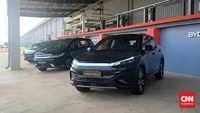
The United States could soon find itself overwhelmed by a massive wave of affordable Chinese electric vehicles unless federal regulators maintain stringent tariff walls and robust market access barriers, according to a top automotive executive. Speaking in San Jose, California, Hyundai Motor CEO Jose Munoz issued a stark warning regarding the shifting dynamics of the global automotive sector, pointing directly to the disruption currently reshaping the European market.
Munoz emphasized that American automakers and established global brands operating within the United States are not immune to the aggressive pricing and rapid expansion strategies deployed by Chinese electric vehicle manufacturers. As Western markets grapple with the realities of the energy transition, the influx of competitively priced Asian imports has ignited fierce debates over industrial policy, national security, and the future of domestic manufacturing.
The Economic Shockwave in Europe
The warning delivered by Hyundai’s chief executive is grounded in the dramatic market share erosion experienced by legacy automakers across Europe. Chinese automotive manufacturers have systematically undercut established brands, including Hyundai and Volkswagen, by offering vehicles at significantly lower price points. According to Munoz, Chinese electric vehicles are currently priced between 30 percent and 40 percent lower than competing models produced by Western and Asian legacy manufacturers in key European markets, including Spain, Italy, and France.
This profound price disparity persists despite regulatory hurdles erected by the European Union. Bruxelles previously implemented provisional and definitive tariffs, alongside minimum price commitments, after concluding through formal investigations that Chinese electric vehicle makers benefit heavily from uncompetitive state subsidies. However, these trade defenses have proven porous in certain jurisdictions.
Munoz specifically highlighted the United Kingdom, noting that the country—historically a highly lucrative and robust market for traditional automakers—has transformed into a landscape heavily penetrated by Chinese brands. Because the UK has not historically aligned entirely with the European Union’s tariff frameworks in the same aggressive manner, it has become an increasingly accessible gateway for overseas manufacturers. Data from the European Automobile Manufacturers Association (ACEA) reveals that the market share of Chinese-branded vehicles sold within the European Union surged past 9 percent during the first half of 2026. Meanwhile, industry figures from the Society of Motor Manufacturers and Traders (SMMT) indicate an even higher penetration rate in the UK, where Chinese brands captured 15 percent of newly registered vehicles over the same period.
The United States Policy Landscape and Domestic Industry Reactions
In contrast to Europe’s patchwork protectionism, the United States has maintained an aggressive posture toward Chinese automotive imports. Washington has effectively blocked the entry of Chinese electric vehicles by imposing punitive tariffs hovering around 100 percent, citing national security concerns related to connected vehicle technology, data privacy, and the protection of the domestic industrial base.
Despite these prohibitive barriers, political figures and industry leaders remain deeply divided on the long-term viability of total exclusion. Former U.S. President Donald Trump remarked during a recent media appearance that he would welcome Chinese automotive manufacturers under specific conditions—namely, if they chose to establish manufacturing operations and build vehicles directly within the United States, thereby generating domestic employment.
Munoz’s cautionary statements closely mirror concerns previously voiced by legacy American automakers. Executives in Detroit have been sounding the alarm for months. Most notably, Ford Motor Company CEO Jim Farley cautioned company employees that management is actively preparing for the inevitability of Chinese automakers attempting to breach the U.S. market within the next five to ten years, regardless of current regulatory hurdles. Ford’s leadership has repeatedly stressed that the competitive threat posed by Chinese EV technology is not merely a European phenomenon, but a global strategic challenge.
Technological Shifts and Hyundai’s Strategic Pivot
Amidst the intensifying global race for electrification and software-defined vehicles, Hyundai Motor Group is concurrently recalibrating its own technological roadmap. The South Korean automotive conglomerate recently announced a strategic delay in the commercial rollout of its proprietary Level 2++ advanced driver-assistance systems (ADAS). Originally targeted for deployment by the end of 2027, the proprietary software launch has now been pushed back to late 2029.
Munoz explained that the delay is driven by the company’s commitment to thoroughness, noting that engineering teams require additional time to accumulate extensive driving data and rigorously validate safety performance under real-world conditions. Rather than rushing an underdeveloped proprietary platform to market, Hyundai has chosen to forge strategic external partnerships to bridge the technological gap.
To maintain its competitive edge in autonomous driving capabilities, Hyundai has established a collaborative venture with semiconductor giant Nvidia. Through this partnership, the automaker plans to introduce vehicles equipped with Level 2+ and Level 2++ systems by 2028, ensuring that customers have access to cutting-edge driver-assistance technology while internal development continues.
Addressing corporate humility and the realities of modern automotive engineering, Munoz remarked on the necessity of external alliances. If an organization is sufficiently humble, he noted, it recognizes when its internal technology falls short of industry benchmarks, making strategic partnerships an operational necessity rather than a weakness. However, Munoz clarified that Hyundai’s reliance on external technology providers is intended to be temporary. The company harbors long-term ambitions to bring both autonomous driving software and core battery technologies entirely in-house.
"We might buy something here and there, or partner temporarily, but for relevant technologies like batteries, we want to have our own technology," Munoz stated, underscoring the company’s vision for vertical integration and technological sovereignty.
Broader Implications for the Global Automotive Ecosystem
The convergence of aggressive Chinese export strategies, shifting Western trade policies, and the rapid evolution of vehicle software is fundamentally transforming the global automotive landscape. As traditional manufacturers attempt to pivot toward software-defined architectures and affordable electrification, they face a dual challenge: defending their legacy profit margins against lower-cost competitors while funding multi-billion-dollar technological transitions.
Analysts note that the protective tariff walls currently shielding the United States may buy domestic automakers crucial time, but they do not eliminate the underlying cost and innovation advantages held by Chinese competitors. As Chinese automakers rapidly refine their supply chains, master battery chemistry, and integrate advanced artificial intelligence into their vehicles, the pressure on global regulators to adapt will only intensify.
Whether through joint ventures, localized manufacturing mandates, or prolonged trade protections, the global automotive industry is entering a defining transitional era. The decisions made by policymakers in Washington, Brussels, and London over the coming years will ultimately determine whether legacy automakers can successfully modernize or whether the global marketplace will undergo a permanent structural shift toward Asian dominance in the electric vehicle sector.