AMMAN — A horrific act of targeted violence has shaken the Hashemite Kingdom of Jordan to its core, leaving the nation in deep mourning and international observers on high alert. Government officials have confirmed that a heavily armed gang, officially designated as a terrorist cell, opened fire on a Greek Orthodox church located in the southern Jordanian governorate of Karak. The brutal assault, which took place during a solemn funeral procession, has escalated into one of the deadliest sectarian-linked attacks in the modern history of the traditionally stable Middle Eastern nation.
As of Sunday, October 25, 2026, the death toll from the mass shooting has tragically risen to nine individuals. Initial reports immediately following the onslaught indicated that seven people had lost their lives at the scene. However, the situation deteriorated further over the weekend as severely wounded victims succumbed to their injuries while receiving emergency medical care. The escalating casualty figures underscore the ferocious and indiscriminate nature of the assault, which targeted civilians gathered inside a house of worship.
The unfolding humanitarian and security crisis has prompted immediate high-level responses from the Jordanian government, security apparatus, and international allies, laying bare the lingering threat of localized radicalization and violent extremism within the region.
Escalating Casualties and Medical Emergency Response
The gravity of the incident was officially detailed by Jordanian Minister of Health, Ibrahim al-Bdour. In a formal statement provided to international news agencies, al-Bdour confirmed the revised fatality figures and outlined the immense strain currently placed on regional healthcare facilities.
"The number of individuals who have tragically lost their lives in the heinous terrorist attack targeting the church in the village of Al-Hamoud, Karak, has now risen to nine," Minister al-Bdour stated. He explained that two victims, who had been admitted in critical condition following the shooting on Friday afternoon, tragically passed away from their extensive wounds on Saturday despite the relentless efforts of trauma surgeons and medical personnel.
In addition to the nine fatalities, minister al-Bdour confirmed that 25 other individuals sustained various degrees of injuries. These survivors remain hospitalized across multiple medical centers in Karak and Amman, with several still under intensive medical monitoring due to severe gunshot trauma. The Jordanian Ministry of Health has mobilized emergency blood donation drives and deployed specialized psychological support teams to assist the grieving families and traumatized survivors of the massacre.
Chronology of a Massacre: The Timeline of Events
The sequence of events unfolded rapidly on Friday afternoon, shattering the quiet routine of Al-Hamoud, a semi-rural village situated in the historic southern governorate of Karak, renowned for its significant Christian community and deep-rooted history of religious coexistence.
At approximately mid-afternoon on Friday, October 23, 2026, dozens of mourners had gathered within the complex of the historic Saint George Greek Orthodox Church. The congregation was assembled to pay their final respects during a scheduled funeral procession and memorial service. Communities in the region routinely use church grounds and communal spaces for mourning rituals, making the gathering a public assembly of friends, family, and community members.
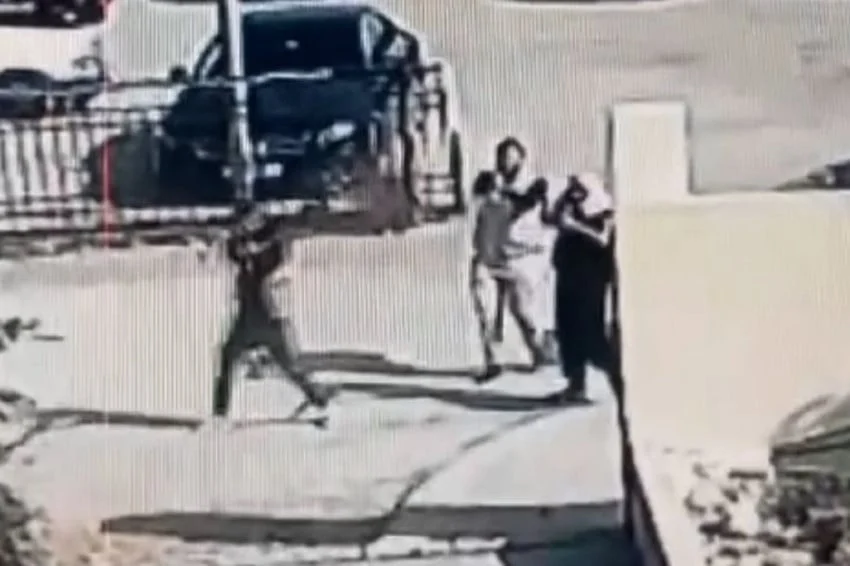
According to preliminary investigative findings and security footage recovered from closed-circuit television (CCTV) systems in the vicinity, three heavily armed assailants arrived at the church complex. Moving with tactical precision, the perpetrators breached the perimeter and positioned themselves advantageously before indiscriminately opening fire with automatic weaponry upon the unsuspecting crowd trapped inside the courtyard and chapel entrance.
The attack caused immediate pandemonium, leaving attendees with limited avenues of escape. The gunmen continued their barrage before fleeing the immediate vicinity. Jordanian security forces, including elite counter-terrorism units and local gendarmerie, were swiftly dispatched to the scene, establishing a total lockdown of the Karak governorate, sealing regional transit routes, and launching an aggressive manhunt to apprehend the perpetrators.
Background Context: The Geopolitical and Security Landscape of Karak
To fully comprehend the shockwaves generated by the attack on Saint George Greek Orthodox Church, observers must examine the unique sociopolitical and historical context of Karak and Jordan at large. Situated roughly 140 kilometers south of the capital city of Amman, Karak has historically been a symbol of interfaith harmony, where Christian and Muslim populations have lived side by side for centuries.
However, the region has not been entirely immune to the tentacles of extremist ideology. In December 2016, Karak was the site of a major terror incident when gunmen launched coordinated attacks against Jordanian security forces and a historic crusader castle, resulting in the deaths of 10 people, including a Canadian tourist, and injuring dozens more. That attack was subsequently claimed by the Islamic State (ISIS), highlighting the persistent underground presence of sleeper cells and radicalized fringe elements in the kingdom’s southern governorates.
Jordan has long positioned itself as a critical Western-allied bulwark of stability, moderation, and counter-terrorism cooperation in a volatile Middle East. The Hashemite monarchy places immense emphasis on internal security and the protection of minority populations, including the historic Christian community, which constitutes roughly two percent of the nation’s population. Consequently, any assault targeting a Christian house of worship strikes directly at the foundational narrative of national unity and state-guaranteed security that Jordan has meticulously cultivated.
Official Reactions and Condemnations
The massacre has drawn swift, unified condemnations from across the Jordanian political spectrum, religious authorities, and the international community. King Abdullah II convened an emergency security council meeting within hours of the shooting, receiving direct briefings from the heads of the General Intelligence Department (GID), the Public Security Directorate (PSD), and the Jordan Armed Forces (JAF).
In a royal decree released by the Royal Hashemite Court, King Abdullah forcefully denounced the atrocity, vowing that the state would show zero leniency toward those who seek to fracture Jordanian society through acts of terror. "The cowardly criminal acts targeting innocent worshippers will only strengthen our resolve to eradicate the dark forces of extremism," the monarch declared, directing all state agencies to provide comprehensive assistance to the victims and their families.
Prominent Islamic and Christian religious leaders in Amman issued a joint denunciation, categorizing the attack as an assault against all humanity and an explicit violation of the sanctity of holy sites. The Council of Church Leaders in Jordan called for nationwide prayers of solidarity, urging citizens to remain calm and reject any attempts by malicious actors to stoke sectarian tensions.
Internationally, expressions of profound sorrow and solidarity poured into Amman. Governments across North America, Europe, and the Middle East issued formal statements condemning the mass shooting. United Nations officials reiterated their steadfast support for Jordan’s security forces and commended the kingdom’s enduring role as a safe haven for refugees and religious minorities alike.
Economic, Social, and Strategic Implications
The assault on the Karak church carries profound implications for Jordan’s domestic stability, tourism sector, and broader security strategy. Economically, Jordan relies heavily on tourism, which accounts for a substantial percentage of its Gross Domestic Product (GDP). Historic sites, including Petra, Wadi Rum, and the religious landmarks scattered throughout Karak and the Jordan Valley, are vital lifelines for local economies. High-profile security incidents inevitably trigger travel advisories from Western nations, threatening to suppress tourist inflows at a time when the broader Middle Eastern economy is already grappling with persistent regional instability stemming from ongoing conflicts in neighboring territories.
From a security perspective, the attack exposes critical vulnerabilities regarding the proliferation of illicit arms and the persistent threat posed by decentralized, self-radicalized terrorist cells operating within remote governorates. While Jordan maintains one of the most professional and capable intelligence apparatuses in the region, the ability of a three-man cell to plan and execute a high-casualty mass shooting underscores the ongoing difficulty of preempting asymmetric threats in semi-urban and rural environments.
Security analysts suggest that the incident will likely prompt a significant tightening of security protocols around all houses of worship across the kingdom, alongside intensified intelligence-gathering operations in southern Jordan. Furthermore, the government faces the delicate task of balancing aggressive counter-terrorism measures with the preservation of civil liberties and community trust.
Conclusion: A Nation at a Crossroads
As forensic teams sift through the remaining evidence at the Saint George Greek Orthodox Church and families in Al-Hamoud bury their dead, Jordan finds itself at a poignant historical crossroads. The resilience of the Jordanian state and its citizenry is once again being tested by the scourge of violent extremism.
The unified domestic response—characterized by cross-communal solidarity, swift governmental intervention, and an unwavering refusal to yield to sectarian division—suggests that the architects of this atrocity will fail in their primary objective of destabilizing the kingdom. Nevertheless, the nine lives lost on that tragic Friday serve as a stark, painful reminder that the pursuit of peace, security, and coexistence in the Middle East demands eternal vigilance.