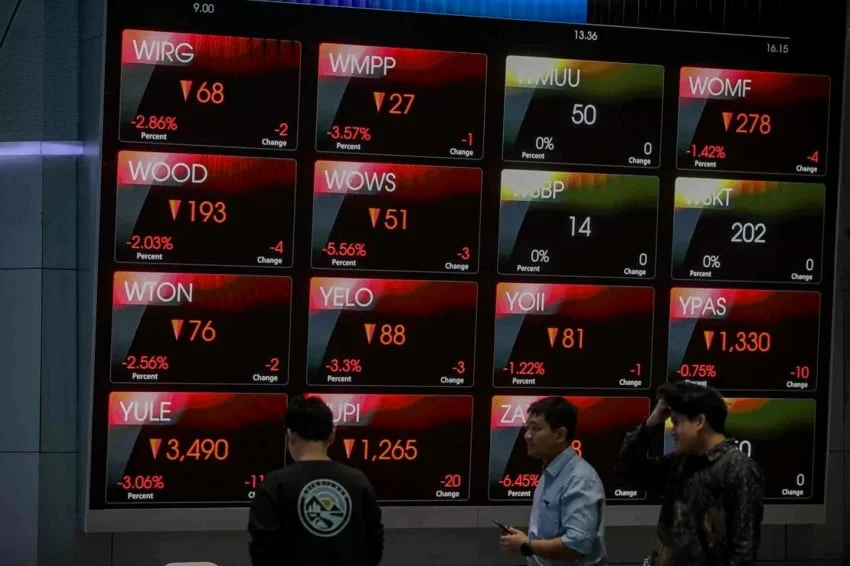
The Jakarta Composite Index, known locally as Indeks Harga Saham Gabungan (IHSG), experienced a sharp contraction during the trading session on Wednesday, October 28, 2026, closing down 1.65 percent at the 5,179 threshold as widespread selling pressure gripped the domestic equity market. The session reflected a deeply bearish sentiment across the entire trading floor, impacting nearly all major sectors and dragging hundreds of equities into negative territory.
From the opening bell, the benchmark index signaled a cautious and defensive stance, sliding immediately to a sluggish start at 5,249. Throughout the course of the morning session, the index attempted multiple recoveries but failed to gain meaningful upside momentum, managing only a brief intraday high of 5,256 before cascading downward to an intraday low of 5,167. The inability of the index to sustain support levels above 5,200 underscored persistent investor apprehension amid a fragile macroeconomic backdrop, both domestically and internationally.
Market breadth heavily favored the bears by the midday intermission. Official exchange statistics revealed a stark imbalance between advancing and declining equities. Out of the total issues traded, only 137 stocks managed to record gains, while a massive 582 equities suffered corrections. Meanwhile, 244 stocks remained stagnant, reflecting a widespread wait-and-see attitude among retail and institutional market participants alike.
Despite the heavy market downturn, transaction activity remained notably active. Total trading volume reached an impressive 16.2 billion shares changing hands, supported by a total transaction value of Rp16.2 trillion. Market liquidity was further highlighted by a high frequency of transactions, crossing the 900,000 mark. This heavy turnover suggested that while investors were aggressively shedding risk assets, institutional rebalancing and high-volume block trades were actively taking place beneath the surface.
Top Gainers and Deeper Losers
Even within a severely depressed market environment, selective sectors and specific small-to-mid-cap equities managed to swim against the current, recording significant double-digit appreciation. Leading the top gainers board was Mitra Energi Persada, trading under the ticker code KOPI, which surged an impressive 24.83 percent. Following closely behind was DIRE Ciptadana Properti Perhotelan (XCIS), posting a strong gain of 20.59 percent, while Esta Multi Usaha (ESTA) rounded out the top three with an increase of 16.78 percent. These counters captured speculative capital looking for short-term gains amid the broader market rout.
Conversely, the list of top losers highlighted severe downward pressure on speculative and growth-oriented equities. Estee Gold Feet (EURO) suffered the deepest contraction of the session, plunging 9.82 percent. It was closely trailed by Agro Bahari Nusantara (UDNG), which dropped 9.52 percent, and Graha Prima Mentari (GRPM), which retreated by 9.35 percent. The sharp declines in these counters reflected a broader risk-off sentiment where investors aggressively liquidated vulnerable positions to preserve capital.
Comprehensive Sectoral Contraction
The bearish sentiment was not isolated to a few select industries but was instead systemic, affecting all eleven primary sectors listed on the exchange. The extensive red ink across the board highlighted a complete lack of defensive safe havens during the trading session.
The energy sector emerged as one of the primary detractors, recording a substantial correction of 3.18 percent. This decline was largely driven by softening global commodity prices and weaker regional sentiment regarding traditional energy demand. Following the energy sector, basic materials plummeted 2.81 percent, weighed down by diminished industrial demand expectations.
Consumer-related sectors also faced heavy selling pressure. Non-cyclical consumer goods dropped 2.11 percent, while cyclical consumer goods and services fell 1.91 percent. The persistent weakness in consumer-facing sectors signaled ongoing anxieties regarding domestic purchasing power, which has faced mounting pressure from inflation and a depreciating local currency.
Industrial and infrastructure sectors bore some of the heaviest brunt of the midday sell-off. The industrial sector slumped by a steep 3.30 percent, while infrastructure stocks experienced the most severe sectoral contraction of the day, plunging 3.74 percent. The property sector also gave up ground, sliding 1.42 percent amid concerns over rising borrowing costs and cautious consumer appetite for residential and commercial real estate investments.
Financials, which historically hold the largest market capitalization weighting and often dictate the direction of the broader index, declined by a comparatively modest 0.41 percent. Nevertheless, their downward movement added substantial downward points to the composite index. Transportation stocks dropped 1.81 percent, while the healthcare sector edged down by 0.20 percent. Finally, the technology sector, which has historically experienced high volatility, closed lower by 0.68 percent, continuing a period of consolidation following previous speculative cycles.
Macroeconomic Headwinds and Currency Pressures
Market analysts note that the sharp drop in the IHSG does not occur in a vacuum; rather, it is deeply intertwined with broader macroeconomic challenges facing the Indonesian economy. Chief among these external pressures is the relentless depreciation of the Indonesian Rupiah against the US Dollar. On the same trading day, the domestic currency faced renewed severe pressure, closing sharply lower at Rp18,156 per US Dollar.
The weakening of the rupiah has raised serious concerns among foreign institutional investors, who typically factor currency risk heavily into their asset allocation strategies in emerging markets. A weaker currency increases the cost of imported raw materials, elevates external debt servicing burdens for local corporations, and raises the probability of further monetary tightening by the central bank to defend currency stability. Consequently, foreign capital outflows have accelerated, placing an immediate ceiling on domestic equity valuations.
Furthermore, persistent global uncertainties—including shifting monetary policy trajectories in major developed economies, geopolitical tensions affecting global supply chains, and fluctuating commodity export revenues—have created a cautious investment climate. Domestic investors have increasingly adopted defensive postures, shifting capital away from risk-heavy equities into safer instruments such as government bonds or cash equivalents.
Implications for Investors and Market Outlook
The breach of key psychological support levels by the IHSG has triggered technical warning bells across trading desks. Financial planners and market strategists emphasize the importance of prudent portfolio risk management during periods of high market volatility. Investors are advised to focus on fundamentally sound companies with strong balance sheets, low foreign currency debt exposure, and steady cash flows that can weather currency depreciation and high interest rate environments.
While short-term volatility is expected to persist as long as the rupiah remains under intense pressure, long-term investors may view significant market corrections as an opportunity to accumulate quality blue-chip stocks at more attractive valuations. However, market participants will closely monitor incoming macroeconomic data, central bank policy announcements, and corporate earnings reports for the upcoming quarter to gauge the potential trajectory of the Indonesian capital market moving toward the final months of the year.