Indonesia’s aspiration to achieve developed nation status by 2045, a vision dubbed "Golden Indonesia 2045," faces a critical challenge as the nation’s middle class experiences growing pressure and a notable decline in its proportion of the total population. This demographic shift, characterized by a shrinking established middle class and a burgeoning "aspiring middle class," signals a complex recalibration of national economic trajectories and poses significant questions for policymakers regarding future growth, consumption patterns, and social stability.
The Evolving Landscape of Indonesia’s Middle Class
For years, the middle class has been heralded as the bedrock of economic growth and social progress in emerging economies like Indonesia. Defined broadly by income levels that allow for discretionary spending beyond basic necessities, this segment typically drives domestic consumption, fosters entrepreneurship, and demands better governance. However, recent data from the National Socio-Economic Survey (Susenas) paints a concerning picture, revealing a marked contraction in this vital demographic. The proportion of Indonesia’s middle class has decreased from 21.5 percent in 2019 to 16.9 percent in 2024. This five-year span encompasses periods of global economic turbulence, including the profound impact of the COVID-19 pandemic, which disproportionately affected household incomes and economic stability.
Conversely, the same period has witnessed a significant expansion of the "aspiring middle class," a group teetering on the edge of middle-income status but often lacking the financial resilience and stability of their established counterparts. This segment has surged to 48.8 percent of the population, indicating a large number of households making strides out of poverty but remaining vulnerable to economic shocks. This trend directly contrasts with earlier projections from the National Development Planning Agency (Bappenas), which estimated that Indonesia would need its middle-class proportion to reach approximately 70 percent of the total population to robustly achieve developed nation status by 2045. The current trajectory suggests a widening gap between aspiration and reality, compelling a deeper examination of underlying economic forces and policy frameworks.
Defining the Middle Class: A Dynamic Metric
Understanding the nuances of the middle class in Indonesia requires a clear definition, which often varies across institutions. The World Bank, for instance, typically defines the middle class based on daily per capita expenditure, classifying individuals as "vulnerable" if they spend between US$2.50 and US$4.00, "lower-middle income" between US$4.00 and US$10.00, "upper-middle income" between US$10.00 and US$20.00, and "high income" above US$20.00 (in 2011 Purchasing Power Parity). While these benchmarks provide a useful international comparison, local contexts often necessitate adjustments to reflect the cost of living, household structures, and cultural consumption patterns. In Indonesia, BPS often uses per capita expenditure ranges adjusted for local purchasing power, categorizing households into different welfare groups. The decline observed in the Susenas data points to a shift of individuals or households from a more secure middle-income bracket into the vulnerable or aspiring categories, or even, in some cases, back into poverty. This fluidity underscores the fragility of economic gains for many Indonesian families.
The Indispensable Economic Engine: Consumption and Growth
Despite its diminishing size, the middle class continues to play an overwhelmingly dominant role in propping up Indonesia’s domestic economy. In 2024, this group was responsible for an astounding 81.5 percent of total household consumption. Given that household consumption itself contributes a substantial 58.8 percent to the nation’s Gross Domestic Product (GDP), the implications are clear: the economic health and spending power of the middle class are intrinsically linked to Indonesia’s overall economic performance and stability.
Metta Dharmasaputra, Co-founder & CEO of Katadata Indonesia, emphasized this strategic importance, stating that "the middle class is key to state and society change." This highlights not just their economic leverage but also their role as drivers of social innovation, political participation, and demand for improved public services. A robust middle class typically invests in education, healthcare, and property, contributing to long-term economic development and human capital formation. A contraction in this segment, therefore, signals potential headwinds for sustained economic momentum and could undermine efforts to transition towards a high-income economy.
Adapting to Pressure: New Survival Strategies
The mounting economic pressure has compelled the middle class to adopt new and often precarious survival strategies. Ivan Triyogo Priambodo, Vice President of Finance & Business Development at Katadata, revealed a critical finding: "For the middle class, a single source of income is no longer enough to provide certainty. Therefore, side jobs are not just an addition, but a layer of security." This observation reflects a growing sense of financial precarity, where families are increasingly diversifying their income streams through gig economy jobs, freelancing, and small entrepreneurial ventures to hedge against economic uncertainties and stagnant real wages. This trend, while demonstrating resilience and adaptability, also points to a strain on work-life balance and potential underemployment, as individuals may be working longer hours across multiple jobs without a commensurate increase in overall financial security.
Accompanying this shift in income generation is a noticeable change in consumption patterns. Middle-class households are becoming more selective in their spending, prioritizing "value over mere cheap price." This indicates a more discerning consumer base that seeks durability, quality, and long-term utility, rather than succumbing to impulse purchases or solely price-driven decisions. This refined consumption behavior can have broader market implications, pushing industries to innovate and offer more sustainable and value-driven products and services. However, it also signifies a tightening of discretionary spending, which could impact sectors reliant on non-essential goods and services.
Policy Imperatives: Nurturing the Middle Class
Recognizing the critical role of the middle class, policymakers face an urgent task to implement adaptive and comprehensive public policies. Kholis Dana P., Research Analyst at Katadata Insight Center, identified several key areas for intervention: maintaining purchasing power, controlling the cost of living, expanding access to quality employment, and providing adaptive social protection.
- Maintaining Purchasing Power: This involves managing inflation, ensuring wage growth that outpaces the cost of living, and potentially targeted subsidies for essential goods. For example, while the government has implemented minimum wage policies, their effectiveness for the broader middle class, especially those in informal sectors or small enterprises, can be limited. Policies promoting productivity growth and value-added industries are crucial for sustainable wage increases.
- Controlling Cost of Living: Housing, education, healthcare, and transportation costs are significant burdens for middle-class families. Government interventions could include affordable housing programs, regulating education fees, expanding public healthcare access, and investing in efficient public transportation infrastructure. For instance, the escalating cost of higher education can trap aspiring middle-class families in debt, hindering their upward mobility.
- Expanding Access to Quality Employment: Beyond simply creating jobs, the focus must be on generating quality jobs that offer stability, fair wages, benefits, and opportunities for career progression. This requires investment in vocational training, reskilling and upskilling programs to meet evolving industry demands, and fostering an environment conducive to entrepreneurship and SME growth.
- Adaptive Social Protection: While social safety nets often target the poorest, there is a growing need for social protection mechanisms that cater to the "vulnerable middle" or "aspiring middle class" who may not qualify for poverty-focused aid but are still susceptible to economic shocks like illness, job loss, or natural disasters. Health insurance schemes, unemployment benefits, and educational scholarships could be tailored to this group. As Kholis aptly put it, "The middle class is not just about protection, but about ensuring they continue to grow and contribute sustainably."
The Role of Technology and AI in Adaptation
In an era defined by rapid technological advancement, the integration of tools like Artificial Intelligence (AI) is emerging as a potential strategy for the middle class to enhance productivity, expand skill sets, and unlock new economic opportunities amidst prevailing pressures. AI can facilitate access to information, automate routine tasks, and enable individuals to develop specialized skills through online learning platforms. For small and medium-sized enterprises (SMEs), which often form the backbone of the middle-class economy, AI-powered tools can optimize operations, improve marketing, and expand market reach.
However, the adoption of AI also presents challenges. The digital divide, lack of access to necessary infrastructure or digital literacy, and the potential for job displacement in certain sectors must be carefully managed through proactive government policies and educational initiatives. Investing in digital literacy and STEM education will be crucial to ensure that the middle class can leverage AI as a tool for upward mobility rather than being marginalized by it.
Broader Socio-Economic and Political Implications
The weakening of Indonesia’s middle class carries profound implications extending beyond immediate economic indicators.
- Social Mobility and Inequality: A shrinking middle class can stifle social mobility, making it harder for individuals to climb the economic ladder. This can exacerbate income inequality, leading to a more polarized society where the gap between the rich and the poor widens. Such trends can erode the promise of a meritocratic society and fuel social discontent.
- Political Stability: A strong middle class is often seen as a bulwark of democratic stability, advocating for good governance, transparency, and accountability. A struggling or shrinking middle class might become more susceptible to populist appeals or disengage from political processes, potentially impacting the quality of democratic institutions.
- Human Capital Development: The middle class typically invests heavily in the education and health of their children, contributing significantly to the nation’s human capital. If this group faces sustained economic pressure, their ability to make such investments may diminish, with long-term consequences for the future workforce’s productivity and innovation capacity.
- Long-term Economic Growth and the Middle-Income Trap: Indonesia aims to escape the "middle-income trap," a scenario where countries achieve a certain level of income but struggle to transition to high-income status due to a lack of innovation, productivity, and skilled labor. A vibrant, expanding middle class is essential for this transition, driving demand for sophisticated goods and services, fostering innovation, and providing a skilled labor pool. A decline in this segment could prolong Indonesia’s stay in the middle-income bracket.
Conclusion: A Call for Strategic Intervention
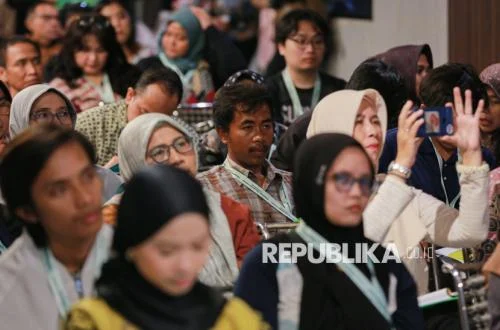
The insights gleaned from the Katadata Indonesia Middle Class Insight (KIMCI) 2026 report, presented at the IDE Katadata Future Forum 2026, serve as a critical alarm bell for Indonesia’s economic future. The comprehensive report meticulously details the consumption behaviors, economic sentiments, and survival strategies of the middle class, providing a robust foundation for policy action. The data underscores the urgency for targeted, adaptive, and forward-looking policies that not only protect the existing middle class but also facilitate the sustainable growth and resilience of the aspiring middle class. Without a robust and expanding middle class, Indonesia’s ambitious vision of becoming a developed nation by 2045 risks being significantly hampered, underscoring the necessity of strategic interventions to navigate these evolving economic dynamics.