
Japan’s formidable industrial sector, a cornerstone of its economic might, is facing an escalating crisis as critical naphtha-based raw material supplies falter, forcing manufacturers to drastically cut production, delay orders, and grapple with surging input costs. This dire situation has exposed a stark disparity between official government assurances of adequate stock levels and the harsh reality of disrupted distribution channels on the ground, leaving a wide array of industries, from heavy construction to precision manufacturing, teetering on the brink of paralysis. The repercussions are being felt across the archipelago, casting a long shadow over Japan’s immediate economic outlook and raising questions about the resilience of its complex global supply chains.
The Unfolding Crisis: A Supply Chain Chokepoint
For over a week leading up to mid-April 2026, more than a dozen companies across various sectors have reported significant impediments to receiving essential naphtha-derived materials or have been hit with substantial price hikes, according to market participants cited by Reuters on Wednesday, April 15, 2026. This pervasive difficulty in sourcing critical inputs is rapidly translating into tangible economic pain, compelling businesses to revise production schedules downwards and, in some cases, halt the acceptance of new orders altogether. The crisis underscores the intricate dependencies within Japan’s industrial ecosystem and its vulnerability to disruptions in the global petrochemical supply chain.
Naphtha, a highly volatile and flammable liquid hydrocarbon mixture, serves as the primary feedstock for a vast array of petrochemical products. Derived from crude oil refining, it is the foundational building block for manufacturing plastics, synthetic rubber, synthetic fibers, solvents, adhesives, and coatings. Japan, a nation renowned for its advanced manufacturing capabilities and its position as a global leader in high-tech and automotive industries, relies heavily on a consistent and stable supply of naphtha to fuel its production lines. Any disruption to this crucial input has a cascading effect, rippling through multiple layers of the economy.
Chronology of Mounting Pressure
While the precise genesis of the current naphtha supply disruption remains subject to ongoing investigation, market signals began to show signs of strain in late 2025 and early 2026. Global energy markets were already navigating a period of heightened volatility, influenced by geopolitical tensions and fluctuating demand patterns. However, the specific bottlenecks affecting Japan’s naphtha supply became acutely apparent in the first quarter of 2026.
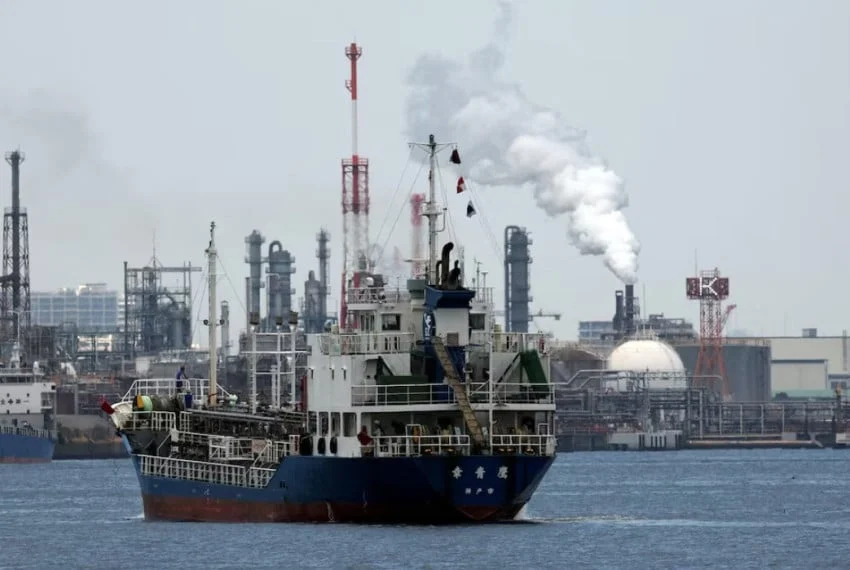
By March 2026, anecdotal evidence of delivery delays and price increases started to surface among smaller and medium-sized enterprises (SMEs) that are often the first to feel the squeeze in a tightening market. The image captured on March 17, 2026, showing a small tanker navigating near an oil refinery in the Keihin Industrial Zone in Kawasaki, south of Tokyo, serves as a poignant visual reminder of the ongoing operations within Japan’s critical energy infrastructure, even as the undercurrents of a looming crisis intensified. This period saw a gradual accumulation of reports from industrial users indicating growing difficulties in securing naphtha-based products, leading to a critical juncture by early April.
The week preceding April 15, 2026, marked a significant escalation. What had been isolated incidents or minor delays transformed into a widespread systemic issue, with "more than a dozen companies" reporting critical disruptions. This rapid deterioration prompted urgent calls for clarification and intervention from industry associations, culminating in the current state of alarm across the construction and manufacturing sectors. The suddenness and breadth of the impact suggest a confluence of factors, potentially including unexpected refinery outages in key naphtha-exporting regions, increased global competition for available supplies, or severe logistical challenges impeding efficient transport to Japan.
Broad Impact Across Key Industrial Sectors
The ripple effects of the naphtha crisis are profoundly impacting diverse sectors that form the backbone of Japan’s industrial prowess. The construction industry, a vital component of the domestic economy, is among the hardest hit. Companies like Toto, a global leader in sanitary ware and plumbing fixtures, and Asahi Kasei, a diversified chemical company producing a wide range of materials from fibers and textiles to plastics and construction materials, are reportedly experiencing significant obstacles. These firms rely heavily on naphtha-based adhesives, sealants, and coatings that are indispensable for various stages of their production processes, from assembling complex components to finishing building materials. Delays in obtaining these critical inputs directly translate into project postponements, extended lead times for products, and potentially higher construction costs, which could eventually be passed on to consumers or impact public infrastructure projects.
The manufacturing sector, Japan’s traditional engine of growth and innovation, is also contending with severe constraints. The production of plastics for the automotive and electronics industries, synthetic rubbers for tires and industrial applications, and various solvents crucial for chemical processing are all inextricably linked to naphtha availability. Kansai Paint, a major paint manufacturer, has publicly acknowledged adjusting its delivery schedules and increasing product prices due to the scarcity of thinner, a critical naphtha derivative whose use is strictly regulated due to its hazardous classification. This highlights not only the cost implications but also the operational complexities faced by companies dealing with regulated chemicals.
Further illustrating the gravity of the situation, a recent survey conducted by the Japan Painting Contractors Association revealed a startling statistic: only 2.7% of member companies reported being able to procure thinner as usual. This figure paints a grim picture of widespread scarcity, indicating that the vast majority of painting contractors, many of whom are SMEs, are either facing significant delays, paying exorbitant prices, or are completely unable to obtain this essential material. Such a severe shortage directly impacts the completion of construction projects, maintenance work, and various finishing applications across residential, commercial, and industrial structures. The inability to complete painting and finishing work can stall entire projects, leading to penalties, financial losses, and a slowdown in economic activity.
Official Responses and Industry Apprehension
In response to the escalating concerns, the Japanese government, primarily through the Ministry of Economy, Trade and Industry (METI), has issued statements acknowledging the supply disruptions while simultaneously asserting the nation’s overall strategic reserves of naphtha remain stable. This apparent disconnect between macro-level inventory data and micro-level market realities has become a focal point of frustration for industry players.
"While Japan maintains robust strategic reserves of crude oil and its derivatives, including naphtha, we recognize the recent challenges in the distribution channels affecting specific industries," a METI official, speaking on background, reportedly stated. "We are actively engaging with refinery operators, petrochemical producers, and logistics providers to identify and rectify bottlenecks, ensuring a more equitable flow of materials to our industries." Such statements, while intended to reassure, have done little to quell the anxiety among businesses struggling with immediate shortages.
Industry associations have been more vocal in expressing their dismay. Representatives from the Japan Chemical Industry Association (JCIA) and the Japan Automobile Manufacturers Association (JAMA) have reportedly conveyed their profound concerns to government officials. A spokesperson for the JCIA was quoted as saying, "The discrepancy between reported national stocks and the critical scarcity our members are experiencing at their production facilities is alarming. We urge the government to move beyond assessing overall inventory and focus on practical solutions to ensure the physical availability of naphtha and its derivatives to manufacturers who are facing imminent production halts."
The prevailing sentiment within the business community is one of growing frustration over what is perceived as a failure to translate national stock availability into actual, accessible supply for end-users. This suggests potential issues ranging from inefficient logistics and transportation networks, to speculative hoarding by intermediate suppliers, or even a lack of transparency in the distribution chain. The government’s challenge lies not merely in having the resources but in ensuring their efficient and timely delivery to the points of need.
Broader Economic Implications and Future Outlook
The deepening naphtha crisis carries significant economic implications for Japan. Firstly, it exerts considerable inflationary pressure. As raw material costs surge due to scarcity, manufacturers are compelled to pass these increased expenses onto consumers, potentially contributing to broader price hikes across a range of goods, from cars and electronics to housing and consumer products. This could undermine efforts to maintain economic stability and consumer purchasing power.
Secondly, the crisis threatens Japan’s global manufacturing competitiveness. The nation’s industrial strength is built on efficiency, precision, and reliable supply chains. Disruptions to critical inputs erode these advantages, making Japanese products more expensive and potentially less reliable in terms of delivery times. This could lead to a shift in production or sourcing away from Japan, impacting its long-term economic standing.
Furthermore, the incident starkly highlights the vulnerabilities inherent in Japan’s reliance on global supply chains for critical industrial inputs. While a highly interconnected global economy offers numerous benefits, it also exposes nations to external shocks, whether from geopolitical conflicts, natural disasters, or unexpected shifts in global demand and supply. The current situation in Japan echoes broader concerns seen in other nations, such as Indonesia’s manufacturing sector grappling with gas crises and Middle East conflicts, suggesting a wider pattern of volatility in global energy and raw material markets. This underscores the urgent need for strategic diversification of supply sources, investment in domestic production capabilities where feasible, and the establishment of more robust, resilient supply chains.
Looking ahead, the Japanese government and industry stakeholders will need to implement a multi-pronged strategy. Short-term measures will focus on stabilizing immediate supplies through diplomatic efforts to secure additional imports, optimizing domestic refinery outputs, and streamlining internal distribution. In the medium to long term, however, the crisis calls for a fundamental re-evaluation of Japan’s industrial raw material strategy. This could involve increasing strategic national reserves of critical petrochemical feedstocks, fostering innovation in alternative materials that reduce naphtha dependency, and investing in advanced logistics and data analytics to enhance supply chain transparency and responsiveness.
The naphtha crisis serves as a critical stress test for Japan’s industrial resilience. How the nation navigates this challenge will not only determine the immediate fate of countless businesses and jobs but will also shape the strategic direction of its manufacturing sector for years to come, emphasizing the imperative for adaptability, foresight, and robust crisis management in an increasingly unpredictable global economic landscape.