
Tehran, Iran – Iran’s Minister of Interior, Eskandar Momeni, has vehemently refuted claims of an effective maritime blockade by the United States, characterizing such notions as mere "illusions." He underscored the nation’s extensive 8,000-kilometer-plus coastline, both on its northern and southern frontiers, as a bulwark against any potential naval encirclement. Momeni further directed provincial authorities in border regions to prioritize and facilitate the import of essential goods, aiming to preemptively counter any disruptions and ensure the uninterrupted flow of critical supplies into the country.
This assertive stance from Tehran emerges against a backdrop of escalating regional tensions and recent developments concerning ceasefires, highlighting a complex geopolitical landscape where economic and security concerns are deeply intertwined. The Minister’s statement appears to be a direct response to ongoing rhetoric and potential strategic maneuvers by adversaries, emphasizing Iran’s resilience and its commitment to maintaining economic stability.
Iran’s Strategic Geography: A Defense Against Naval Blockade
The sheer scale of Iran’s maritime borders, stretching along the Persian Gulf, the Gulf of Oman, and the Caspian Sea, is a critical factor in the nation’s defense strategy. The Persian Gulf and the Gulf of Oman provide access to vital international shipping lanes, including the Strait of Hormuz, a chokepoint through which a significant portion of the world’s oil supply passes. Control or influence over these waterways has historically been a key element of regional power dynamics.
Iran’s coastline on the Persian Gulf is approximately 1,700 kilometers long, while its southern coast along the Gulf of Oman extends for roughly 300 kilometers. To the north, its border with the Caspian Sea spans approximately 600 kilometers. While the Caspian Sea is an inland waterway, it remains crucial for regional trade and transportation. The combined length of these coastlines, exceeding 8,000 kilometers as stated by Minister Momeni, underscores the logistical challenges any attempt at a comprehensive maritime blockade would face. This extensive coastline necessitates a substantial naval presence and surveillance capabilities to effectively monitor and control, making a complete interdiction by a foreign power a formidable undertaking.
Background Context: A History of Sanctions and Regional Rivalries
Iran has been subject to extensive international sanctions for decades, primarily related to its nuclear program and its regional policies. The United States, in particular, has employed a strategy of "maximum pressure," utilizing economic sanctions to curb Iran’s influence and compel it to alter its behavior. These sanctions have significantly impacted Iran’s economy, affecting its oil exports, access to international finance, and the import of various goods.
The recent escalations in regional tensions have further amplified these pressures. The ongoing conflict in the Middle East, particularly involving Israel and its adversaries, has created a volatile environment. Iran’s alleged support for proxy groups in the region has been a constant source of friction with the United States and its allies. The possibility of the US utilizing its naval power to enforce stricter sanctions or interdict Iranian trade has been a recurring concern.
Intelligence Assessments and Counter-Narratives
Minister Momeni’s assertion comes in the wake of a statement attributed to the Head of Israel’s Mossad, David Barnea. Barnea reportedly indicated that the Israeli intelligence apparatus does not anticipate the imminent fall of the Iranian regime following the cessation of active combat. He further suggested that efforts to destabilize and ultimately overthrow the Iranian government would persist beyond any immediate military engagements. This intelligence assessment, if accurate, suggests a long-term strategy by Israel and potentially its allies to exert sustained pressure on Iran.
The Iranian government, by dismissing the blockade claims, is likely aiming to project an image of strength and self-sufficiency. It seeks to reassure its population and international partners that it can withstand external pressures. By emphasizing its vast coastline, Iran is signaling that it possesses the geographical advantages to circumvent or resist such measures.
Ensuring Supply Chain Continuity: A Strategic Imperative
Minister Momeni’s directive to provincial authorities to facilitate the import of essential goods is a critical component of Iran’s economic resilience strategy. In an environment of potential sanctions and import restrictions, ensuring the availability of food, medicine, and other vital commodities is paramount for maintaining domestic stability and preventing public discontent.
This focus on supply chain continuity suggests that Iran is actively preparing for scenarios where its access to international markets could be further curtailed. By empowering border provinces, Tehran is decentralizing its efforts to secure necessary imports, potentially utilizing land routes and less conventional shipping channels to bypass heavily monitored maritime chokepoints.
Broader Implications for Regional Stability
The exchange of statements between Iranian officials and Israeli intelligence highlights the deepening strategic rivalry in the Middle East. Iran’s defiance of perceived US pressure and its emphasis on its defensive capabilities could embolden its allies and partners in the region, while potentially escalating tensions with the US and its regional allies.
The effectiveness of any US-led blockade would depend on a multitude of factors, including the willingness of other nations to cooperate, the extent of US naval deployment, and Iran’s ability to adapt its trade routes and economic activities. The vastness of Iran’s coastline and its strategic location present significant challenges to any comprehensive interdiction effort.
A Chronology of Regional Developments:
- Past Decades: Iran has faced various rounds of international sanctions, impacting its economy and international relations.
- Recent Years: Escalating regional conflicts and Iran’s alleged support for proxy groups have intensified geopolitical tensions.
- Early 2026 (Implied): Reports emerge of statements from Israeli intelligence suggesting ongoing efforts to destabilize the Iranian regime.
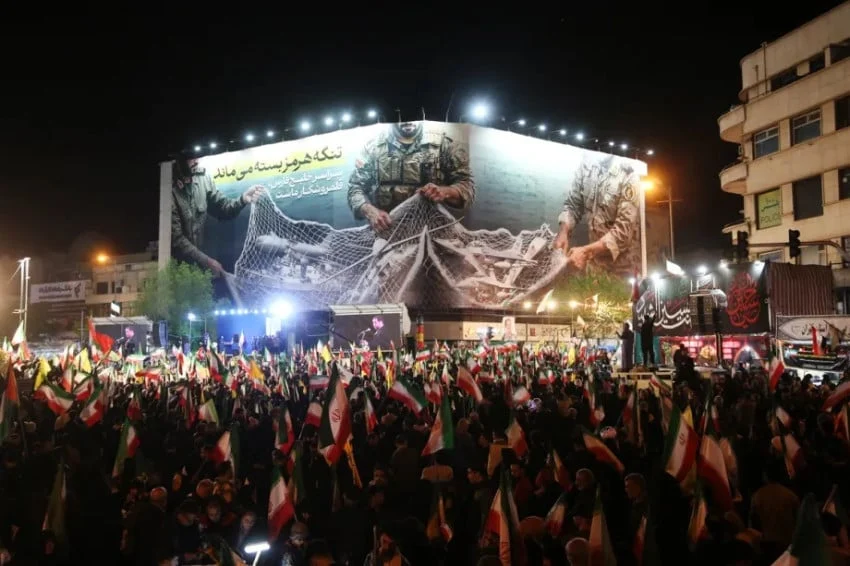
- April 12, 2026: Protests against the United States and Israel are reported in Tehran, indicating public sentiment and nationalistic fervor.
- April 15, 2026: Iran’s Minister of Interior, Eskandar Momeni, publicly dismisses US blockade claims, emphasizing the nation’s extensive coastline and directing provincial authorities to facilitate essential imports.
Supporting Data and Analysis:
- Iran’s Maritime Borders: Over 8,000 kilometers of coastline along the Persian Gulf, Gulf of Oman, and Caspian Sea. This vastness makes complete naval blockade extremely challenging.
- Strait of Hormuz: A critical chokepoint for global oil trade, which Iran borders and has historically leveraged its influence over.
- Sanctions Impact: While difficult to quantify precisely in real-time, historical data indicates that sanctions have had a significant, albeit not crippling, impact on Iran’s GDP, currency, and trade volumes. The IMF and World Bank regularly publish reports on Iran’s economic performance.
- Regional Trade Routes: Iran has historically utilized land-based trade routes with neighboring countries like Turkey, Iraq, and Central Asian nations, which could become even more crucial in a tightened maritime blockade scenario.
Official Responses and Related Parties:
While the primary focus of the article is Iran’s response, it’s important to consider the broader context of statements from other involved parties.
- United States: The US Navy maintains a significant presence in the Persian Gulf and the wider region, primarily to ensure freedom of navigation and counter regional threats. Official statements regarding specific blockade operations are rare, but the US has historically employed naval assets to enforce sanctions and deter hostile actions.
- Israel: As indicated by the Mossad chief’s alleged statement, Israel views Iran as a significant security threat and actively seeks to counter its influence. Its intelligence assessments often inform its strategic decisions and public pronouncements.
- Regional Neighbors: Countries bordering the Persian Gulf, such as Saudi Arabia, the UAE, and Kuwait, are deeply invested in regional stability and maritime security. Their responses to any significant escalation of tensions or blockade efforts would be crucial. Their economic ties to Iran, while strained, are also a factor.
Fact-Based Analysis of Implications:
Minister Momeni’s statement is a clear indication that Iran views the current geopolitical climate as one requiring robust defiance and proactive measures to ensure economic continuity. By framing US actions as "illusions" and highlighting its geographical advantages, Iran is attempting to:
- Deter further aggressive actions: Projecting strength and resilience can serve as a deterrent against more extreme measures.
- Maintain domestic morale: Reassuring the population that the government is capable of navigating external pressures is vital for social stability.
- Signal to international actors: Iran is communicating its ability to adapt and its resolve to resist what it perceives as unjust external pressure.
The directive to facilitate essential imports underscores a strategic focus on self-sufficiency and the diversification of supply chains. This could involve increased reliance on land-based trade, barter systems, or trade with nations not fully aligned with US sanctions regimes.
However, the effectiveness of Iran’s strategy will ultimately depend on several factors:
- The scale and nature of US actions: Whether any "blockade" is a comprehensive naval interdiction or a more targeted enforcement of existing sanctions will determine the level of impact.
- International cooperation: The extent to which other nations adhere to or circumvent US sanctions will significantly influence Iran’s economic well-being.
- Iran’s internal economic resilience: The ability of Iran’s economy to adapt to reduced imports and potential export limitations will be crucial.
- Regional stability: Any further escalation of conflict in the region could have cascading economic and security consequences for Iran and its neighbors.
In conclusion, Iran’s dismissal of US blockade claims is a strategic communication aimed at projecting strength and resilience amidst a complex and volatile regional environment. While the nation possesses significant geographical advantages, its ability to fully withstand external pressures will be a testament to its economic adaptability, its diplomatic maneuvering, and the broader geopolitical dynamics at play in the Middle East. The ongoing regional tensions suggest that such statements and counter-statements are likely to continue as various actors vie for influence and security in the strategic waterways of the Persian Gulf and beyond.