
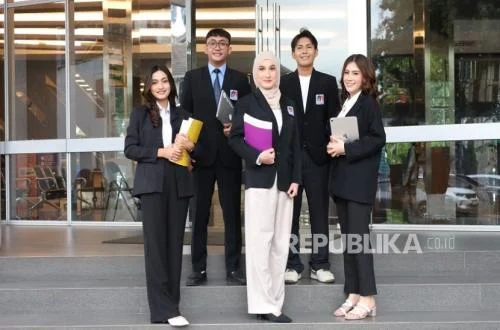
The global landscape of employment is currently undergoing a seismic shift as major technology conglomerates increasingly transition from human-centric operations to automated systems, particularly in the critical sector of content moderation. This trend, which has gained significant momentum in the mid-2020s, has highlighted a broader transformation in how digital platforms manage vast quantities of data. In response to these rapid technological advancements, Universitas Nusa Mandiri (UNM), recognized as a leading Digital Business Campus, has announced a series of strategic initiatives aimed at equipping the next generation of Indonesian professionals with the skills necessary to navigate and lead in an AI-driven economy.
As of April 2026, the integration of Artificial Intelligence (AI) into the workforce is no longer a speculative future but a present reality. Reports from global tech hubs indicate that the replacement of human moderators with AI-based systems is driven by the need for unprecedented speed, efficiency, and consistency. While human moderators often face psychological strain and physical limitations when processing millions of content pieces daily, AI systems can operate 24/7 without fatigue, identifying violations of community standards with increasing precision. However, this shift has also raised concerns regarding the displacement of traditional roles, prompting educational institutions like UNM to redefine the relationship between human intelligence and machine learning.
The Evolution of Content Moderation and the AI Imperative
The transition toward automated moderation represents a pivotal moment in the history of the internet. For over a decade, social media giants relied on thousands of human contractors to filter harmful content. However, the sheer volume of data generated in the 2020s—estimated in the zettabytes—made human-only moderation unsustainable. The move toward AI systems is not merely a cost-cutting measure but a logistical necessity. These systems utilize advanced natural language processing (NLP) and computer vision to detect nuances in text, images, and videos that were previously difficult for algorithms to grasp.
Despite the efficiency of AI, industry experts argue that the "human in the loop" remains essential for handling complex cultural contexts and ethical dilemmas. This nuanced reality is what Universitas Nusa Mandiri aims to address. By understanding that AI is a tool to be managed rather than a replacement to be feared, the university is positioning its students to become the architects and supervisors of these automated systems.
UNM’s Strategic Response through Specialized Education
Recognizing the urgency of the digital talent gap, Universitas Nusa Mandiri’s Faculty of Information Technology has curated three flagship programs: Information Systems, Informatics, and Data Science. These programs are not merely academic tracks but are designed as incubators for the workforce of the future.
The Information Systems program focuses on the bridge between technology and business management. In an era where AI dictates operational efficiency, students are taught how to integrate automated systems into corporate frameworks. This involves understanding how data flows through an organization and how AI can be used to optimize decision-making processes.
The Informatics program dives deeper into the technical architecture of AI. Students engage with the coding, algorithm development, and software engineering required to build the very tools that are currently reshaping the global job market. By mastering machine learning frameworks and neural networks, graduates are prepared to innovate rather than just operate.
The Data Science program addresses the "fuel" of the AI revolution: data. In a world where every click, like, and transaction is recorded, the ability to extract actionable insights from massive datasets is a high-value skill. UNM’s curriculum emphasizes statistical analysis, predictive modeling, and data visualization, ensuring that students can interpret the outputs of AI systems and provide the human oversight necessary for accuracy.
Bridging the Digital Talent Gap in Indonesia
The shift toward AI comes at a time when Indonesia is striving to fulfill its "Golden Indonesia 2045" vision, which relies heavily on digital sovereignty and a tech-savvy workforce. According to data from the World Economic Forum, while AI may displace approximately 85 million jobs globally by 2025, it is also expected to create 97 million new roles that are more adapted to the new division of labor between humans, machines, and algorithms.
In Indonesia, the demand for digital talent is projected to reach 9 million workers by 2030. However, the current supply of graduates with advanced IT skills remains insufficient to meet the needs of a rapidly expanding digital economy. Universitas Nusa Mandiri is actively working to close this gap by aligning its curriculum with industry standards and fostering partnerships with tech leaders.
Andry Maulana, Head of the UNM Margonda Campus, emphasized that the university’s approach is rooted in adaptability. "The presence of AI is not something to be feared; it is something to be understood and utilized," Maulana stated in an official communication on Wednesday, April 15, 2026. "We are preparing our students to be part of the solution and to become innovators who can harness the power of the digital era for the betterment of society."
From Theory to Practice: The UNM Pedagogical Framework
One of the distinguishing features of UNM’s educational model is its emphasis on practical, technology-based learning. The university has moved away from traditional rote memorization in favor of project-based learning that mimics real-world industry challenges. Students are encouraged to develop their own AI models, participate in hackathons, and engage in internships with leading Indonesian tech firms.
Maulana noted that the massive digital transformation across sectors has opened up a plethora of career pathways that did not exist a decade ago. "Our graduates are not just looking for jobs; they are entering fields like data analysis, AI engineering, software development, and cybersecurity specialization," he explained. "These are roles that require a blend of technical proficiency and critical thinking—qualities that we cultivate through an adaptive academic environment."
The focus on cybersecurity is particularly relevant as AI systems become more prevalent. As businesses automate their moderation and data processing, they become more vulnerable to sophisticated cyber threats. UNM ensures that its students understand the security implications of AI, preparing them to protect the digital infrastructure of the future.
Analyzing the Broader Implications of AI Integration
The trend of replacing human roles with AI, as seen in content moderation, serves as a harbinger for other industries. Banking, healthcare, logistics, and even creative industries are beginning to see similar patterns. The analysis of this trend suggests that the most successful professionals will be those who possess "transversal skills"—the ability to work alongside AI, providing the ethical, creative, and strategic input that machines cannot replicate.
For Indonesia, the implications are profound. If the nation can successfully transition its youth into these high-tech roles, it stands to become a major player in the global digital economy. Conversely, failure to adapt could lead to significant structural unemployment. Universitas Nusa Mandiri’s proactive stance is a vital component of the national strategy to ensure the former outcome.
The university’s commitment to "Digital Business" reflects a holistic view of the future. It is not enough to know how to code; one must also understand how that code impacts the market, the consumer, and the social fabric. This interdisciplinary approach is what makes UNM graduates attractive to employers who are navigating the complexities of the mid-2020s.
A Call to Action for the Next Generation
As the 2026 academic year approaches, Universitas Nusa Mandiri has opened its doors to high school graduates, vocational school alumni, and young professionals looking to pivot their careers. The university’s enrollment process has been streamlined through digital platforms, including the official pmb.nusamandiri.ac.id website and the MyNusa PMB mobile application, reflecting its identity as a digital-first institution.
The momentum of the AI era presents a unique window of opportunity. For the youth of Indonesia, the choice is clear: remain passive observers of technological change or become active participants in shaping the digital future. By offering specialized programs in Information Systems, Informatics, and Data Science, UNM provides the roadmap for the latter.
In conclusion, while the replacement of human moderators by AI in global tech firms serves as a reminder of the disruptive power of technology, it also highlights the critical need for advanced digital education. Universitas Nusa Mandiri’s strategic focus on AI-readiness, practical skill acquisition, and industry alignment ensures that its students are not just spectators of the digital revolution, but its primary drivers. As Indonesia continues its journey toward becoming a global digital powerhouse, institutions like UNM will remain at the forefront, cultivating the talent that will define the next chapter of human-machine collaboration.