
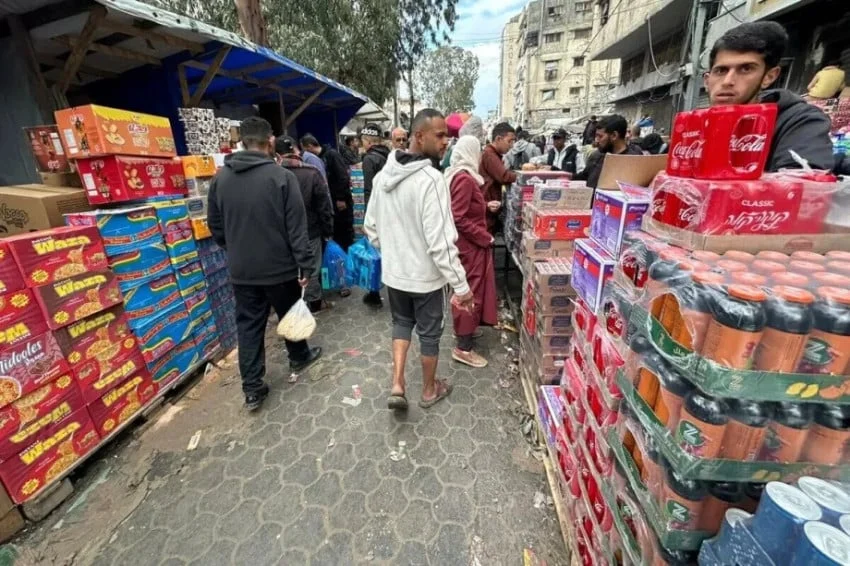
The humanitarian landscape in the Gaza Strip has reached a point of unprecedented paradox, according to high-ranking health officials in the besieged enclave. Dr. Munir Al-Barsh, the Director General of the Ministry of Health in Gaza, has issued a dire warning regarding what he describes as the "deliberate manipulation" of humanitarian aid. While essential life-saving materials, including fuel, specialized medicine, and basic nutritional staples, remain blocked or severely restricted at border crossings, the local markets are reportedly seeing an influx of non-essential items such as chocolate, soda, and jelly. This disparity, Al-Barsh argues, is not a logistical oversight but a calculated strategy that masks the ongoing starvation and medical collapse facing the Palestinian population.
The situation inside the remaining functional wards of the Al-Shifa Hospital complex and other medical facilities across the Strip has been described as catastrophic. Within these corridors, the rhythmic hum of medical machinery—once a sign of stability—is now a source of constant anxiety for healthcare providers. Doctors are forced to operate in a reality where the survival of infants in neonatal intensive care units (NICUs) depends entirely on a dwindling supply of fuel for generators. Despite international calls for a sustained humanitarian corridor, the specific resources required to keep incubators running and oxygen concentrators functional are frequently denied entry, even as trucks carrying confectionery products are permitted to pass through.
The Irony of Aid: Luxury Goods Amidst Medical Despair
Dr. Al-Barsh’s testimony highlights a grim irony that has come to define the current phase of the conflict. "What is entering Gaza today is not humanitarian aid; it is a cruel mockery of death," he stated in a recent briefing. He detailed how shipments of jelly, chocolates, and various soft drinks have been documented entering the territory, creating a superficial appearance of commerce and aid flow. However, these items provide no nutritional value to a population facing acute food insecurity and do nothing to address the critical shortages in the healthcare sector.
The lack of fuel remains the most significant hurdle for the Gaza Ministry of Health. Without diesel to power hospital generators, the healthcare system is effectively paralyzed. This affects not only the incubators for premature babies but also hemodialysis machines for patients with kidney failure, ventilators in intensive care units, and the refrigeration systems required to preserve blood supplies and vaccines. Al-Barsh emphasized that the arrival of "luxury" items while life-saving fuel is prohibited serves to obfuscate the reality of the siege to the international community.
Contextualizing the Blockade and Inspection Protocols
The restriction of goods into the Gaza Strip is managed primarily through the Coordination of Government Activities in the Territories (COGAT), the Israeli body responsible for implementing civilian policy in the Palestinian territories. Since the escalation of hostilities in October 2023, the inspection process has been rigorous and, according to various international NGOs, often arbitrary. Israel maintains a "dual-use" list of items that it claims could be repurposed for military use by Hamas. This list historically includes construction materials, certain chemicals, and electronic equipment.
However, humanitarian agencies such as UNRWA and the World Health Organization (WHO) have reported that the definition of "dual-use" has expanded in practice to include essential medical kits, green-tinted oxygen cylinders, and even certain types of surgical anesthetics. The result is a bottleneck where trucks are turned back if a single "prohibited" item is found during inspection, leading to weeks of delays for entire shipments of food and medicine. The entry of soda and chocolate, which do not fall under the "dual-use" category, is seen by local officials as a way to maintain a minimum truck count for international reporting without addressing the core humanitarian needs.
Chronology of the Humanitarian Decline
The current crisis is the result of a cumulative decline in humanitarian access over several months. To understand the gravity of Dr. Al-Barsh’s claims, one must look at the timeline of the blockade’s evolution:
- October 2023: A "complete siege" was initially announced, cutting off all electricity, water, food, and fuel.
- November 2023: Following international pressure, limited aid began entering through the Rafah crossing, though fuel remained almost entirely banned.
- January-March 2024: Reports from the Integrated Food Security Phase Classification (IPC) warned of imminent famine in northern Gaza. During this period, the disparity between requested medical supplies and permitted goods began to widen significantly.
- May 2024: The closure of the Rafah crossing following military operations in the area further constricted the flow of aid, shifting reliance to the Kerem Shalom crossing, where inspection backlogs grew.
- Present Day: While the number of trucks entering has fluctuated, the composition of the aid has shifted toward the non-essential items described by Dr. Al-Barsh, while the medical sector faces its most acute shortage of anesthetics and sterile equipment to date.
Statistical Overview of the Crisis
Data from the World Health Organization and the United Nations Office for the Coordination of Humanitarian Affairs (OCHA) provides a quantitative look at the health crisis. As of late 2024, only a fraction of Gaza’s 36 hospitals remain even partially functional. The occupancy rate in active hospitals often exceeds 200%, with patients being treated in hallways.
In terms of food security, the UN has reported that nearly the entire population of 2.3 million people is experiencing "crisis" levels of hunger. Acute malnutrition among children under five has reached record levels, particularly in the northern governorates. The Ministry of Health reports that dozens of children have already died from dehydration and malnutrition—a statistic that Al-Barsh links directly to the policy of allowing "junk food" while blocking nutrient-dense staples and therapeutic milk for infants.
Furthermore, the fuel requirement for Gaza’s basic humanitarian operations is estimated at roughly 400,000 liters per day. Current deliveries often fall below 20% of this requirement, forcing hospitals to prioritize which wards receive power and for how many hours a day.
International Reactions and Legal Implications
The international community has reacted with increasing alarm to reports of aid manipulation. Human rights organizations, including Amnesty International and Human Rights Watch, have argued that the restriction of essential supplies constitutes a violation of international humanitarian law. Under the Geneva Conventions, an occupying power—or a party to a conflict exercising effective control—has a legal obligation to ensure the civilian population has access to food, medical supplies, and other necessities.
The International Court of Justice (ICJ), in its provisional measures regarding the situation in Gaza, explicitly ordered the unhindered provision of urgently needed basic services and humanitarian assistance. Critics argue that the prioritization of non-essential goods over medical supplies and fuel flies in the face of these legal mandates.
Conversely, Israeli officials have frequently stated that there is "no limit" to the amount of aid that can enter Gaza. COGAT often points to the total number of trucks as evidence of their cooperation, frequently blaming UN agencies for "logistical failures" in distributing the aid once it crosses the border. The discrepancy between the "number of trucks" and the "utility of the contents" remains the central point of contention between the Gaza Health Ministry and the coordinating authorities.
Broader Implications for Public Health and Stability
The long-term implications of this aid disparity are profound. Beyond the immediate risk of death for those in incubators or on dialysis, the lack of proper nutrition and medicine is creating a generation of children with stunted growth and chronic health conditions. The "mockery of aid" described by Dr. Al-Barsh suggests a breakdown in the fundamental principles of humanitarianism, where the appearance of assistance is prioritized over the actual preservation of life.
The psychological impact on the population cannot be overstated. When a parent cannot find bread or clean water for their child but sees shelves stocked with imported soda and chocolate, it fosters a sense of profound injustice and despair. This environment complicates any future efforts at stabilization or reconstruction.
As the conflict continues, the calls from medical professionals like Dr. Al-Barsh serve as a grim reminder that humanitarian aid is not a monolithic category. The effectiveness of aid is measured not by the volume of trucks, but by the lives saved through the delivery of specific, critical resources. Without an immediate shift in policy to prioritize fuel and medicine over non-essential goods, the "catastrophic situation" in Gaza’s hospitals is expected to claim more lives than the hostilities themselves.