
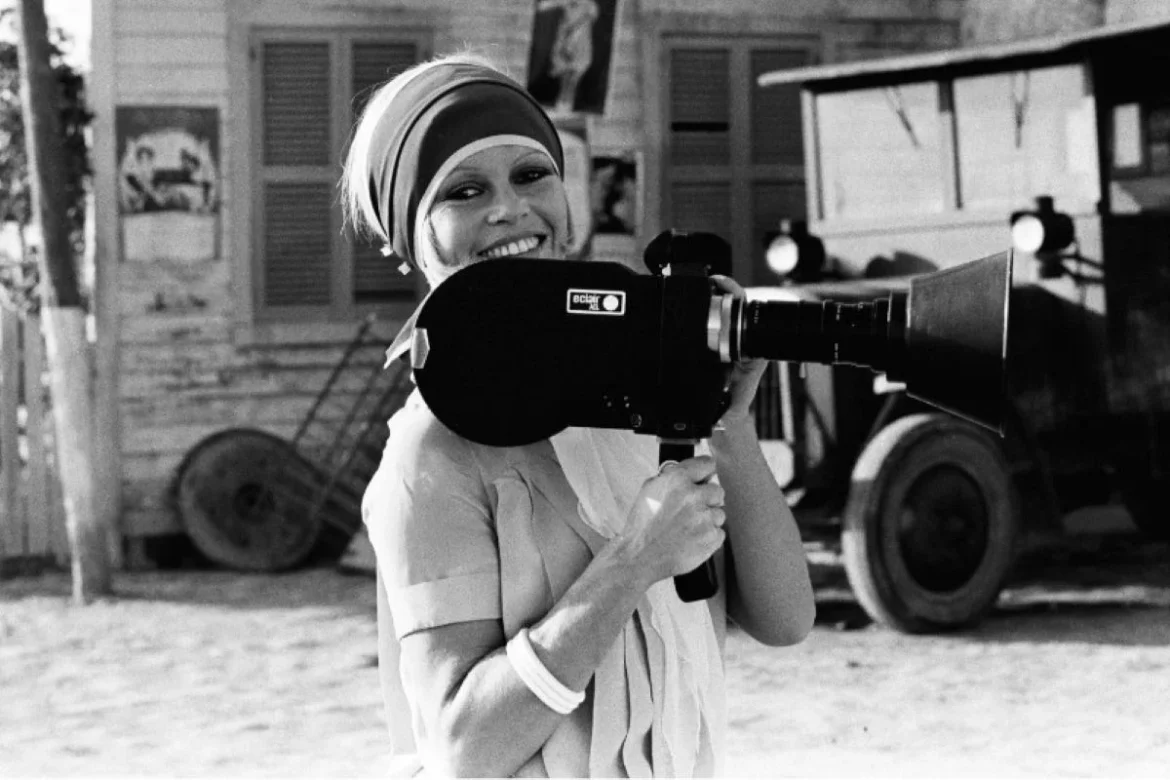
Jakarta (ANTARA) – Brigitte Bardot, the legendary French actress whose captivating presence illuminated the silver screen and later dedicated her life to fervent animal rights advocacy, has passed away at the age of 91. Her death was confirmed on Sunday, December 28, marking the end of a remarkable life that spanned an era of profound cultural and social change. Bardot, who had largely retreated from public life in recent months following medical treatment at a hospital in Toulon, southern France, breathed her last at her beloved home, La Madrague, nestled in the picturesque coastal town of Saint-Tropez.
Official Confirmation and Widespread Tributes
The news of Bardot’s passing was officially announced by the Brigitte Bardot Foundation, the organization she founded and passionately led. In a poignant written statement, the foundation expressed profound sorrow at the loss of its visionary founder and president. "The Brigitte Bardot Foundation, with deep sadness, announces the passing of our founder and president, Madame Brigitte Bardot. She was a world-renowned actress and singer who chose to leave her brilliant career to dedicate her life and energy to the welfare of animals through her foundation," the statement read, underscoring the duality of her enduring legacy as both a cultural icon and a humanitarian.
The announcement immediately resonated across France and beyond, prompting a wave of tributes from cultural figures, political leaders, and animal welfare organizations. French President Emmanuel Macron is expected to issue a formal statement, acknowledging her indelible mark on French cinema and her unwavering commitment to animal causes. Colleagues from her acting days, though few remain, along with contemporary artists influenced by her trailblazing spirit, are anticipated to share their condolences, highlighting her status as a global phenomenon. Animal rights groups worldwide are mourning the loss of a tireless champion, recognizing her instrumental role in bringing critical issues of animal welfare into mainstream discourse.
From Bourgeois Beginnings to Stardom: The Early Life of a Legend
Born Brigitte Anne-Marie Bardot in Paris, France, on September 28, 1934, she hailed from a conservative, upper-bourgeois family. Her father, Louis Bardot, was an industrialist, and her mother, Anne-Marie Mucel, fostered a love for the arts, enrolling young Brigitte in ballet classes at a tender age. From childhood, Bardot displayed an innate artistic sensibility, particularly drawn to dance and music, which would subtly shape her expressive movements on screen. Her early years were marked by strict discipline, a stark contrast to the free-spirited persona she would later embody.
The trajectory of her life began to shift dramatically at the age of 15 when, in 1949, she posed for the cover of Elle magazine, a pivotal moment orchestrated by her mother’s connections. This seemingly innocuous modeling gig flung open the doors to the entertainment industry. Her striking beauty, natural allure, and unique blend of innocence and sensuality immediately captivated photographers and producers alike. By 1952, Bardot made her acting debut in the film "Le Trou Normand" (English "Crazy for Love"), a modest French comedy that hinted at the burgeoning talent within. She gradually began to climb the ranks of French cinema, laying the groundwork for an international career that would soon take her to Hollywood and establish her as a global icon.
The Cinematic Phenomenon: "And God Created Woman" and Beyond
Bardot’s meteoric rise to international stardom was unequivocally cemented by the 1956 film "And God Created Woman" (Et Dieu… créa la femme), directed by Roger Vadim, who was her husband at the time. This groundbreaking drama, set in the vibrant fishing village of Saint-Tropez – a place that would become synonymous with Bardot herself – cast her as Juliette Hardy, a fiercely independent and sexually liberated young woman. The film was a sensation, not least for its candid depiction of sexuality and Bardot’s uninhibited performance, which included daring scenes that were considered exceptionally bold and controversial for the era. It ignited moral outrage in some quarters, particularly in the United States where it faced censorship, yet simultaneously propelled Bardot into the global spotlight as a symbol of burgeoning female emancipation and sexual freedom.
Her portrayal in "And God Created Woman" resonated deeply with the intellectual currents of the time. French philosopher Simone de Beauvoir, in her influential 1959 essay "The Lolita Syndrome," specifically analyzed Bardot’s persona, linking her to a concept of "absolute freedom." Beauvoir argued that Bardot embodied a new kind of woman, one who transcended traditional societal expectations and dared to exist outside conventional moral frameworks, paving the way for a broader discussion on women’s autonomy and liberation. This philosophical endorsement cemented Bardot’s status as more than just an actress; she became a cultural touchstone, a living embodiment of changing societal norms.
Throughout her acting career, which spanned over two decades, Bardot starred in more than 40 films, showcasing her versatility across various genres. Her filmography includes a diverse range of works that cemented her position as a leading lady in both French and international cinema:
- "Le Trou Normand" (1952) – Her debut, a light comedy.
- "Love Is My Profession" (1959) – A dramatic role that further explored her sensuous image.
- "La Vérité" (1960) – Directed by Henri-Georges Clouzot, earning her critical acclaim.
- "Contempt" (1963) (Le Mépris) – A seminal work of the French New Wave, directed by Jean-Luc Godard, where she played a pivotal role opposite Michel Piccoli, exploring themes of love, cinema, and modern relationships. This film showcased her ability to work with auteur directors and left an indelible mark on cinematic history.
- "Viva Maria!" (1965) – A comedic adventure film co-starring Jeanne Moreau, showcasing her lighter side.
- "Shalako" (1968) – A Western film alongside Sean Connery, demonstrating her appeal in international co-productions.
- "The Women" (1969) (Les Femmes) – A French comedy-drama.
- "Les Novices" (1970) – Another comedic role.
- "L’histoire très bonne et très joyeuse de Colinot trousse-chemise" (1973) – Her final film before retiring from acting.
Beyond her active film career, Bardot’s influence extended into other artistic spheres. Mentions of "Maria by Calls" (2017) and "Bardot" (2025) in the original source likely refer to documentaries or biographical projects that have continued to explore and celebrate her life and impact, underscoring her enduring relevance even decades after her retirement.
A Cultural Revolutionary: Fashion, Feminism, and the Bardot Mystique
Bardot was not merely an actress; she was a global fashion icon and a powerful symbol of pop culture. Her distinctive style—from her effortlessly disheveled yet chic blonde hair, often worn in a signature bouffant or beehive, to her penchant for natural makeup and bold eyeliner—defined an era. She popularized trends such as gingham prints, peasant blouses, capri pants, and the bikini, making them symbols of youthful rebellion and sophisticated allure.
Perhaps her most enduring sartorial legacy is the "Bardot collar," a wide, open neckline that exposes both shoulders. This style, which she frequently wore, epitomized a blend of sensuality and casual elegance, instantly becoming a classic and remaining a staple in fashion design to this day. Her natural, sun-kissed aesthetic challenged the more polished, inaccessible glamour of earlier Hollywood stars, making her relatable yet aspirational.
Her image as a free-spirited, sensual woman resonated deeply with the burgeoning feminist movement and the broader push for sexual liberation in the 1960s. While she never explicitly identified as a feminist in the political sense, her on-screen portrayals and public persona inadvertently contributed to a redefinition of femininity. She symbolized a woman who was in control of her sexuality, unapologetically independent, and unafraid to defy conventional expectations. This made her an inadvertent pioneer, inspiring countless women to embrace their own autonomy and reject rigid societal roles. Her influence was not confined to cinema or fashion; she embodied a cultural shift that championed youth, freedom, and individuality, leaving an indelible mark on how women were perceived and how they perceived themselves in the latter half of the 20th century.
The Unconventional Retirement: A Life Dedicated to Animal Welfare
In a move that stunned the world, Brigitte Bardot made the extraordinary decision to retire from acting at the peak of her fame in 1973, at the relatively young age of 39. She had starred in more than 40 films and was arguably one of the most recognizable faces on the planet. Her motivation was clear and unwavering: to dedicate the remainder of her life entirely to the welfare and protection of animals. This drastic career shift was unprecedented for a star of her magnitude and demonstrated a profound personal commitment that transcended the glamour and adulation of show business.
Her dedication was not a fleeting fancy. In 1986, she founded the Brigitte Bardot Foundation for the Welfare and Protection of Animals, which quickly became a powerful voice in the global animal rights movement. She personally financed the foundation’s initial operations by auctioning off many of her personal belongings, including jewelry and film memorabilia, raising 3 million francs (equivalent to approximately €450,000 or $500,000 at the time, but significantly more in purchasing power). This act underscored the depth of her resolve and her willingness to sacrifice personal wealth for her cause.
Through her foundation, Bardot tirelessly championed a multitude of animal rights issues that were often overlooked or considered peripheral at the time. She became a vocal opponent of:
- Seal hunting: Her campaigns against the brutal slaughter of seal pups in Canada and other regions garnered international attention and significantly raised public awareness, contributing to the eventual bans on seal product imports in several countries.
- Animal experimentation: She spoke out forcefully against the use of animals in laboratory testing for cosmetics, drugs, and other products, advocating for alternative testing methods.
- The use of animals in circuses: Bardot campaigned for the prohibition of wild animals in performances, citing cruelty and unnatural living conditions.
- The fur trade: She was a staunch anti-fur activist, influencing public opinion against wearing animal pelts.
- The consumption of horse meat: A controversial stance in France, where horse meat has a culinary tradition.
- The sending of animals into space: An early concern stemming from Cold War-era animal testing.
Her high profile and relentless advocacy brought unprecedented media attention to these causes, transforming them from niche concerns into global ethical debates. Her foundation continues its work today, operating shelters, funding rescue missions, and lobbying governments for stronger animal protection laws, all guided by Bardot’s founding principles.
Navigating Controversy: The Unwavering Conviction of an Activist
Brigitte Bardot’s unwavering commitment to animal rights, while earning her immense respect from many, was not without controversy. Her outspoken nature and often provocative statements, particularly in later life, sometimes led to accusations of racism, xenophobia, and homophobia. She was fined multiple times by French courts for inciting racial hatred, notably for comments criticizing Muslim practices concerning animal slaughter and immigration. These incidents undeniably tarnished aspects of her public image and sparked widespread condemnation.
However, even amidst these criticisms, her dedication to animal welfare remained undiminished and universally acknowledged. Her personal philosophy, as she often articulated, was that "I gave my youth and my beauty to men. I am giving my wisdom and experience to animals." She viewed her love for animals as a purer, more meaningful path, often stating that animals offered an unconditional love and honesty she rarely found in human interactions.
In recognition of her profound contributions to French culture and her significant philanthropic work, Bardot was awarded the Légion d’honneur (Legion of Honour), France’s highest order of merit, though she famously declined to accept it in 1985, citing her principled stance against certain government policies and her desire to remain independent. This refusal further underscored her maverick spirit and her prioritization of her personal convictions over traditional accolades. Despite the complexities of her public persona in later years, her core commitment to animal protection never wavered, solidifying her status as one of the most dedicated and effective celebrity activists in history.
A Multifaceted Legacy: Impact on Film, Culture, and Compassion
Brigitte Bardot’s passing leaves behind a multifaceted and profoundly influential legacy that transcends her initial fame. Her impact on 20th-century cinema, fashion, and social norms is undeniable. As an actress, she redefined female stardom, embodying a new era of sensual independence that challenged patriarchal structures and contributed to the burgeoning discussions around women’s liberation. Her films, particularly "And God Created Woman" and "Contempt," remain cinematic landmarks, studied for their artistic merit and cultural resonance. The "Bardot collar" and her signature style continue to inspire designers and fashion enthusiasts, proving her enduring influence on aesthetics.
Beyond the silver screen, her second act as a tireless animal rights advocate cemented her place in history as a compassionate and courageous humanitarian. She leveraged her global fame to shine a crucial spotlight on the suffering of animals, transforming public perception and catalyzing tangible change in animal welfare policies worldwide. The Brigitte Bardot Foundation stands as a living testament to her unwavering dedication, continuing her mission to protect vulnerable creatures.
The complexities of her later life, marked by controversial political statements, serve as a reminder of the nuanced nature of public figures. Yet, even these debates underscore her profound impact – a figure who consistently provoked thought, challenged norms, and ignited passionate responses. Tributes from various sectors are expected to continue pouring in, reflecting her broad and often contradictory influence. Her legacy is one of a woman who, through beauty, talent, and an unyielding will, irrevocably altered the landscape of entertainment, empowered a generation of women, and championed the voiceless, leaving an indelible mark on both human and animal history. Brigitte Bardot will be remembered not just as an actress, but as a revolutionary force whose journey from sex symbol to animal savior created a unique and unforgettable narrative in the annals of global culture.