
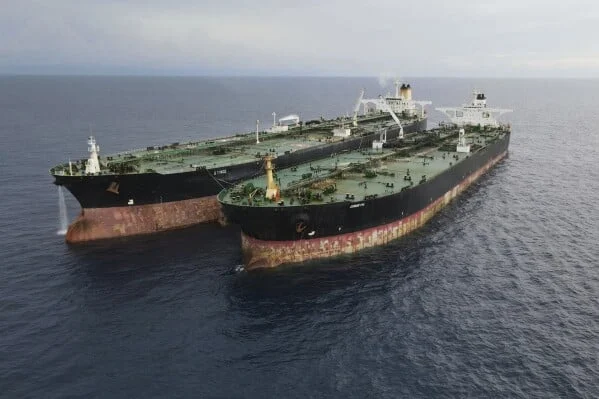
WASHINGTON D.C. – In a significant development reverberating through global energy markets and diplomatic circles, India has reportedly received approximately 4 million barrels of Iranian crude oil, marking the first such imports in seven years. This strategic move, reported on Wednesday, April 15, 2026, underscores India’s proactive efforts to bolster its energy security and diversify its supply sources amidst tightening global markets and before the expiration of a critical grace period for United States sanctions against Iran. The resumption of these imports signals a nuanced recalibration of India’s foreign policy and energy strategy, balancing its burgeoning demand with complex geopolitical realities.
Background: India’s Insatiable Energy Appetite and Global Dependencies
India, as the world’s third-largest oil consumer and importer, faces an ever-growing demand for energy to fuel its rapidly expanding economy and support its population of over 1.4 billion people. The nation imports more than 85% of its crude oil requirements, making it exceptionally vulnerable to price fluctuations and supply disruptions in the international market. This intrinsic dependence on foreign oil necessitates a flexible and pragmatic approach to energy procurement, often leading New Delhi to navigate complex geopolitical landscapes to secure affordable and reliable supplies.
Historically, Iran has been a significant crude oil supplier to India, owing to its geographical proximity, competitive pricing, and favorable payment terms. Before the imposition of stringent US sanctions, Iran was among India’s top three oil suppliers, alongside Saudi Arabia and Iraq. Data from India’s Ministry of Petroleum and Natural Gas indicates that in the fiscal year 2018-2019, India imported nearly 23.5 million tonnes of crude oil from Iran, representing about 10% of its total oil imports at the time. The relationship was built on a foundation of long-standing trade ties and strategic interests, including India’s investment in Iran’s Chabahar Port, which offers a vital gateway to Afghanistan and Central Asia, bypassing Pakistan.
The Shadow of Sanctions: A Timeline of Disruption and Compliance
The cessation of Iranian oil imports by India in 2019 was a direct consequence of the re-imposition of comprehensive sanctions by the United States following its withdrawal from the Joint Comprehensive Plan of Action (JCPOA), commonly known as the Iran nuclear deal, in May 2018. The Trump administration adopted a "maximum pressure" campaign aimed at crippling Iran’s economy by targeting its oil exports, which are a primary source of revenue for Tehran.
Initially, the US granted waivers to several countries, including India, allowing them to continue purchasing limited quantities of Iranian oil for a period. However, these waivers expired in May 2019, forcing India and other major importers to halt their purchases to avoid secondary sanctions that could cut off their access to the US financial system. India, keen on maintaining its strategic partnership with the United States and avoiding punitive measures, complied with these sanctions, despite the economic implications of losing a reliable and often discounted crude source. This compliance forced Indian refiners to seek alternative suppliers, primarily from Saudi Arabia, Iraq, the UAE, and, more recently, a significant surge in imports from Russia following the geopolitical shifts of the early 2020s.
A Strategic Re-evaluation: India’s Diversification Drive Amidst Global Volatility
The decision to resume Iranian oil imports, even on a potentially temporary basis, underscores a strategic re-evaluation by India in the face of persistent global energy market volatility. The early 2020s witnessed unprecedented disruptions, including the COVID-19 pandemic’s impact on demand, the Russia-Ukraine conflict’s ripple effects on supply chains and pricing, and ongoing geopolitical tensions in the Middle East, particularly affecting shipping routes in the Red Sea. These factors have collectively driven up global crude oil prices and increased the cost of India’s energy imports.
India’s energy strategy has increasingly focused on diversification to mitigate these risks. While it has significantly ramped up imports of discounted Russian crude in recent years – becoming one of Russia’s largest oil customers – the nation remains vigilant for other opportunistic acquisitions. The return to Iranian oil, even if temporary, fits this broader strategy of leveraging all available options to secure energy at competitive prices. "This shipment signals India’s swift move to capitalize on the time window before the sanctions grace period expires," stated an anonymous source familiar with the matter, as reported by Bloomberg on April 15, 2026. This reflects a pragmatic approach where energy security often takes precedence in foreign policy calculations.
The Recent Shipment: Details and Logistics
The recent consignment involves approximately 4 million barrels of Iranian crude. According to tracking data, two very large crude carriers (VLCCs), identified as the ‘Jaya’ and the ‘Felicity’, were instrumental in this delivery. These vessels, notably listed on US sanctions lists, reportedly discharged their cargo at two key Indian ports: Paradip on India’s eastern coast and Sikka on the western coast. The port facilities at Paradip are operated by Indian Oil Corp. (IOC), a state-owned enterprise and India’s largest refiner, while the Sikka port serves major private and public sector players, including Reliance Industries Ltd. and Bharat Petroleum Corp. (BPCL). Ship tracking data further indicated that both tankers were scheduled to depart India within the week of their arrival, suggesting a swift turnaround.
The use of vessels potentially subject to US sanctions highlights the intricate and often opaque logistics involved in facilitating such transactions. These operations typically involve complex financial arrangements, sometimes utilizing non-dollar currencies or barter systems, and meticulous planning to circumvent direct exposure to US financial enforcement. The discretion surrounding the operation is further evidenced by the lack of official statements. As of the report date, Indian Oil Corp., Reliance Industries Ltd., and Bharat Petroleum Corp. had not issued any formal responses regarding these specific oil deliveries, a common practice in sensitive trade dealings.
Geopolitical Balancing Act: Delhi’s Diplomatic Tightrope
India’s decision to resume Iranian oil imports places it on a delicate diplomatic tightrope, particularly concerning its strategic partnership with the United States. While Washington has consistently urged allies to reduce or eliminate energy ties with Tehran, India has historically asserted its sovereign right to make independent decisions regarding its national interests, especially concerning energy security.
For the United States, the efficacy of its sanctions regime against Iran is a crucial component of its foreign policy in the Middle East. Any perceived breach or weakening of these sanctions by major global players like India could be viewed as undermining Washington’s leverage. However, the US administration often exercises a degree of pragmatism, particularly with key strategic partners. It is plausible that any US reaction to India’s imports would be carefully calibrated, weighing the importance of the Indo-US strategic partnership against the desire to enforce sanctions. Experts suggest that the timing, volume, and potential one-off nature of these imports might influence the US response, possibly leading to a muted official reaction rather than immediate punitive measures, especially if the imports are framed as an exceptional, time-bound necessity rather than a permanent policy shift.
From India’s perspective, maintaining a robust relationship with Iran also holds strategic value beyond energy. The Chabahar Port project remains a cornerstone of India’s regional connectivity strategy, providing access to landlocked Afghanistan and Central Asian markets, thereby circumventing rival Pakistan. This project, which has received specific carve-outs from some US sanctions, underscores the multi-faceted nature of Indo-Iranian ties that extend beyond crude oil.
Market Dynamics and Broader Implications
The re-entry of Indian buyers into the Iranian oil market, even for a limited period, has several implications for global energy dynamics. Firstly, it could provide a temporary boost to Iran’s oil export revenues, which have been severely constrained by sanctions. This influx of funds could offer some relief to Iran’s economy and potentially strengthen its negotiating position in any future discussions regarding the JCPOA or broader regional security.
Secondly, for the global oil market, the additional supply, even if relatively small in the context of global consumption (approximately 100 million barrels per day), could contribute to easing supply concerns, particularly if other major producers are constrained or if geopolitical tensions escalate further. While 4 million barrels is not a game-changer, it represents a portion of the "shadow fleet" oil that finds its way into the market, influencing overall supply-demand balances.
Analysts infer that India’s move could also signal to other nations that there are viable, albeit complex, pathways to acquire Iranian crude under certain circumstances. This could potentially complicate the US sanctions enforcement efforts if more countries decide to follow India’s lead, even if cautiously. However, the risks associated with sanctions compliance generally deter most major economies from engaging in significant, sustained trade with sanctioned entities.
Expert Perspectives and Future Outlook
Energy analysts and geopolitical observers view India’s latest move as a clear reflection of its "multi-alignment" foreign policy, where the nation prioritizes its economic and strategic interests above strict adherence to any single bloc’s demands. "India’s energy security is paramount, and it will explore all avenues to ensure stable and affordable supplies for its growing economy," stated a Delhi-based energy consultant, speaking on condition of anonymity due to the sensitivity of the issue. "This move, whether a one-off or a precursor to more sustained imports, highlights India’s pragmatism in a highly volatile global energy landscape."
The future sustainability of such imports remains uncertain. The original report indicates that India is acting "before the grace period for US sanctions ends." This suggests a time-limited window, implying that these imports might be opportunistic and not necessarily a permanent shift. The duration and nature of this "grace period" are crucial and could pertain to specific exemptions, a temporary diplomatic understanding, or a strategic gamble by India to test the boundaries of enforcement. Should the political climate surrounding Iran sanctions tighten further, India might again be compelled to cease these imports.
The broader implications for India’s energy diplomacy are also significant. While strengthening its ties with Iran provides an alternative supply route and reinforces its strategic autonomy, it simultaneously requires careful management of its relationship with the United States. New Delhi’s ability to balance these competing interests will be a defining feature of its foreign policy in the coming years.
Conclusion
The reported arrival of 4 million barrels of Iranian crude in India, marking a seven-year high, is a testament to India’s adaptive and pragmatic energy strategy. Driven by an unwavering commitment to securing its energy future amidst global supply volatility and geopolitical complexities, India is leveraging all available opportunities. While the implications for US sanctions policy and global oil markets remain to be fully seen, this development underscores India’s rising stature as a major global player capable of charting an independent course in pursuit of its national interests, even when navigating the intricate web of international sanctions and power dynamics. The episode serves as a powerful reminder that in the realm of energy security, national imperatives often dictate strategic choices, reshaping geopolitical alignments in the process.