
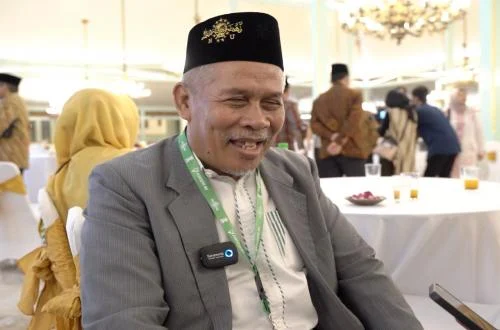
JAKARTA – The Partai Kebangkitan Bangsa (PKB) is actively exploring the possibility of nominating KH Marzuki Mustamar, the former Chairman of the East Java regional chapter of Nahdlatul Ulama (PWNU), as its candidate for the highly anticipated 2024 East Java Gubernatorial Election. This strategic move by PKB could potentially set the stage for a high-stakes political contest against the formidable incumbent, former East Java Governor Khofifah Indar Parawansa, who is widely expected to seek re-election. The political landscape of East Java, a critical electoral stronghold and a barometer for national politics, is already abuzz with speculation surrounding this potential clash of titans, both deeply rooted in the Nahdlatul Ulama (NU) community.
PKB’s Strategic Deliberations
Abdul Halim Iskandar, the Chairman of PKB’s Pilkada Desk, confirmed the party’s keen interest in KH Marzuki Mustamar during a press conference held at the DPP PKB office in Central Jakarta on Wednesday, May 29, 2024. Halim highlighted the growing public sentiment and aspirations from various communities across East Java advocating for Kiai Marzuki’s candidacy. "For East Java, today, the name of KH Marzuki is actively circulating among the public. He is currently meeting with various community groups, who are conveying their aspirations regarding his potential candidacy to PKB," Halim stated, underscoring the organic nature of this political momentum.
PKB, a party historically and ideologically linked to Nahdlatul Ulama, views these public aspirations with considerable enthusiasm. However, Halim emphasized that the ultimate decision hinges on Kiai Marzuki’s willingness to enter the gubernatorial race. "PKB is ready to embrace these aspirations, but the final touch will be to await Kiai Marzuki’s consent," he clarified. This approach signals a respectful deference to the revered cleric, acknowledging his significant spiritual and social standing within the Nahdlatul Ulama community and the broader East Java society. The party’s strategy appears to be one of careful persuasion rather than forceful imposition, recognizing the delicate balance required when dealing with a figure of Kiai Marzuki’s stature.
Halim further elaborated that PKB would fully respect Kiai Marzuki Mustamar’s decision, even if he chooses not to participate in the political contest. This stance reflects the party’s deep appreciation for his influence and leadership. "Even if we are ready, if Kiai Marzuki says ‘please don’t,’ we certainly will not force him. He is an extraordinary figure and icon of NU East Java, whose popularity has only grown after facing certain unfavorable treatments following his dismissal by PBNU," Halim explained. This candid admission points to a pivotal event that significantly amplified Kiai Marzuki’s public profile and endeared him further to a large segment of the NU populace.
The Persona of KH Marzuki Mustamar
KH Marzuki Mustamar is not merely a political figure but a highly respected religious scholar and community leader within the Nahdlatul Ulama. Prior to his controversial dismissal, he served as the Chairman of PWNU East Java, a position that commands immense influence over the largest regional chapter of the world’s largest Islamic organization. His background as a traditional cleric, coupled with his deep understanding of pesantren (Islamic boarding school) networks, makes him a highly credible and authentic voice for many in East Java, a province where NU’s presence is pervasive. His sermons and teachings are widely followed, and his commitment to moderate Islam aligns with the core values of Nahdlatul Ulama.
His appeal, particularly to the grassroots NU members, stems from his perceived sincerity and strong spiritual authority. His leadership style is often characterized as down-to-earth and approachable, fostering a strong connection with ordinary people. This grassroots support base is precisely what PKB hopes to tap into, recognizing that electoral success in East Java often hinges on the ability to mobilize the vast NU constituency. His potential candidacy offers PKB a unique opportunity to consolidate the votes of those who feel a strong affiliation with traditional NU values and leadership.
The PBNU Controversy: A Catalyst for Popularity
Central to Kiai Marzuki’s recent surge in popularity is the controversial decision by the Nahdlatul Ulama Central Board (PBNU) to dismiss him from his position as Chairman of PWNU East Java. While the specific reasons for his dismissal were not fully disclosed by PBNU, it sparked widespread debate and dissent within various layers of the NU community, particularly in East Java. Many viewed the decision as politically motivated or unjust, leading to a strong wave of sympathy and support for Kiai Marzuki.
The timeline of events saw Kiai Marzuki removed from his post in late 2023, a move that surprised many observers given his strong mandate and standing. Instead of diminishing his influence, this act inadvertently elevated his status as a figure who stood against perceived central authority or political machinations within the organization. This narrative resonated strongly with many NU members who felt a sense of loyalty to their regional leader. His perceived "persecution" by the central body ironically transformed him into a more potent symbol of resistance and authenticity for a significant portion of the NU electorate. This incident, as Halim Iskandar noted, made him "even more popular," creating a groundswell of aspirational support that PKB is now strategically positioned to harness. The controversy solidified his image as an independent and principled leader, distinct from internal NU political maneuvering, which could be a significant asset in a gubernatorial race.
East Java’s Political Crucible
East Java is arguably one of Indonesia’s most crucial electoral battlegrounds. With a population exceeding 40 million, it boasts the second-largest electorate in the country, trailing only West Java. Its political dynamics are deeply intertwined with the presence of Nahdlatul Ulama, which counts millions of adherents and maintains an extensive network of pesantren, mosques, and social organizations throughout the province. Historically, the gubernatorial elections in East Java have often been a contest between figures with strong NU credentials or those capable of garnering significant NU support.
The province’s diverse economic landscape, ranging from agriculture and fisheries to manufacturing and services, also adds layers of complexity to its political discourse. Voters are concerned with issues spanning economic development, social welfare, education, and religious harmony. Winning East Java is not just about securing a provincial mandate; it is seen as a significant indicator of national political trends and often provides a strong springboard for national political careers. For PKB, securing the East Java governorship would be a monumental achievement, solidifying its position as a major political force and enhancing its bargaining power in national coalitions.
The Shadow of Khofifah Indar Parawansa
Should Kiai Marzuki Mustamar accept PKB’s overtures, he would face an incumbent of considerable stature: Khofifah Indar Parawansa. Khofifah, a former Minister of Social Affairs, is also a prominent NU figure, serving as the Chairwoman of PP Muslimat NU, the women’s wing of the organization. Her political career spans decades, marked by her consistent presence in national and provincial politics. She successfully won the East Java gubernatorial election in 2018 after several previous attempts, demonstrating her tenacity and deep-rooted political network.
Khofifah’s tenure as governor has been generally well-received, with her administration focusing on infrastructure development, social programs, and economic growth. She enjoys strong support from a coalition of major political parties, including Gerindra, Golkar, PAN, and Demokrat, which have already signaled their intent to back her re-election bid. This broad coalition provides her with a formidable electoral machine and access to significant resources. Her connection to Muslimat NU also gives her a distinct advantage in mobilizing women voters, a crucial demographic in East Java. A contest between Kiai Marzuki and Khofifah would therefore be a fascinating clash not just of personalities, but potentially of different factions or interpretations within the broader NU political sphere.
PKB’s Broader Ambitions in East Java
PKB’s pursuit of Kiai Marzuki Mustamar is deeply embedded in its long-term strategic ambitions for East Java and beyond. As the political vehicle originally established by Nahdlatul Ulama leaders, PKB views East Java as its spiritual and electoral heartland. While the party performed creditably in the 2024 general election, increasing its seat count in the national parliament (DPR RI) and several provincial legislative assemblies (DPRD), securing the East Java governorship would be a crowning achievement. In the 2024 legislative elections, PKB demonstrated its enduring appeal in East Java, maintaining a strong presence in the provincial parliament and contributing significantly to its national vote share. However, the gubernatorial race presents a different challenge, requiring a unifying figure capable of transcending party lines and appealing to a broader electorate.
The party’s strategy involves leveraging Kiai Marzuki’s widespread popularity and deep religious legitimacy to mobilize a significant portion of the NU vote that may feel disillusioned or unrepresented by other political figures. This move could also serve to consolidate PKB’s position as the primary political voice for traditional NU members, potentially challenging the influence of other parties that also seek NU votes. The high stakes in East Java mean that a successful gubernatorial bid would not only enhance PKB’s regional power but also significantly boost its national profile and influence in future political negotiations.
Navigating Coalition Dynamics and Running Mates
Should Kiai Marzuki Mustamar agree to run, the next critical step for PKB would be to determine his running mate and forge a robust coalition. Halim Iskandar noted that while the focus remains on Kiai Marzuki’s decision, "many are ready to be Kiai Marzuki’s running mate." This suggests that PKB is already receiving feelers from potential vice-gubernatorial candidates, indicating the perceived strength of Kiai Marzuki’s potential candidacy. The party’s strategy would likely involve selecting a running mate who can complement Kiai Marzuki’s strengths, perhaps someone with strong bureaucratic experience, a background in local governance, or appeal to non-NU demographics, such as urban voters or specific ethnic groups.
Building a winning coalition in East Java typically requires the support of multiple parties, as no single party usually holds enough seats in the provincial legislature to nominate a candidate independently. PKB would need to engage in intense negotiations with other political parties to secure the necessary backing. The choice of running mate would be crucial in this regard, as it could attract or deter potential coalition partners. For instance, a running mate from a nationalist party could broaden the appeal beyond the NU base, while a candidate from a more secular background might help balance the ticket. The discussions surrounding the vice-gubernatorial pick would undoubtedly involve careful calculations to ensure maximum electoral advantage and a stable governing alliance.
Implications for the Nahdlatul Ulama Bloc
A potential contest between KH Marzuki Mustamar and Khofifah Indar Parawansa carries profound implications for the internal dynamics of Nahdlatul Ulama. Both figures represent significant currents within the organization, and their direct competition could highlight existing ideological or political fault lines. While NU traditionally strives for political neutrality, its members are diverse in their political affiliations. A gubernatorial election featuring two prominent NU figures could effectively "split" the NU vote, forcing members to choose between revered leaders.
This scenario might also reignite debates about the political engagement of religious figures and the influence of the PBNU in regional elections. The outcome of such a contest would not only determine the next governor of East Java but could also reshape the internal power balance within NU, influencing future leadership selections and policy directions. It would be a litmus test for the enduring power of grassroots NU sentiment versus the influence of central organizational directives and established political networks.
The Road Ahead for Pilkada Jatim 2024
The path to the 2024 East Java Gubernatorial Election is still unfolding, with several key milestones yet to be reached. The most immediate next step is Kiai Marzuki Mustamar’s decision regarding his candidacy. Once that is clear, PKB will move forward with formalizing his nomination and building a robust campaign infrastructure. The official registration period for candidates, typically in August, will mark a critical phase in the election cycle.
The campaign itself is expected to be highly competitive, focusing on issues of economic development, social equity, education, and regional stability. Both potential candidates, if they run, would leverage their respective strengths: Kiai Marzuki, his grassroots religious authority and widespread sympathy following the PBNU controversy; and Khofifah, her incumbency, proven administrative record, and extensive political network. The East Java Pilkada 2024 is shaping up to be a compelling political drama, with significant implications not just for the province but for the broader political landscape of Indonesia. The coming months will reveal whether this potential clash of NU heavyweights will indeed materialize, fundamentally altering the trajectory of East Java’s political future.