
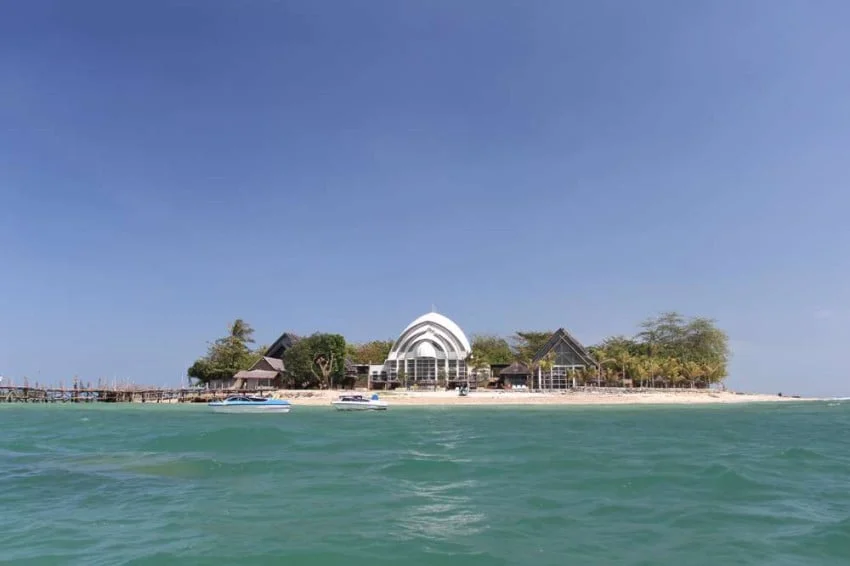
JAKARTA – A contentious advertisement by a property agent offering Umang Island in Banten for sale at an astonishing price of Rp65 billion (approximately USD 4.1 million) has ignited a significant controversy across Indonesian social media platforms, prompting a swift and decisive response from the Ministry of Marine Affairs and Fisheries (KKP). The Directorate General of Supervision of Marine and Fisheries Resources (PSDKP) within the KKP has confirmed that it has taken immediate action, including the sealing of the island’s facilities and the commencement of a thorough investigation into the legality of the advertised sale and ongoing activities on the island. This incident underscores Indonesia’s unwavering commitment to protecting its territorial integrity and ensuring the sustainable, regulated management of its vast archipelago, particularly its numerous small islands which hold immense ecological, economic, and strategic value.
Chronology of the Umang Island Controversy and Official Response
The controversy began to unfold in mid-April 2026, when an advertisement surfaced online, widely circulated across various social media channels, featuring Pulau Umang as a property for sale. The ad, which highlighted the island’s pristine beauty and potential for development, quickly drew public attention due to the unique nature of the offering – a whole island – and its substantial price tag. Concerns rapidly mounted among the public and governmental observers regarding the implications of such a sale, particularly given Indonesia’s strict regulations concerning land ownership and development on small islands, as well as broader issues of national sovereignty.
Upon becoming aware of the viral advertisement, the KKP’s PSDKP Directorate General initiated an immediate investigation. On Tuesday, April 14, 2026, a specialized team from the KKP was dispatched to Umang Island, located off the coast of Banten, to conduct an on-site inspection. During this inspection, the team confirmed the presence of commercial activities on the island managed by a company identified as PT GSM. Crucially, the investigation revealed that PT GSM had not secured the requisite Persetujuan Kesesuaian Kegiatan Pemanfaatan Ruang Laut (PKKPRL), or Approval for Conformity of Marine Spatial Utilization Activities, a mandatory document for any commercial or development activity within Indonesia’s marine and coastal zones. In light of these findings, the KKP team proceeded to seal the facilities on Umang Island, effectively halting all unapproved operations.
The following day, Wednesday, April 15, 2026, the Director General of PSDKP, Pung Nugroho Saksono, addressed the media in a press conference held at the KKP headquarters in Jakarta. During this briefing, Pung Nugroho Saksono elaborated on the ministry’s actions and the rationale behind them. He expressed profound concern over the public advertisement of an island for sale, particularly the potential for exploitation by foreign entities, which he described as a significant national security risk. "Yesterday afternoon, we carried out the sealing of Umang Island in Banten. Why? Because we found advertisements on social media selling Umang Island. How can an island be for sale? We must prevent a situation where, once advertised abroad, various parties, especially foreign entities, might exploit it. This is dangerous," Pung Nugroho Saksono stated emphatically. His remarks underscored the KKP’s proactive stance in safeguarding Indonesia’s maritime territories and ensuring that all forms of utilization adhere strictly to national laws and regulations.
Official Stance and Legal Framework
Director General Pung Nugroho Saksono further articulated the government’s unwavering commitment to upholding national sovereignty and ensuring the sustainable and regulated management of Indonesia’s small islands. He emphasized that the KKP’s swift intervention in the Umang Island case serves as a clear demonstration of this commitment. "We will not tolerate violations, especially concerning small islands. The state has its rules here. Even those who own small islands cannot simply build whatever they want just because they have money; there are permits that must be obtained by these actors," he asserted. This statement highlights the distinction between land ownership and the right to develop or commercially exploit coastal and marine areas, which falls under a separate and rigorous regulatory framework.
The primary legal instrument governing such activities is the Law No. 27 of 2007 concerning the Management of Coastal Areas and Small Islands, which was later amended by Law No. 1 of 2014. This legislation explicitly regulates the utilization of coastal and small island areas, aiming to ensure ecological sustainability, equitable access for local communities, and national security. Key provisions within this law stipulate that any activity involving the utilization of marine space, including tourism, aquaculture, or infrastructure development, requires specific permits and approvals from the relevant authorities.
One of the most critical documents, as highlighted in the Umang Island case, is the Persetujuan Kesesuaian Kegiatan Pemanfaatan Ruang Laut (PKKPRL). The PKKPRL is an essential prerequisite for obtaining other operational permits and signifies that the proposed activity aligns with the national and regional marine spatial plans. It ensures that development does not conflict with conservation efforts, navigation routes, fishing grounds, or national defense interests. The absence of a PKKPRL for PT GSM’s operations on Umang Island therefore represents a fundamental breach of marine spatial planning regulations, making their commercial activities unlawful.
Furthermore, while private ownership of land on certain small islands is permissible under Indonesian law (typically through freehold or concession rights), the sale of an entire island as a complete entity, implying control over its surrounding waters and resources, often raises red flags. Indonesian law strictly prohibits the sale of islands that would compromise state sovereignty or public interest. The concept of "selling an island" can be misleading, as it often refers to selling privately owned land parcels on an island rather than the island itself, including its territorial waters and natural resources, which remain state property. The KKP’s concern about foreign exploitation is rooted in this nuanced legal distinction and the broader principle of maintaining national control over strategic resources.
Broader Context: Indonesia’s Archipelagic State Principle and Small Island Management
Indonesia, as the world’s largest archipelagic state, possesses over 17,000 islands, many of which are small, uninhabited, or sparsely populated. These small islands are not merely geographical features; they are vital components of the nation’s sovereignty, biodiversity, and economic potential. They serve as critical habitats for diverse marine life, provide livelihoods for coastal communities through fishing and tourism, and play a strategic role in national defense and maritime security.
The principle of an archipelagic state, enshrined in the United Nations Convention on the Law of the Sea (UNCLOS), grants Indonesia sovereign rights over its internal waters and archipelago, including the resources within. This legal framework forms the bedrock of Indonesia’s robust stance on managing its marine and coastal territories. Consequently, any activity that could undermine this sovereignty or lead to unregulated exploitation is met with strong governmental intervention.
This is not the first instance where the sale or alleged sale of Indonesian islands has garnered national attention. In previous years, several reports have emerged about Indonesian islands being advertised on international real estate platforms, often sparking similar outrage and official inquiries. For example, some islands in remote regions have been listed for sale, sometimes targeting foreign investors, which has consistently triggered concerns from the KKP and other government agencies about potential violations of land ownership laws for foreigners and the uncontrolled transfer of sovereign assets. These past incidents have contributed to the KKP’s heightened vigilance and its proactive approach to the Umang Island case, aiming to set a clear precedent and deter future unlawful transactions.
The government’s strategy for small island management typically involves a multi-pronged approach:
- Conservation: Designating protected marine areas to preserve biodiversity.
- Sustainable Tourism: Developing eco-tourism initiatives that benefit local communities without degrading the environment.
- Community Empowerment: Ensuring that local populations have priority access to resources and benefit from development.
- Security and Monitoring: Regular patrols and surveillance to prevent illegal activities, including illegal fishing, unauthorized development, and potential border intrusions.
The Umang Island incident serves as a stark reminder of the challenges in balancing economic development, particularly in the lucrative tourism sector, with the imperative of environmental protection and national security within such a complex archipelagic nation.
Economic and Environmental Implications of Unregulated Development
The allure of developing small islands for high-end tourism resorts is undeniable, given Indonesia’s natural beauty and growing tourism industry. However, unregulated development poses significant economic and environmental risks. Environmentally, small island ecosystems are incredibly fragile. Unplanned construction, improper waste management, and excessive human activity can lead to coral reef degradation, mangrove destruction, beach erosion, and disruption of marine wildlife habitats. Such damage not only devastates the local ecology but also undermines the very natural assets that attract tourists in the first place, leading to long-term economic losses.
From an economic perspective, unregulated development often bypasses legal frameworks designed to ensure fair labor practices, local community benefits, and tax compliance. It can also lead to speculative land acquisitions that inflate property values, making it difficult for local communities to maintain their livelihoods or access essential resources. The KKP’s requirement for PKKPRL and other permits is precisely to mitigate these risks, ensuring that economic activities contribute positively to the local and national economy while adhering to environmental safeguards. The Rp65 billion valuation of Umang Island, while indicative of its perceived market potential, highlights the substantial financial stakes involved and the need for stringent oversight to prevent exploitation.
Analysis and Future Outlook
The Umang Island controversy is more than just a legal dispute; it is a critical test case for Indonesia’s ability to enforce its maritime laws and protect its national assets in the digital age. The KKP’s prompt action sends a clear message to property agents, developers, and potential investors, both domestic and international, that any attempt to circumvent established regulations concerning marine and coastal resource utilization will not be tolerated.
The ongoing investigation will likely delve deeper into the ownership structure of PT GSM, the precise nature of their activities on Umang Island, and the details surrounding the advertisement. Penalties for violations of marine spatial planning and environmental laws can be severe, including fines, cessation of operations, and legal prosecution. Furthermore, the incident may prompt the KKP and other relevant ministries to review and strengthen regulations concerning the advertisement and sale of properties on small islands, especially those with significant ecological or strategic value.
This event also highlights the increasing role of social media in uncovering potential regulatory breaches. The rapid dissemination of information through platforms like Facebook, Instagram, and TikTok allows public scrutiny to act as an early warning system, prompting government agencies to investigate and respond swiftly.
Looking ahead, the resolution of the Umang Island case will undoubtedly set an important precedent for future small island management in Indonesia. It reinforces the government’s steadfast commitment to ensuring that its vast maritime domain, including its countless small islands, is developed sustainably, equitably, and in full compliance with the nation’s laws, thereby safeguarding both its natural heritage and its sovereign interests for generations to come. The incident serves as a powerful reminder that while private enterprise is encouraged, it must always operate within the confines of national laws designed to protect public interest and the integrity of the state.