The Indonesian Ministry of Trade, through the Indonesian Anti-Dumping Committee (KADI), has officially initiated a formal antidumping investigation targeting imports of galvanized steel—technically known as baja lapis seng or BJLS—originating from the People’s Republic of China. This regulatory intervention comes in response to mounting pressure on the domestic manufacturing sector, which has experienced severe financial and operational strain due to an influx of heavily subsidized or low-priced foreign steel flooding the Indonesian market over the past several years.
According to trade authorities, the cumulative volume of Chinese galvanized steel entering Indonesia between 2023 and 2025 has surpassed the two million metric ton threshold. This massive wave of imports has captured a dominant market share, undercutting local producers and disrupting the equilibrium of the domestic steel supply chain. KADI’s decision to move forward with the investigation marks a critical escalation in Jakarta’s efforts to protect local industries from unfair global trade practices and to enforce strict adherence to international trade regulations.
The Formal Trigger and Petitioner Background
The initiation of this high-stakes trade investigation was not a unilateral decision by the Indonesian government; rather, it represents a direct administrative response to a formal petition filed by prominent domestic steel manufacturers. PT Tata Metal Lestari and PT Arcelormittal Nippon Steel Indonesia formally approached KADI, acting as representatives of the broader domestic galvanized steel manufacturing sector.
In their joint petition, the domestic producers presented preliminary evidence demonstrating that the surging volume of Chinese imports was not merely a result of natural market growth or competitive pricing, but rather the consequence of unfair pricing structures. They argued that these foreign products were being sold in Indonesia at export prices significantly lower than their normal value in the domestic market of the country of origin. This disparity, according to the petitioners, has caused material injury to local industries, leading to depressed domestic sales volumes, reduced capacity utilization, compressed profit margins, and a potential threat to employment stability within the national metallurgical sector.
Upon receiving the application, KADI initiated a preliminary assessment to evaluate the sufficiency and accuracy of the evidence provided. Frida Adiati, Chairperson of KADI, confirmed that the preliminary findings substantiated the claims made by the local producers. "Based on the results of our review regarding the adequacy and accuracy of the initial evidence, KADI has found an increase in imports of galvanized steel from China, which has resulted in material injury to the domestic industry," Frida stated in an official release.
Comprehensive Import Data and Scope of Investigation
Trade data compiled by KADI illustrates the sheer scale of foreign steel penetration into the Indonesian market. Over a three-year observation period spanning from January 1, 2023, to December 31, 2025, total Indonesian imports of galvanized steel from all global sources reached an aggregate of 2,562,407 metric tons (MT).
Out of this staggering volume, a massive 2,075,801 metric tons—accounting for approximately 81 percent of total imports—originated exclusively from China. This heavy reliance on a single source country underscores the vulnerability of domestic supply chains and highlights the concentration of import pressure that local manufacturers have faced.
The legal and administrative scope of the investigation is strictly defined by specific product classifications. The galvanized steel products under scrutiny are categorized under several Harmonized System (HS) codes in accordance with the 2022 Indonesian Customs Tariff Book (Buku Tarif Kepabeanan Indonesia or BTKI). The targeted tariff lines include HS codes 7210.49.11, 7210.49.17, 7210.49.18, 7210.49.19, 7212.30.12, 7212.30.13, 7212.30.19, 7225.92.90, and 7225.99.90. These codes encompass various specifications of flat-rolled products of iron or non-alloy steel, clad, plated, or coated with zinc, which are widely utilized in construction, automotive manufacturing, and general industrial fabrication.
Regulatory Framework and Procedural Timeline
The ongoing antidumping investigation is being conducted in strict compliance with national regulations and international trade agreements, specifically adhering to Government Regulation (PP) No. 34 of 2011 concerning Antidumping Measures, Countervailing Measures, and Trade Safeguard Measures. This regulatory framework operationalizes World Trade Organization (WTO) guidelines within Indonesian domestic law, ensuring that all investigative procedures maintain transparency, fairness, and due process for all participating stakeholders.
By statutory design, KADI is mandated to complete the antidumping investigation within a maximum timeframe of 12 months from the date of initiation. However, provisions within the regulation allow for this period to be extended up to 18 months under exceptional circumstances—such as complex data collection requirements, extensive cooperation needs, or multifaceted legal arguments presented by foreign respondents.
Following standard international trade procedures, KADI has formally dispatched notices regarding the commencement of the investigation to all known interested parties. This outreach includes domestic industry representatives, local importers, as well as identified foreign exporters and producers of galvanized steel in China. Furthermore, official notifications have been transmitted through diplomatic channels to the Government of the People’s Republic of China via its representative office in Jakarta, as well as to the Embassy of the Republic of Indonesia in Beijing, ensuring full diplomatic transparency throughout the process.
Economic Context and Broader Market Implications
The launch of this investigation occurs against a backdrop of increasing protectionism and trade friction within the global steel market. Overcapacity in China’s domestic steel sector has frequently driven Chinese manufacturers to export surplus production at highly competitive prices, creating severe imbalances in emerging economies across Southeast Asia, Latin America, and Europe. For Indonesia, balancing the need for affordable raw materials for downstream industries—such as infrastructure development and manufacturing—against the imperative of preserving a robust domestic upstream and midstream metallurgical sector remains a complex policy challenge.
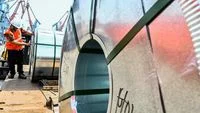
Galvanized steel is a vital material utilized extensively in roofing, walling, ductwork, automotive body panels, and structural applications. Any disruption or distortion in the pricing of this commodity directly ripples through the broader economy. On one hand, downstream users and construction contractors often benefit from lower material costs when low-priced imports are readily available. On the other hand, unchecked reliance on foreign steel exposes the national economy to external supply shocks, geopolitical shifts, and the long-term risk of domestic deindustrialization if local producers are forced to shutter operations.
Industry analysts suggest that if KADI ultimately determines that dumping has occurred and has caused demonstrable injury to local producers, the Indonesian government could impose definitive antidumping duties on the targeted Chinese steel products. Such tariffs are designed to level the playing field by neutralizing the margin of dumping, thereby restoring fair competition within the domestic market.
Next Steps for Interested Parties
With the investigation now officially underway, attention shifts to the collection of evidentiary data, questionnaire responses, and verification visits. Importers, exporters, and domestic producers are required to submit detailed financial records, cost-of-production data, and sales figures to KADI within specified statutory deadlines to defend their respective commercial interests.
KADI has reiterated that any stakeholders requiring further technical details, procedural guidance, or documentation regarding the investigation can reach out directly to the committee through the Ministry of Trade in Jakarta. The outcome of this year-long inquiry will not only dictate the future regulatory landscape for galvanized steel trade in Indonesia but will also serve as a crucial benchmark for how Jakarta addresses broader metallic trade imbalances in the years to come.