JAKARTA — The Indonesian government has officially implemented a strategic reduction in its pipeline natural gas exports to neighboring countries, scaling back outward shipments by approximately 8 percent to safeguard and prioritize domestic energy security. The adjustment, which directly affects long-standing regional supply agreements, is designed to channel vital energy resources toward state-owned electricity provider PT PLN (Persero) and the domestic manufacturing and industrial sectors.
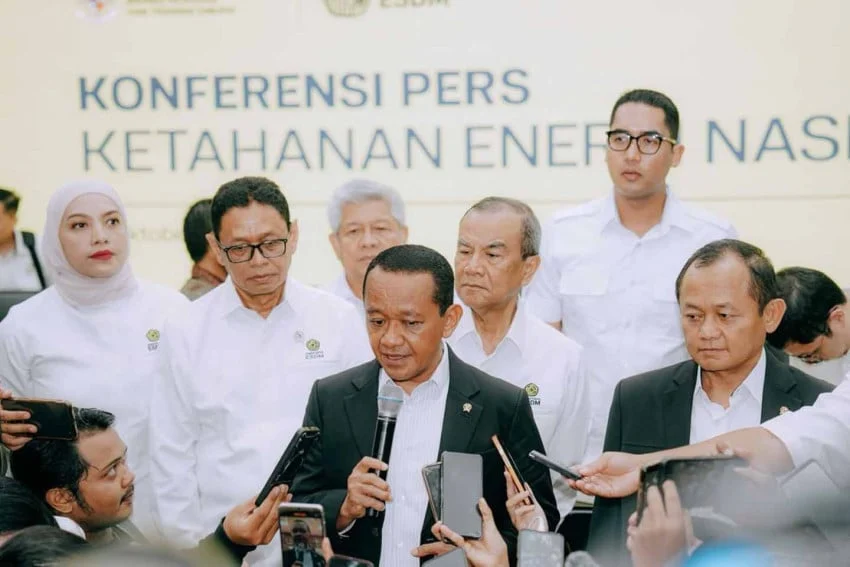
Minister of Coordinating for Downstreaming and Energy Transition, as well as Minister of Energy and Mineral Resources (ESDM), Bahlil Lahadalia, formally addressed the policy adjustment during a high-profile press conference regarding national energy resilience held on Monday, October 26, 2026. Addressing reporters at the ministry headquarters, Bahlil firmly defended the legality and necessity of the move, emphasizing that the reduction falls strictly within the permissible thresholds outlined in the foundational international supply contracts. According to the energy ministry, the decision was necessitated by a combination of declining natural gas production rates across key domestic fields and the urgent need to maintain uninterrupted power generation and industrial output nationwide.
Main Facts of the Export Adjustment
Under the newly enforced policy, Indonesia has trimmed roughly 8 percent of its piped natural gas exports originating from major production hubs in the Natuna Sea and Sumatra. In concrete terms, the total volume of piped gas traditionally exported from these regions stands at 409.55 Million British Thermal Units per Day (MMBTUD). Out of this substantial volume, the government has authorized a reduction amounting to 31 MMBTUD.
Bahlil underscored that this specific volume reduction has been meticulously calculated to comply with the baseline minimum delivery requirements established in bilateral trade agreements. "The 31 million units that we have cut still reside safely within the minimum contract thresholds," Bahlil stated during the briefing. He further clarified the legal boundaries governing the export agreements, noting that under the contractual frameworks binding Indonesia and its international buyers, a breach of contract would only occur if the supply reduction exceeded 10 percent of the agreed baseline.
"And we are currently only reducing by around 8 percent," Bahlil elaborated. "Except if we were to cut by 10 percent—only then would we be in violation of the contract."
Chronology and Background Context of the Energy Crunch
The path leading to the October 2026 export reduction stems from a confluence of operational, infrastructural, and macroeconomic factors that have increasingly strained Indonesia’s domestic energy balance. Over the preceding months, the Ministry of Energy and Mineral Resources noted a noticeable decline in output from several legacy natural gas wells located in the West Natuna transportation system and various onshore and offshore blocks across Sumatra.
Compounding the natural depletion rates of these mature fields, upstream operators scheduled essential maintenance shutdowns (maintenance turnarounds) throughout the third quarter of 2026. These scheduled technical interventions, while critical for the long-term integrity and safety of upstream infrastructure, created temporary yet severe supply bottlenecks. As production figures dipped, the ministry was confronted with a widening gap between available natural gas supply and surging domestic demand, particularly from power plants dependent on gas turbines to maintain grid stability and industrial facilities operating at expanded capacities.
Recognizing the vulnerability of the domestic energy supply chain, technical teams within the ESDM ministry, alongside upstream regulator SKK Migas, conducted a comprehensive review of existing export commitments. The findings dictated that continuing uninterrupted export volumes at the expense of domestic requirements would introduce unacceptable risks of rolling blackouts and operational stoppages for domestic industries. Consequently, the inter-ministerial coordination committee formulated the 8 percent reduction plan as a calibrated, legally compliant intervention to rebalance the domestic market without triggering formal international disputes.
Supporting Data and Regional Market Dynamics
Indonesia has historically been a reliable net exporter of natural gas to regional neighbors, notably supplying piped gas to Singapore and Malaysia via established subsea pipeline networks. The Natuna and Sumatra supply systems form the backbone of these transnational energy corridors, which have operated for decades under long-term take-or-pay or fixed-volume contracts.
However, as Indonesia aggressively pursues downstream industrialization policies—aiming to add value to domestic commodities, expand manufacturing output, and transition toward cleaner energy mixes—its domestic consumption profile has shifted dramatically. Natural gas is no longer viewed merely as an export commodity to generate foreign exchange, but as a critical transition fuel essential for baseload power generation and industrial feedstock, particularly for petrochemical, fertilizer, and manufacturing plants.
The announcement of Indonesia’s export trim immediately reverberated across regional energy markets. Notably, consuming nations such as Singapore moved quickly to reassure domestic stakeholders regarding energy security. Singaporean energy authorities and market analysts were quick to point out that piped gas from Indonesia represents a diminishing share of the island nation’s overall energy matrix, which has increasingly diversified into liquefied natural gas (LNG) imports, solar power initiatives, and regional power grid interconnections. Official statements from Singaporean counterparts indicated that the 31 MMBTUD reduction—translating to roughly 2 percent of Singapore’s total national energy and gas requirements—is manageable and will be absorbed through existing LNG spot-market procurements and secondary reserves.
Official Responses and Stakeholder Reactions
The policy has drawn varied reactions from domestic industry associations, energy experts, and international trade partners.
Domestically, industrial associations representing manufacturing, ceramics, and chemical producers have expressed cautious optimism and support for the government’s intervention. For months, local industries have voiced concerns over gas supply reliability and escalating domestic gas prices, which directly impact their global competitiveness. By prioritizing domestic allocation, the Ministry of Energy and Mineral Resources has signaled a commitment to shielding local factories from international supply shocks and ensuring that industrial growth targets under the national downstreaming agenda are not compromised by energy scarcity.
State-owned electricity provider PT PLN (Persero) likewise stands to benefit directly from the redirection of the 31 MMBTUD gas volume. With peaking plants and combined-cycle gas turbine power stations facing tight fuel inventories during peak demand cycles, the additional gas allocation ensures greater stability for the Java-Bali and Sumatran electrical grids, reducing reliance on more expensive and carbon-intensive diesel fuels for emergency power generation.
On the international front, diplomatic and commercial channels have engaged in constructive dialogues regarding the implementation of the export adjustment. Because the reduction is maintained below the 10 percent contractual threshold, foreign buyers have limited legal grounds for dispute, though commercial discussions concerning pricing adjustments, delivery schedules, and compensation mechanisms for alternate sourcing are reportedly underway. Energy analysts note that while the export cuts are legal, managing long-term diplomatic relations with energy-dependent neighbors will require transparent communication and predictable timelines from Jakarta regarding future supply outlooks.
Broader Economic and Strategic Implications
The decision by Minister Bahlil Lahadalia to restrict natural gas exports highlights a broader, structural evolution in Indonesia’s energy governance. The traditional paradigm—where resource extraction heavily favored export revenues—is increasingly giving way to a resource-nationalist and domestic-centric framework that prioritizes national energy sovereignty and industrial value addition.
This shift carries several profound implications for the Indonesian economy and its geopolitical standing:
-
Reinforcement of National Energy Security: By legally asserting the minimum-contract clause to reclaim a portion of exported gas, the Indonesian government demonstrates a willingness to utilize contractual flexibilities to protect domestic consumers. This ensures that economic growth is not choked by domestic energy shortages.
-
Acceleration of the Downstreaming Agenda: The Ministry of Energy and Mineral Resources is tightly aligned with the broader governmental push for industrial downstreaming. Ensuring a stable and predictable supply of natural gas to domestic petrochemical and manufacturing plants is a prerequisite for attracting foreign and domestic direct investment into high-value processing sectors.
-
Managing Upstream Decline: The supply constraints that necessitated the export cuts underscore a critical long-term challenge for Indonesia: the natural depletion of mature oil and gas basins. To prevent future crises, the government must accelerate exploration and development in new frontier blocks—such as the South Andaman and Glayar exploration plays—and streamline regulatory approvals to attract foreign upstream capital.
-
Diplomatic Balancing Act: While strictly adhering to legal parameters prevents formal trade arbitrations, Indonesia must navigate its regional relationships with care. As Southeast Asia integrates its energy markets through initiatives like the ASEAN Power Grid and interconnected gas pipelines, maintaining a reputation as a stable, reliable energy partner remains vital for regional economic cooperation.
Conclusion
As Indonesia continues to navigate the complexities of energy transition, industrial expansion, and resource management, the 8 percent reduction in pipeline gas exports serves as a defining policy measure of the Bahlil Lahadalia tenure at the ESDM ministry. By balancing strict adherence to international trade law with an unyielding commitment to domestic energy resilience, Jakarta has managed to secure critical supplies for PLN and local industries without triggering formal contract breaches.
Nevertheless, the episode serves as a clear reminder of the tightening margins within Indonesia’s domestic energy landscape. Moving forward, the ultimate success of the nation’s energy and downstreaming policies will depend heavily on unlocking new upstream production, improving infrastructure efficiency, and sustaining a delicate balance between international export obligations and domestic sovereignty.