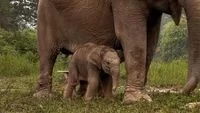
The ongoing global endeavor to preserve the critically endangered Sumatran elephant received a significant and heartwarming boost this week with the arrival of a healthy male calf at the Tesso Nilo National Park located in Riau Province, Indonesia. Lisa, an adult female Sumatran elephant (Elephas maximus sumatranus) housed within the conservation area, successfully delivered her newborn on Monday, September 28, marking a notable milestone for park rangers, wildlife veterinarians, and conservationists alike. The birth not only increases the dwindling population numbers of this fragile subspecies but also serves as a testament to the resilience of wildlife adapting to heavily fragmented forest landscapes through strategic human intervention and protected sanctuary programs.
According to official reports released by park authorities, the newborn calf is the result of a natural mating process between Lisa and a wild bull elephant originating from the surrounding forest ecosystems. This unique breeding dynamic—facilitated by the presence of semi-wild conservation herds interacting with wild counterparts—highlights the ecological connectivity that conservationists have long strived to maintain within and around the Tesso Nilo landscape. Weighing in within a healthy parameter typical for newborn elephants, the calf stood upright shortly after birth, displaying vigorous vitality as it nuzzled close to its mother under the watchful eyes of the resident mahouts and medical personnel stationed at the location.
The event took place at the specialized Elephant Flying Squad compound, a well-known conservation mechanism deployed within the national park to mitigate human-wildlife conflict and monitor biodiversity health. The arrival of this new calf elevates Lisa’s personal maternal record to an impressive total of six offspring, cementing her status as a prolific and crucial matriarch within the captive and semi-captive conservation breeding programs managed by regional environmental agencies. As international and domestic wildlife organizations continue to grapple with the rapid decline of megafauna across Southeast Asia, every successful birth within protected confines represents a strategic victory in the broader war against extinction.
Chronology of the Birth and Immediate Post-Natal Care
The unfolding of events on Monday, September 28, was marked by careful observation, professional veterinary readiness, and natural maternal instincts. The labor process commenced late in the afternoon, prompting resident handlers and medical staff of the Elephant Flying Squad to maintain a respectful yet vigilant watch over Lisa as she experienced the final stages of gestation.
By approximately 19:00 Western Indonesia Time (WIB), the delivery was successfully concluded without the need for invasive medical procedures, a testament to Lisa’s robust physical condition and her previous experience with multiple pregnancies. Immediately following the birth, the Elephant Flying Squad veterinary team initiated standard post-natal protocols. These procedures included monitoring the respiratory rate of the newborn, ensuring that the calf was free from any congenital abnormalities, and observing whether the mother readily accepted the infant.
Within the first hour of life, the calf successfully achieved a crucial developmental milestone by standing on wobbly legs, guided by the trunk and gentle nudges of its mother. Soon after, the newborn successfully initiated nursing, securing essential colostrum rich in maternal antibodies necessary to boost its immune system against potential pathogens present in the tropical forest environment. Veterinarians remained on site throughout the night to monitor both animals, reporting that Lisa demonstrated exemplary maternal behavior, shielding the calf from potential disturbances and ensuring its steady recovery from the birthing process.
Background Context of Tesso Nilo National Park and the Elephant Flying Squad
To fully understand the significance of Lisa’s latest delivery, one must examine the ecological and historical context of Taman Nasional Tesso Nilo (TNTN). Established as a national park to protect one of the last remaining lowland rainforest blocks in central Sumatra, Tesso Nilo historically served as a premier habitat for large mammals, most notably the Sumatran tiger and the Sumatran elephant. However, decades of aggressive deforestation driven by illegal logging, widespread conversion of natural forest into monoculture pulpwood and palm oil plantations, and severe habitat fragmentation have squeezed these magnificent creatures into isolated pockets.
The degradation of natural habitats inevitably led to frequent and volatile encounters between humans and elephants, as displaced herds frequently raided local agricultural settlements in search of food. In response to escalating conflicts and the rapid decimation of local elephant populations, conservation authorities established the Elephant Flying Squad initiative. This innovative program utilizes trained, captive elephants—commonly referred to as "pamong" or companion elephants—handled by experienced mahouts, alongside resident wildlife veterinarians, to patrol the park boundaries, drive wild herds away from vulnerable villages, and facilitate scientific research.
Lisa is a prominent member of this specialized working squad. By acting as an ambassador for her species, she not only assists rangers in mitigating human-elephant conflicts in surrounding communities but also contributes directly to the gene pool of the region. The integration of captive-managed elephants with wild populations—exemplified by Lisa mating with a wild bull—is a deliberate conservation strategy designed to maintain genetic diversity, thereby avoiding the detrimental effects of inbreeding depression that often plague small, isolated wildlife populations.
Supporting Data and the Critical Status of Sumatran Elephants
The plight of the Sumatran elephant is well-documented within global conservation frameworks. In 2012, the International Union for Conservation of Nature (IUCN) upgraded the conservation status of the Sumatran elephant from Endangered to Critically Endangered, reflecting an alarming population reduction of more than 50 percent over a single generation—roughly equivalent to 25 to 30 years. Current scientific estimates suggest that fewer than 2,000 to 3,000 individual Sumatran elephants remain in the wild today, scattered across fragmented forest blocks in Aceh, Riau, Jambi, and Lampung provinces.
The primary drivers behind this catastrophic decline include relentless habitat loss and severe human-wildlife conflict. Sumatra has lost a staggering percentage of its original forest cover over the past half-century, leaving elephant herds with restricted ranges, blocked traditional migratory corridors, and diminished access to natural food sources. Furthermore, elephants have historically been targeted by poachers for their ivory tusks, though coordinated anti-poaching patrols and stricter law enforcement by Indonesian forestry authorities have helped curb illegal hunting in recent years.
Within this grim statistical landscape, births within protected areas like Tesso Nilo assume disproportionate importance. Every successful calf born in captivity or semi-captivity represents a tangible increase in the global census of the subspecies. While conservationists emphasize that captive breeding cannot replace the urgent need for large-scale habitat restoration and protection, it serves as a vital demographic buffer and an invaluable tool for educational outreach and scientific study.
Official Responses and Conservationist Reactions
The birth of Lisa’s sixth calf drew immediate expressions of joy, relief, and renewed commitment from various stakeholders involved in Indonesian wildlife conservation, including the Ministry of Environment and Forestry, regional conservation agencies (BKSDA), and non-governmental organizations operating within Riau.
In statements released following the announcement, park officials underscored that the successful delivery is a direct reward for the tireless efforts of the field staff, veterinarians, and mahouts who dedicate their lives to monitoring and protecting the Tesso Nilo elephant herds. Representatives noted that the birth validates the operational efficacy of the Elephant Flying Squad model, proving that semi-captive management systems can successfully coexist with, and even complement, wild animal populations.
Wildlife conservation experts who monitor the Sumatran ecosystem have similarly lauded the event. Independent biologists point out that Lisa’s mating with a wild bull is an ecologically positive sign, indicating that the boundaries separating captive squads from wild herds remain porous in a beneficial way. This interaction facilitates natural gene flow, which is paramount for the long-term viability and adaptive evolutionary potential of the Tesso Nilo elephant population. Furthermore, conservation advocates hope that positive news of this nature will help generate broader public awareness and garner increased financial and political support for ongoing reforestation and anti-poaching initiatives across Sumatra.
Broader Impact, Economic Pressures, and Future Implications
While the birth of a single elephant calf is undeniably a cause for celebration, conservation scientists and policy analysts urge caution against viewing such events in isolation from the broader systemic challenges facing Indonesian biodiversity. The long-term survival of the newborn calf and its future offspring hinges upon addressing the root causes of habitat destruction and human-elephant conflict that continue to threaten the entire subspecies.
Tesso Nilo National Park itself has faced severe pressure from illegal encroachers seeking to clear park land for unauthorized oil palm cultivation. Despite ongoing clearance operations and law enforcement crackdowns by national authorities, the integrity of the park’s boundaries remains under constant threat. When natural forest is converted into agricultural estates, elephant home ranges are compressed further, forcing animals into tighter spaces where food scarcity and stress levels increase.
Looking toward the future, conservation strategies must expand beyond reactive measures such as rescue operations and captive breeding. Comprehensive landscape-level planning is required to restore degraded forest corridors, allowing elephant herds to move safely between currently isolated protected areas. Additionally, strengthening community-based conservation programs—ensuring that local human populations living adjacent to national parks have economic incentives to protect wildlife rather than view them as pests—will be vital for sustainable coexistence.
As Lisa and her newborn male calf continue to bond within the safety of the Tesso Nilo Elephant Flying Squad compound, they serve as living symbols of hope and endurance. Their existence challenges the narrative of inevitable extinction, reminding the global community that dedicated stewardship, scientific diligence, and political will can still alter the trajectory for some of the world’s most vulnerable species. For now, rangers and veterinarians remain focused on the immediate task of ensuring the calf’s healthy development, watching closely as another chapter unfolds in the ongoing struggle to save the majestic Sumatran elephant from the brink of history.