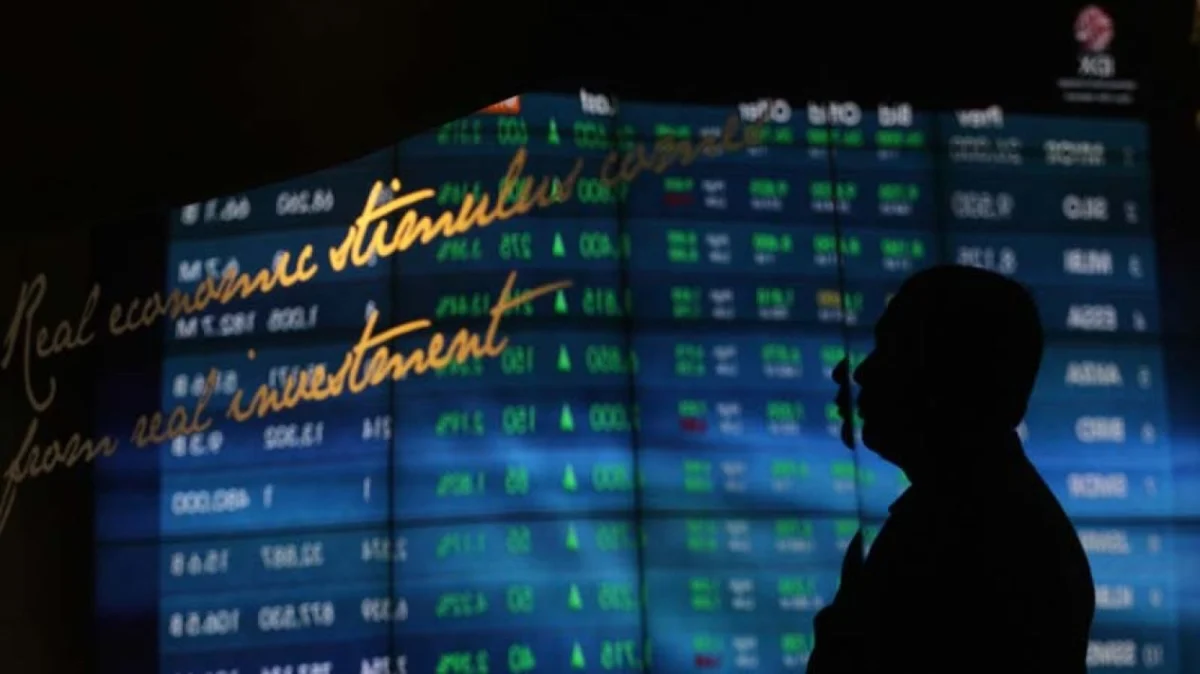
The Indonesia Stock Exchange (IDX), known locally as Bursa Efek Indonesia (BEI), has officially announced a landmark shift in its trading regulations. Starting Monday, September 28, 2026, the minimum price threshold for stocks listed on the exchange will be lowered from the long-standing floor of IDR 50 to a nominal IDR 1 per share. This regulatory overhaul, formalized through the issuance of Board of Directors Decree No. Kep-00136/BEI/09-2026, is designed to enhance market dynamics, foster liquidity, and provide investors with a more granular mechanism for portfolio management and price discovery.
Context and Regulatory Background
For decades, the IDR 50 "gocap" floor has been a defining characteristic of the Indonesian capital market. This psychological and structural barrier prevented stocks from trading below that level, often forcing companies into reverse stock splits or delisting when their valuations plummeted. By removing this floor, the IDX is aligning itself with international standards observed in more mature markets, where stocks are permitted to trade at "penny stock" levels.
The move comes as the IDX seeks to invigorate the participation of retail investors, who have become the backbone of the exchange’s daily trading volume. According to market analysts, the legacy rule often created a "liquidity trap" where investors were unable to exit positions in struggling companies because the stock was stuck at the IDR 50 floor, despite market demand suggesting a lower valuation. By allowing the price to move toward its true market-clearing level, the IDX aims to improve the efficiency of price discovery.
Chronology of Implementation
The rollout of these changes is structured in two distinct phases to ensure a smooth transition for market participants, brokerage firms, and clearing houses:
- Phase One (September 28, 2026 – December 31, 2026): During this initial period, the exchange will maintain an asymmetric Auto Rejection (AR) system for stocks priced above IDR 10. The Auto Reject Bawah (ARB)—the limit at which a stock can fall in a single day—will remain capped at 15 percent, while the Auto Reject Atas (ARA) will be adjusted based on specific price brackets.
- Phase Two (January 1, 2027, and beyond): Starting on the first trading day of 2027, the IDX will transition to a fully symmetrical Auto Rejection system. This will standardize the volatility limits for both gains and losses, marking a significant step toward a more unified and predictable trading environment.
Adjustments to Auto Rejection Limits
The IDX has provided a detailed roadmap for how price volatility will be managed under the new regime. From September 28, 2026, until the end of the year, the limits are defined as follows:
- IDR 1 to IDR 10: For stocks in this micro-price range, both ARA and ARB are set at a flat IDR 1.
- Above IDR 10 to IDR 200: The ARA is set at 35 percent, while the ARB remains at 15 percent.
- Above IDR 200 to IDR 5,000: The ARA is 25 percent, and the ARB is 15 percent.
- Above IDR 5,000: The ARA is 20 percent, and the ARB is 15 percent.
Effective January 1, 2027, the symmetry will be applied across the board:
- IDR 1 to IDR 10: ARA/ARB at IDR 1.
- IDR 11 to IDR 200: ARA/ARB at 35 percent.
- IDR 200 to IDR 5,000: ARA/ARB at 25 percent.
- Above IDR 5,000: ARA/ARB at 20 percent.
These adjustments also extend to Infrastructure Investment Funds (DINFRA). Previously, DINFRA units priced above IDR 50 were subject to a 10 percent ARA/ARB limit. Under the new rules, DINFRA units priced between IDR 1 and IDR 10 will face a flat IDR 1 limit, while those priced above IDR 10 will adhere to a 10 percent ARA/ARB cap.
Official Statements and Market Rationale
Elsierra Putri Yosita, Corporate Secretary of the IDX, emphasized that the decision was driven by the need for better market efficiency. "By allowing stocks that were previously stuck at IDR 50 to trade within a broader range, we are enabling more accurate price discovery. This change provides our market participants with the flexibility required to manage their investment portfolios effectively, particularly in an environment where volatility is an inherent component of trading," Yosita stated.
Market experts view this as a necessary evolution for the Indonesian exchange. In the past, companies whose share prices hit IDR 50 often faced prolonged periods of stagnation. This regulatory change empowers the market to "clear" these stocks, potentially reducing the number of companies languishing on the exchange without significant trading activity. It also forces management teams of listed companies to be more accountable, as their share prices can now reflect market sentiment more accurately without being artificially propped up by a price floor.
Implications for Investors and Brokers
For retail investors, the change introduces both opportunities and risks. While the ability to trade at lower prices may lower the barrier to entry for certain speculative positions, it also increases the risk profile of low-priced stocks. Market participants are advised to exercise caution, as stocks trading near the IDR 1 mark may experience extreme volatility, especially under the new, more aggressive Auto Rejection limits.
For brokerage houses, the implementation requires significant updates to their trading platforms and risk management systems. Brokers must ensure that their systems are capable of handling the new tick sizes and the differentiated Auto Rejection rules that will be in effect through the end of 2026. Failure to calibrate these systems correctly could lead to order rejections or erroneous trades, placing a heavy administrative burden on IT departments during the transition week.
Broader Economic Impact
The move is expected to have a mixed impact on market liquidity. On one hand, it may encourage the entry of "penny stock" traders who thrive on high-volatility, low-priced assets. On the other hand, conservative institutional investors may steer clear of stocks that fall below the traditional psychological thresholds, potentially leading to a bifurcation in the market between "blue-chip" stocks and the increasingly volatile micro-cap sector.
Furthermore, this adjustment aligns with the Indonesian government’s broader goal of deepening the domestic capital market. By making the exchange more accessible and responsive to market forces, the IDX hopes to attract a larger share of the nation’s growing middle-class wealth, which has increasingly sought alternatives to traditional savings accounts.
Analysis of Future Market Trends
Looking ahead, the shift to a symmetrical ARB/ARA system in 2027 suggests that the IDX is confident in the resilience of its trading infrastructure. The adoption of a 35 percent limit for stocks in the IDR 11 to IDR 200 range is particularly aggressive, signaling a willingness to tolerate higher volatility in exchange for deeper liquidity.
Observers note that this could lead to an increase in speculative trading activity. However, it also provides a clearer path for companies to undergo capital restructuring. When a stock price drops below a certain point, the market will now naturally reflect that decline, allowing for more transparent price signals. This transparency is a key pillar of investor protection, as it reduces the information asymmetry that often occurs when stock prices are artificially constrained.
As the September 28 deadline approaches, all eyes will be on the IDX’s systems and the behavior of market participants. The coming months will serve as a pilot period, testing the market’s appetite for lower-priced equity and the effectiveness of the new, tiered Auto Rejection limits in maintaining orderly trading. If successful, this reform could be the catalyst for a more robust and responsive Indonesian stock market, capable of catering to a wider spectrum of investors and providing a more accurate reflection of corporate value.
The transition marks a definitive end to the era of the IDR 50 floor and serves as a testament to the ongoing evolution of the Indonesian financial landscape. Whether this leads to a sustained increase in market turnover remains to be seen, but the structural change is undoubtedly a significant milestone in the history of the Indonesia Stock Exchange.