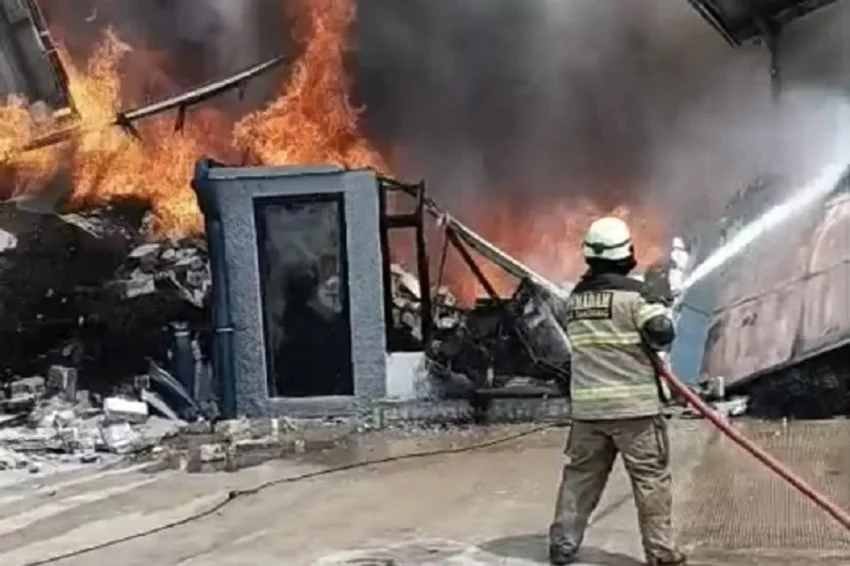
A major fire incident struck a residential apartment building located on Jalan Teluk Intan, RT 07/RW 16, in the densely populated neighborhood of Penjaringan, North Jakarta, on Sunday, September 20. The blaze, which originated from an electrical short circuit on the eighth floor, rapidly escalated and consumed multiple levels of the high-rise structure, triggering a massive emergency response from local fire departments and municipal authorities.
The incident has once again turned the spotlight on high-rise building safety protocols, electrical maintenance standards, and fire preparedness in metropolitan residential complexes. While swift actions by emergency personnel prevented any fatalities, the scale of the damage across five floors highlights the vulnerability of vertical housing developments to electrical anomalies.
Initial Spark and Failure of First Response
According to official reports from the Jakarta Fire and Rescue Agency (Sudin Gulkarmat) of North Jakarta, the disaster began during the late morning hours. Preliminary investigations and eyewitness accounts indicate that the fire was sparked by a sudden electrical short circuit within the primary electrical panel situated on the eighth floor of the building.
In high-rise residential complexes, electrical panels act as critical distribution nodes, routing power to numerous units across specific vertical zones. A failure in such panels often carries a high risk due to the density of wiring and the potential presence of combustible materials within utility shafts.
Upon detecting the smoke and anomalies originating from the eighth-floor panel, the building’s internal security personnel immediately attempted to contain the situation. Armed with standard portable fire extinguishers (APAR), the security team rushed to the scene in an effort to suppress the flames before they could grow out of control. However, due to the intensity of the electrical arc and the rapid ignition of surrounding architectural elements, the initial firefighting efforts proved unsuccessful. The chemical powder from the standard extinguishers failed to suppress the deep-seated electrical fire, allowing the flames to breach the confines of the panel housing and ignite adjacent building materials.
Rapid Escalation and Multi-Floor Propagation
With the initial containment attempt failing, the fire found a ready pathway through vertical utility ducts and open corridors, rapidly spreading upward and downward from the point of origin. Gatot Sulaeman, the Head of Operations for Sudin Gulkarmat North Jakarta, detailed the alarming speed at which the fire propagated.
"The electrical short circuit occurred on the electrical panel on the eighth floor. The security party had tried to extinguish it using portable extinguishers, but it was unsuccessful," Gatot stated, elaborating on the chronology of the disaster. He further confirmed that the flames subsequently leaped to adjacent levels, ultimately engulfing a total of five floors within the complex.
The vertical spread of the fire turned what could have been a localized equipment failure into a multi-story crisis. Fire behavior in high-rise buildings is notoriously complex, often driven by the stack effect—where warm air rises within a building, pulling oxygen and flames upward through stairwells, elevator shafts, and utility corridors. In this case, the fire impacted a total surface area estimated at 156 square meters. The intense heat, dense toxic smoke, and structural threat forced dozens of residents to scramble for safety as emergency alarms echoed through the complex.
Emergency Response and Evacuation Operations
The scale of the fire prompted a rapid mobilization from the Jakarta Fire and Rescue Agency. Upon receiving distress calls from residents and building management, multiple fire engine units and rescue squads were dispatched to the scene, navigating through North Jakarta’s congested traffic to reach the Teluk Intan location.

Upon arrival, firefighters faced the immediate challenge of tackling a high-rise structure fire, which requires specialized equipment such as high-pressure hoses, aerial ladders, and portable breathing apparatuses for interior rescue teams. While ground crews secured the water supply and established command posts, specialized search and rescue (SAR) teams ascended the stairwells through thick, billowing smoke to conduct sweeping checks of the affected floors.
A total of 53 residents trapped or endangered by the toxic smoke on the upper floors were successfully located, evacuated, and guided to safety by emergency personnel. The evacuation process required meticulous coordination to ensure that vulnerable residents, including children and the elderly, were safely removed from the danger zone without succumbing to smoke inhalation. Medical teams and ambulances stationed outside the apartment complex immediately provided triage, administering oxygen and first aid to individuals suffering from minor smoke inhalation and exhaustion, though no major injuries or casualties were reported at the scene.
Context and Broader Implications for Urban High-Rises
This incident in Penjaringan adds to a growing catalog of urban fires in the Indonesian capital, where rapid vertical development often outpaces infrastructure maintenance and safety compliance. Jakarta, as a densely populated megacity, has seen a proliferation of apartment complexes, condominiums, and commercial high-rises over the past two decades. While these developments address critical housing shortages in urban centers, they also introduce unique fire safety challenges.
Electrical short circuits consistently rank as one of the leading causes of structural fires in Indonesia. According to historical data from fire authorities, aging electrical installations, overloaded circuits, unauthorized electrical modifications by residents, and substandard maintenance of building utility panels are major contributors to such disasters. When maintenance protocols lapse or building management fails to conduct routine inspections of electrical infrastructure, the risk of catastrophic failure increases exponentially.
The Penjaringan incident underscores the critical importance of robust fire suppression systems in high-rise buildings, such as functional sprinkler networks, smoke extraction systems, and fire-resistant compartmentalization. While portable extinguishers are valuable as a first line of defense, their limitations against electrical panel fires—especially when the source remains energized—highlight the necessity of automated suppression systems designed to activate before a fire can spread across multiple floors.
Furthermore, the episode sheds light on the preparedness of building management and residents. While the swift action of the security team demonstrated awareness, the failure to contain the blaze emphasizes the need for regular, professional-grade fire safety drills and advanced training for on-site personnel. Building management entities across Jakarta are continually reminded by regulatory bodies that adherence to the Fire Safety Management System (Manajemen Keselamatan Kebakaran Gedung) is not merely a bureaucratic requirement, but a matter of life and death.
Ongoing Investigation and Outlook
Following the complete suppression of the flames and the successful cooling down of the affected areas, forensic teams from the local police department, in collaboration with fire investigators, launched an official inquiry to determine the exact technical cause of the short circuit. Investigators will examine the debris around the eighth-floor electrical panel, review maintenance logs, and assess whether any negligence contributed to the severity of the incident.
For the residents of the Penjaringan apartment complex, the immediate aftermath involves assessing property damage, addressing structural integrity concerns with the building management, and awaiting clearance to return to units unaffected by the fire and smoke. Municipal authorities have emphasized that they will conduct a thorough audit of the building’s safety systems to ensure that structural integrity has not been compromised before occupancy is fully restored.
Ultimately, the Penjaringan apartment fire serves as a stark reminder of the fragile margin between routine urban living and sudden disaster. As Jakarta continues its vertical expansion, the incident reinforces the urgent call for stricter oversight, proactive maintenance of electrical grids, and unyielding enforcement of building safety codes to protect the lives and property of urban dwellers.