JAKARTA – Across the vast archipelago of Indonesia, Sunday, July 19, 2026, unfolded as a vibrant tapestry of cultural celebration and critical social advocacy. From the spiritual solemnity of mass prayers in East Java to the exuberant traditional fishing rituals in Central Java, and from elaborate cultural parades in Sumatra to a nationwide call for enhanced child protection, the day underscored Indonesia’s rich heritage and its commitment to safeguarding its future generations. These diverse events, observed in various regions, collectively painted a picture of a nation deeply rooted in its traditions yet acutely aware of its contemporary responsibilities.
Spiritual Unity and Heritage in Situbondo
In East Java, the regency of Situbondo became the focal point of a massive spiritual gathering, as more than one hundred thousand individuals converged on the Situbondo Square. This monumental assembly was held for the Haul Masyayikh, an annual commemoration dedicated to revered religious scholars and community figures. The centerpiece of the event was a collective recitation of Selawat Nariyah, a powerful and widely cherished prayer in Islamic tradition, seeking blessings upon the Prophet Muhammad. Participants, comprising both local residents and pilgrims from various parts of Indonesia, united in prayer, honoring deceased scholars and leaders across the archipelago, and invoking divine favor for the nation’s well-being and prosperity.
The Haul Masyayikh tradition holds profound significance in Indonesian Islamic culture, particularly within communities influenced by pesantren (Islamic boarding schools). It serves not only as an act of remembrance and spiritual homage but also as a powerful mechanism for transmitting religious knowledge, moral values, and community solidarity across generations. Situbondo, with its strong pesantren tradition, has historically been a hub for such gatherings, drawing immense crowds who seek spiritual enrichment and collective blessings. The scale of this year’s event, with over a hundred thousand attendees, underscored the enduring appeal and importance of such spiritual convocations in fostering communal identity and religious harmony.
Bupati (Regent) of Situbondo, Yusuf Rio Wahyu Prayogo, who also served as the head of the organizing committee, articulated the dual purpose of the event. "The primary hope for this Haul Masyayikh is to pray for the masyayikh and community leaders across the archipelago, seeking blessings for them. Beyond that, we also pray for the betterment of the Indonesian nation," he stated. His remarks highlighted the event’s role in linking historical reverence with contemporary national aspirations. The tradition encourages participants to emulate the virtues and struggles of their predecessors, reinforcing a sense of continuity and responsibility towards national progress. This spiritual endeavor, therefore, transcended mere remembrance, evolving into a collective aspiration for a more virtuous and prosperous Indonesia, grounded in its rich Islamic heritage.
The event’s meticulous organization, managing such a large crowd, also showcased the community’s capacity for collective action and civic engagement. Local volunteers, religious leaders, and government officials collaborated seamlessly to ensure the smooth flow of the ceremony, from crowd control to the provision of facilities. This collaborative spirit is often a hallmark of major religious and cultural events in Indonesia, reflecting a deep-seated tradition of gotong royong (mutual cooperation) that underpins many aspects of social life.
Vibrant Local Traditions Flourish Across the Archipelago
Beyond the solemn prayers of Situbondo, other regions across Indonesia erupted in vibrant celebrations of local traditions, showcasing the nation’s diverse cultural tapestry and the enduring spirit of community. These events served as crucial platforms for cultural preservation, community engagement, and regional identity.
In Central Java, the regency of Klaten buzzed with excitement as thousands enthusiastically participated in the traditional "Memet Ikan" event at the village pond of Gemblegan, Kalikotes District. This unique communal fishing tradition, a highlight of the 222nd anniversary celebrations of Klaten Regency, attracted residents from various surrounding areas, all eager to cast their nets and participate in the joyous scramble for fish.
The "Memet Ikan" tradition is more than just a fishing event; it is a time-honored ritual deeply embedded in the agrarian communities of Java. Historically, such communal fishing activities were often associated with harvest festivals or rites of passage, symbolizing abundance, shared prosperity, and community cohesion. The act of gathering at a communal pond, often after a period of its natural regeneration, reinforces a sense of collective ownership and responsibility for shared resources. The sight of thousands of people, young and old, wading into the water with their nets, laughing and competing good-naturedly, is a powerful affirmation of communal bonds and the joy derived from shared experiences.
One participant, Supriyadi (42), from Tambaksari Village, expressed his satisfaction, "I managed to catch quite a few fish, mostly bawal (pomfret). Some were big, I got about five of them." His statement encapsulated the simple joy and tangible rewards of the tradition, where participants not only enjoy the communal spirit but also take home fresh catches to their families. The 222nd anniversary of Klaten Regency provided a significant backdrop, infusing the event with a deeper sense of historical pride and continuity. Such anniversaries are often marked by a series of cultural events that highlight the regency’s unique identity, history, and achievements, drawing both local participation and regional tourism. The "Memet Ikan" thus served as a lively demonstration of Klaten’s enduring cultural vitality.
Further south, in Kota Bandarlampung, Lampung Province, Mayor Eva Dwiana emphasized the pivotal role of the "Begawi Bandarlampung" event in introducing local culture to the younger generation. The "Begawi" is a traditional Lampungese cultural festival, often associated with significant life events, rites of passage, or community celebrations, showcasing the rich customs and artistic expressions of the Lampung people. This year’s "Begawi" was particularly vibrant, featuring a dazzling Festival of Decorated Vehicles and a grand Cultural Parade that vividly displayed the richness of local heritage.
The "Begawi" tradition is a cornerstone of Lampungese identity, embodying centuries of customs, rituals, and artistic expressions. It often involves elaborate ceremonies, traditional music, dance, and specific attire, all of which convey profound social and cultural meanings. By integrating a Festival of Decorated Vehicles and a Cultural Parade, the city sought to make these traditions more accessible and appealing, especially to a younger audience who might otherwise be distanced from their cultural roots. Mayor Dwiana’s focus on youth engagement highlights a broader national effort to ensure that Indonesia’s diverse cultural heritage is not only preserved but also actively embraced and carried forward by successive generations. Such events play a critical role in fostering cultural pride, strengthening community bonds, and promoting local tourism, offering visitors a window into the unique charm of Lampungese culture.
Meanwhile, in Palembang, South Sumatra, the iconic Ampera Bridge transformed into a runway for a spectacular parade of over a thousand women adorned in kebaya. This elegant procession was a key event commemorating National Kebaya Day 2026. Participants creatively blended traditional kebaya designs with modern songket fabrics, showcasing a fusion of classic elegance and contemporary style.
The kebaya, a traditional blouse-dress combination, holds a cherished place in Indonesian cultural identity, recognized as a symbol of grace, femininity, and national heritage. Efforts have been underway for years to secure UNESCO recognition for the kebaya, underscoring its cultural significance. National Kebaya Day serves as an annual reminder of this sartorial legacy, encouraging women across the nation to don the attire and celebrate its timeless beauty. The Palembang parade, set against the backdrop of the majestic Ampera Bridge, was particularly striking, with the vibrant colors and intricate patterns of kebaya and songket adding to the festive atmosphere. Songket, a traditional hand-woven fabric rich with metallic threads, is particularly prominent in Sumatra, and its combination with kebaya creates a uniquely regional aesthetic.
Lana T Koentjoro, Chairperson of the Central Board of Perempuan Indonesia Maju (PIM – Advanced Indonesian Women), emphasized the broader impact of the movement. She stated that the kebaya parade, which included a walk from the Ampera Bridge to the Monument of People’s Struggle (Monpera) in Palembang, was not merely about cultural preservation but also about strengthening family economies through women’s empowerment. "This movement of walking in kebaya from the Ampera Bridge to the Monpera in Palembang concretely strengthens family economies through women’s empowerment," Koentjoro affirmed. Her statement underscored the economic ripple effects of cultural initiatives, from supporting local textile artisans and designers to promoting entrepreneurship among women involved in the kebaya and songket industries. By celebrating the kebaya, the movement inadvertently boosts local craftsmanship and fosters economic independence, demonstrating how cultural expression can be intrinsically linked with social and economic progress.
A United Call for Child Protection Ahead of National Children’s Day
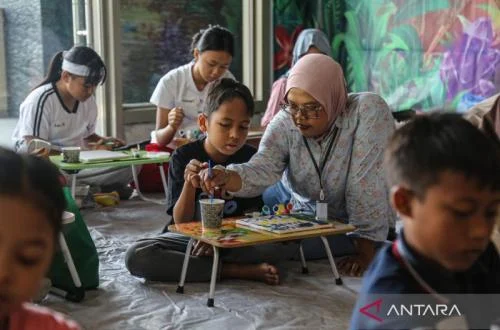
Amidst these vibrant cultural celebrations, a crucial call for social responsibility resonated across the nation, focusing on the protection and empowerment of Indonesia’s youngest citizens. As the country approached National Children’s Day (HAN), observed annually on July 23, the Minister of Women’s Empowerment and Child Protection (PPPA), Arifah Fauzi, issued an urgent appeal for intensified collaboration among all elements of society. Her message underscored the paramount importance of fulfilling the rights and ensuring the comprehensive protection of every child in Indonesia.
National Children’s Day is not merely a ceremonial observance; it serves as a critical national moment to reflect on the welfare of children, assess progress in child protection, and reaffirm commitments to their holistic development. The lead-up to HAN 2026, therefore, was marked by heightened advocacy and public awareness campaigns aimed at galvanizing collective action. Minister Fauzi’s call for strengthened collaboration highlighted the multifaceted nature of child protection issues, which require a concerted effort from government agencies, families, communities, educational institutions, civil society organizations, and the private sector. The challenges faced by Indonesian children, ranging from child marriage and exploitation to violence and limited access to quality education and healthcare, necessitate a unified and integrated approach.
"As National Children’s Day approaches on July 23, let us make this momentum an opportunity to increasingly love, protect, and fulfill the rights of every child. Children are the future of the nation whom we must support so they can achieve their aspirations," Minister PPPA Arifah Fauzi passionately urged. Her words served as a powerful reminder of the nation’s collective responsibility towards its youth, emphasizing that investing in children’s well-being is synonymous with investing in the future stability and prosperity of Indonesia. The Minister’s statement implicitly acknowledged the various threats children face and called for proactive measures to create a safe, nurturing, and empowering environment for them.
The Ministry of Women’s Empowerment and Child Protection has been at the forefront of developing policies and programs aimed at safeguarding children’s rights, including the implementation of the Child Protection Law. However, the effectiveness of these measures largely depends on broad societal participation and a shift in cultural norms. For instance, issues like child marriage, while showing a gradual decline, remain a persistent challenge, often rooted in traditional practices and socioeconomic vulnerabilities. Similarly, the digital age presents new forms of online exploitation and cyberbullying, requiring innovative protective strategies and digital literacy programs for both children and parents.
The call for collaboration extends to various sectors:
- Families and Communities: Encouraging positive parenting, fostering child-friendly environments, and activating community-based child protection mechanisms.
- Education Sector: Ensuring safe school environments, integrating child protection education into curricula, and addressing issues like bullying and violence in schools.
- Healthcare Providers: Offering comprehensive health services, including mental health support, and identifying signs of abuse or neglect.
- Law Enforcement and Justice System: Ensuring prompt and effective legal responses to child abuse cases, providing child-friendly justice processes, and preventing re-victimization.
- Civil Society Organizations: Acting as advocates, providing direct services to vulnerable children, and monitoring the implementation of child protection policies.
- Private Sector: Implementing child-friendly business practices, preventing child labor, and supporting initiatives for children’s well-being.
The broader implication of Minister Fauzi’s appeal is a reinforcement of a rights-based approach to childhood, where children are not merely passive recipients of care but active rights-holders whose voices and needs must be heard and met. By emphasizing the fulfillment of rights – including the rights to education, health, identity, play, and protection from violence – the government aims to cultivate a generation of resilient, well-adjusted, and productive citizens. This proactive stance, leading up to National Children’s Day, signals a national commitment to creating a "Child-Friendly Indonesia" where every child has the opportunity to thrive and contribute to the nation’s progress.
Synthesis: A Nation in Motion
The events of Sunday, July 19, 2026, collectively portrayed a dynamic Indonesia – a nation deeply reverent of its diverse cultural and spiritual legacies, yet forward-looking in its commitment to social progress. From the communal prayers in Situbondo that strengthened spiritual bonds and national aspirations, to the joyful "Memet Ikan" in Klaten celebrating agrarian heritage, the vibrant "Begawi" in Bandarlampung fostering youth engagement, and the elegant kebaya parade in Palembang championing women’s empowerment, each event resonated with the distinct heartbeat of its region.
These cultural expressions are not mere spectacles; they are vital conduits for transmitting values, reinforcing identity, and fostering community cohesion in a rapidly modernizing world. Simultaneously, the impassioned call from the Minister of Women’s Empowerment and Child Protection for enhanced collaboration in safeguarding children’s rights served as a crucial reminder that cultural vibrancy must be underpinned by robust social protections. As Indonesia navigates the complexities of the 21st century, its ability to honor its past while diligently investing in its future, particularly through the well-being of its children, will define its path towards sustainable development and national prosperity. The convergence of tradition and advocacy on this particular Sunday highlighted a nation actively engaged in both celebrating its heritage and building a more secure and equitable future for all its citizens.
Content processed with the assistance of AI.
Source: Antara