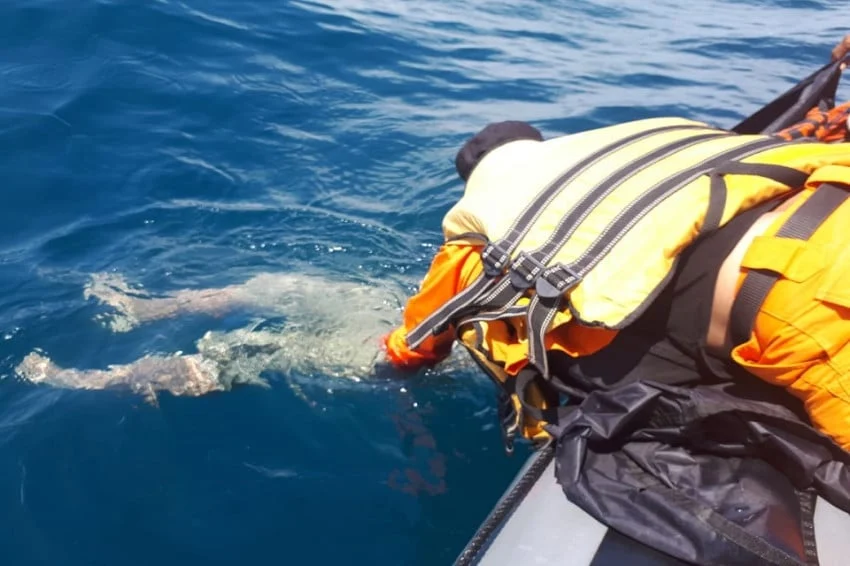
The management of human remains is a fundamental duty within Islamic jurisprudence, yet executing this obligation becomes uniquely challenging when death occurs far from solid ground. When a Muslim passes away in the middle of the ocean—aboard a commercial vessel, a cruise ship, a fishing boat, or a naval vessel—the Muslim community accompanying the deceased faces a complex set of religious, logistical, and legal responsibilities. While Islamic law establishes clear protocols for burial in the earth as a communal obligation (fardu kifayah), maritime realities often necessitate exceptional procedural adaptations. Understanding these guidelines requires examining foundational religious texts, historical precedents, and the practical consensus of Islamic scholars regarding burials at sea.
In standard circumstances, Islamic tradition dictates that the deceased should be buried directly in the earth. This practice honors the dignity of humanity, whom God has fashioned from the dust of the earth and to which their physical form must eventually return. The Quran explicitly establishes humanity’s connection to the terrestrial environment, noting in Surah Al-Mursalat, verses 25 to 26: "Did We not make the earth a receptacle for the living and the dead?" Furthermore, Islamic history traces the origins of earthly burial to the narrative of Cain and Abel in Surah Al-Maidah, verse 31, where a raven sent by God demonstrates how to conceal the body of the deceased, setting a permanent precedent for terrestrial interment.
However, maritime travel introduces variables that can render immediate terrestrial burial impossible. When a journey is expected to take many days or weeks, and the vessel is thousands of miles from the nearest coastline, the primary challenge becomes the preservation of human dignity in the face of rapid decomposition.
The Decision-Making Chronology and Protocols at Sea
When a death occurs aboard a watercraft, maritime and religious protocols dictate a structured timeline for decision-making. The overarching principle is that every possible effort must be made to transport the body back to land for a traditional burial.
The immediate hours following the passing involve confirming the death, notifying the ship’s captain, and assessing the vessel’s current geographical position relative to the nearest port or coastline. If the journey to land is brief enough that the deceased’s body will not undergo decomposition or severe alteration, the crew and accompanying passengers are obligated to delay the final rites and preserve the remains until landfall is achieved. Modern maritime vessels often feature cold storage facilities or designated morgue spaces, which significantly extend the window of time available to reach a port safely.
Conversely, if the vessel is in deep ocean waters, far from any landmass, and the estimated travel time to the nearest port exceeds the limits of safe preservation—risking the desecration or structural breakdown of the human remains—Islamic jurisprudence provides a crucial dispensation. Under such extenuating circumstances, the traditional terrestrial burial requirement is temporarily suspended in favor of a burial at sea.
Even when burial at sea becomes unavoidable, the essential rites of Islamic funeral preparation must still be fulfilled to the greatest extent possible. Religious scholars emphasize that the body must be washed (ghusl), shrouded in funeral cloths (kafan), and prayed over (salat al-janazah) before it is committed to the water.
Historical Precedents and Scholarly Consensus
The legitimacy of burials at sea within Islamic law is not a modern innovation born of contemporary shipping lanes; it is rooted in early Islamic jurisprudence and historical precedent. Prominent classical references, including accounts recorded by Imam al-Baihaqi in Sunan al-Kubra, shed light on how early companions of the Prophet Muhammad handled such situations. Notably, reports involving senior figures such as Abu Thalhah—who passed away while participating in a maritime expedition—demonstrate that the companions navigated these exact logistical dilemmas by prioritizing both the honor of the deceased and the practical limitations of sea travel.
Contemporary Islamic scholars consistently reinforce these historical rulings. Ustaz Kholid Syamhudi, in explanations regarding maritime death protocols, emphasizes that the primary objective of any burial method—whether in soil or at sea—is the protection of human honor. The process is fundamentally designed to conceal the body, shield it from scavengers or indignity, and prevent any state that would compromise human dignity.
When a burial at sea is deemed necessary, Islamic jurists generally outline specific methods to ensure the body sinks rather than floats, thereby respecting both maritime safety and the dignity of the deceased. Weights or heavy, non-harmful materials are traditionally secured to the shrouded body before it is gently lowered into the water, accompanied by specific supplications.
Broader Implications and Modern Logistics
The intersection of Islamic jurisprudence and modern maritime operations carries significant implications for global shipping companies, cruise lines, and naval forces. As international trade and global tourism continue to expand, hundreds of thousands of Muslim crew members and passengers traverse the world’s oceans daily.
Logistically, maritime operators are increasingly aware of the cultural and religious requirements of their passengers and workforce. When a death at sea occurs today, ship captains must coordinate not only with maritime authorities and embassies but also with religious representatives to ensure that Islamic rites are respected. This often involves diplomatic clearances for rapid port entry, coordination with local authorities for repatriation flights, or adherence to strict sanitary guidelines if an immediate burial at sea is mandated by extreme maritime isolation.
Ultimately, the framework governing Muslim deaths at sea reflects the overarching philosophy of Islamic law: that religious obligations are fundamentally bound by human capacity. While terrestrial burial remains the gold standard, the flexibility permitted by Islamic jurisprudence ensures that even in the vast, unforgiving expanse of the open ocean, the dignity, respect, and rights of the human soul are meticulously upheld.