Jakarta, VIVA – The current administration under President Prabowo Subianto is operating with a governance style that is excessively centered around a single figure, according to prominent political observer Agung Baskoro. Speaking on the tvOne program "Apa Kabar Indonesia Malam" on Tuesday, October 21, 2025, Baskoro articulated concerns that this "Superman management" approach is significantly hindering the effectiveness of key government officials, including Vice President Gibran Rakabuming Raka, various coordinating ministers, and other cabinet members. He argued that for the administration to effectively tackle the myriad of complex issues facing the nation, a fundamental shift from a "Prabowo-centric" model to a "super team" approach is imperative.
Baskoro elaborated on his observations, stating, "Indeed, my primary concern is the shift from ‘Superman management,’ which is heavily Prabowo-centric, to a genuine super team. How can the cabinet effectively address and respond to numerous problems if the burden of resolution consistently falls on one person?" His critique underscores a perceived lack of delegated authority and visible, substantive roles for other high-ranking officials. This dynamic, he warned, could render the Vice President, Coordinating Ministers, and other ministers largely ineffective, potentially leading to a decline in public trust and overall governance efficiency.
The ‘Superman’ Style: A Deeper Look into Centralized Governance
Agung Baskoro’s analysis delves into the operational dynamics within President Prabowo Subianto’s administration, pointing to a pattern where critical decisions and public problem-solving initiatives appear to be disproportionately handled by the President himself. This highly centralized mode of governance, often colloquially termed "Superman management," posits the President as the singular, indispensable figure for crisis resolution and policy direction. While such an approach might convey an image of strong leadership and decisive action, Baskoro contends that it inherently stifles the potential and actual contributions of a broader team.
In a modern, complex state like Indonesia, the array of challenges – from economic stability to social welfare, infrastructure development to international relations – demands a multi-faceted and coordinated response. A governance model that relies heavily on the personal intervention of the President for every significant issue risks creating bottlenecks, delaying crucial decisions, and overburdening the top executive. This can also lead to a perception that the President’s immediate subordinates lack the authority or capability to act autonomously, even within their defined portfolios. Baskoro emphasized that this style, if continued, could inadvertently undermine the very structure of the executive branch by diminishing the strategic importance of ministerial roles and the principle of collective responsibility.
The Vice President’s Role: Between Presence and Absence
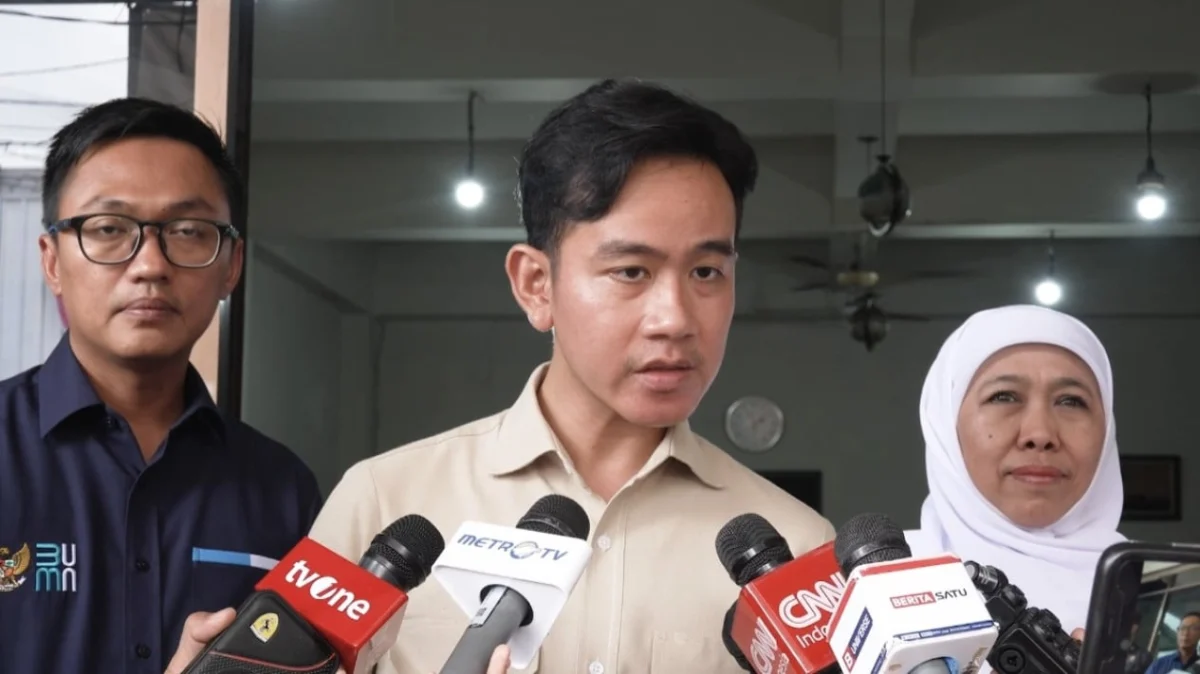
A particularly salient point in Baskoro’s critique concerns the perceived visibility and substantive engagement of Vice President Gibran Rakabuming Raka. Baskoro starkly described Gibran’s role as "between present and absent," suggesting a lack of a clear, prominent, and impactful public profile in addressing national issues. This observation raises questions about the practical delegation of responsibilities within the executive office and whether the Vice President is being fully empowered to utilize his mandate and capabilities.
Traditionally, the Vice President serves not merely as a symbolic figure but as a crucial partner to the President, taking on specific portfolios, leading inter-ministerial task forces, and acting as a primary liaison for various government initiatives. If the Vice President’s contributions are largely invisible or perceived as minimal, it can lead to public speculation about the coherence of the executive leadership and the overall effectiveness of the governance model. Baskoro’s assessment implies that without a more clearly defined and empowered role, the Vice President’s office may not be contributing to the nation’s governance to its full potential, a critical component of a robust "super team."
Cabinet Efficacy and Coordination: Beyond Symbolism
The concerns extend beyond the Vice President to the broader cabinet, specifically the Coordinating Ministers and other ministerial heads. Baskoro argued that their positions, while nominally powerful, appear to be more symbolic than substantively influential in shaping policy and addressing national problems. Coordinating Ministers are designed to harmonize policies across several related ministries, acting as crucial nodes for inter-agency collaboration and strategic planning. If their roles are diminished, it could lead to fragmented policy implementation, duplication of efforts, and an overall lack of cohesion in governmental action.
Indonesia’s governmental structure relies on these coordinating mechanisms to manage its vast bureaucracy and complex development agenda. A perception that these crucial roles are underutilized suggests potential inefficiencies in how policies are formulated, communicated, and executed. Baskoro’s call for a "super team" directly addresses this, advocating for a system where each minister, particularly Coordinating Ministers, is empowered with clear mandates, sufficient authority, and the necessary coordination mechanisms to drive their respective agendas forward without constant presidential oversight for every detail. This shift would foster greater accountability, innovation, and responsiveness across the entire governmental apparatus.
Background and Context: The Prabowo-Gibran Administration’s First Year
President Prabowo Subianto and Vice President Gibran Rakabuming Raka assumed office in October 2024, following a highly anticipated general election. Their victory was heralded by promises of continuity blended with innovation, aiming to build upon previous administrations’ successes while introducing new policy directions focused on accelerating economic growth, enhancing social welfare, and strengthening national security. The inauguration marked the beginning of a new political era, bringing together a seasoned political veteran and a dynamic young leader, a pairing that generated considerable public interest and diverse expectations.
Upon taking office, the administration quickly moved to form what was widely termed a "Unity Cabinet," drawing individuals from various political parties and professional backgrounds, signaling an intent to foster broad-based consensus. Early policy priorities included ambitious programs such as bolstering food security through large-scale agricultural initiatives, accelerating critical infrastructure projects across the archipelago, and expanding social safety nets to protect vulnerable populations. Initial public approval ratings for President Prabowo were robust, reflecting a period of post-election optimism. However, as the administration progressed into its first year, the implementation of these ambitious programs and the day-to-day governance challenges began to draw closer scrutiny, particularly concerning the efficiency of the executive structure.
Economic Headwinds and Policy Responses in 2025
The year 2025 presented the Prabowo-Gibran administration with significant economic challenges. Following a period of global economic uncertainty and domestic adjustments, Indonesia’s economic growth trajectory showed signs of deceleration. Data for the first three quarters of 2025 indicated a mild but persistent economic contraction, with GDP growth rates recorded at 4.5% in Q1, dipping to 4.2% in Q2, and further slowing to 4.0% in Q3. While these figures still represented growth, they fell short of the government’s ambitious targets and public expectations for accelerated prosperity. This trend suggested that underlying structural issues, coupled with global economic headwinds, continued to impact the national economy.
In response to these indicators, the government initiated two significant stimulus packages within the first year. These packages aimed to inject liquidity into the economy, support vulnerable sectors, and boost consumer spending. However, Baskoro’s critique implies that the effectiveness of these measures has been limited, evidenced by the continued economic contraction. He specifically highlighted concerns about the economic team’s focus and cohesion, warning against an over-reliance on what he termed the "Purbaya Effect." While not specifying an individual, this term can be interpreted as an over-dependence on a single economic strategy or advisor, rather than a collaborative, multi-pronged approach drawing from diverse expert insights within the cabinet. A lack of a unified and proactive economic "super team," Baskoro suggests, could exacerbate these challenges, making it harder for Indonesia to navigate the complex global economic landscape and achieve sustainable growth. The implication is that without a more agile and coordinated economic response, the nation risks prolonged periods of sluggish growth and unmet development goals.
Communication Challenges and Public Trust
Beyond structural and economic concerns, Agung Baskoro also pinpointed significant issues within the administration’s public communication strategy. He observed instances of what he termed "slip of tongue" and inconsistent messaging from various government officials, leading to public confusion and potentially eroding trust. Effective public communication is a cornerstone of good governance, ensuring that citizens are informed, policies are understood, and the government’s actions are transparent.
The administration currently utilizes several key institutions for public communication, including the Presidential Staff Office (KSP), the Agency for Public Information and Communication (Bakom), and the Presidential Communication Bureau (BKP). While these bodies are designed to streamline and coordinate official statements, Baskoro’s critique suggests that their efforts are not yet fully effective. He advocated for the urgent implementation of clearer communication guidelines and protocols to ensure that all government officials speak with a unified voice. In an age of rapid information dissemination, inconsistent or contradictory statements from different ministries or officials can quickly become problematic, fueling public skepticism and providing fodder for misinformation. This not only affects domestic perception but also has implications for how Indonesia is viewed by international stakeholders, including foreign investors and diplomatic partners. A coherent communication strategy is vital for maintaining confidence, both at home and abroad, and for effectively managing public expectations regarding policy outcomes and governmental performance.
Official Responses and Counter-Arguments (Inferred)
While Agung Baskoro’s critique has resonated in political circles, official responses from the Presidential Palace and other government bodies have consistently sought to project an image of unity and collaborative governance. Sources close to the administration, speaking off the record, have emphasized that President Prabowo’s hands-on approach should not be misconstrued as a lack of delegation but rather as a testament to his deep commitment and personal oversight of key national priorities. They argue that the President’s engagement is often necessary to break bureaucratic impasses and accelerate critical projects, especially during the initial phases of the administration.
The Vice President’s office, through official channels, has highlighted Gibran Rakabuming Raka’s active involvement in specific, often less publicly visible, portfolios. These include chairing inter-ministerial meetings on youth empowerment, digital transformation initiatives, and fostering partnerships with local governments for regional development. Spokespersons from the Vice President’s team have underscored that Gibran is focused on substantive work and strategic coordination, often operating behind the scenes to ensure policy alignment and effective implementation. They maintain that his contributions are integral to the administration’s success, even if they do not always involve high-profile public appearances.
Similarly, Coordinating Ministers and other cabinet members have publicly affirmed their commitment to a team-based approach. They frequently emphasize the robust internal coordination mechanisms, regular cabinet meetings, and working groups that are in place to ensure a synchronized governmental response to national challenges. Statements from various ministries often highlight cross-ministerial collaborations on projects ranging from economic recovery to environmental protection, portraying an administration that values teamwork and shared responsibility. These official narratives aim to counter the perception of a centralized, "Superman" style of leadership, asserting instead that the Prabowo-Gibran administration operates as a cohesive unit, with each member playing a vital, active role in national development.
Broader Implications for Governance and Democracy
The issues raised by Agung Baskoro carry significant implications for the future of governance and democratic institutions in Indonesia. A highly centralized leadership model, if allowed to persist, can lead to several adverse outcomes. Firstly, it risks creating policy bottlenecks, where decisions are delayed awaiting presidential approval, thus slowing down crucial government functions and service delivery. This can particularly affect the agility required to respond to rapidly evolving domestic and international crises.
Secondly, such a model can stifle ministerial accountability and development. If ministers perceive their roles as largely symbolic or constantly subject to direct presidential intervention, their initiative, innovation, and sense of ownership over their portfolios may diminish. This could hinder the growth of future leadership within the bureaucracy and weaken the institutional capacity of government departments.
Thirdly, the erosion of public confidence, stemming from inconsistent communication and a perception of a single-point failure in governance, can have long-term detrimental effects on the democratic process. Trust is a fundamental currency in politics, and its decline can lead to disengagement, cynicism, and reduced civic participation.
Lastly, for international investors and partners, a government perceived as lacking internal coordination or reliant on a single figure for all decisions might appear less stable or predictable. This could impact foreign direct investment, international aid, and diplomatic relations, all of which are crucial for Indonesia’s continued development and global standing. The health of Indonesia’s democratic institutions relies on a system of checks and balances, effective delegation, and empowered executive branches that function cohesively, not singularly.
Moving Forward: The Call for a ‘Super Team’ Paradigm
Agung Baskoro’s compelling analysis ultimately serves as a clarion call for a fundamental reorientation of the Prabowo-Gibran administration’s operational philosophy. He insists that merely acknowledging the need for teamwork is insufficient; a tangible, systematic shift towards a "super team" paradigm is essential for long-term success and stability. This paradigm shift, as envisioned by Baskoro, would entail more than just rhetorical commitment to collaboration.
In practice, a "super team" model would manifest through enhanced delegation of authority, ensuring that the Vice President and cabinet ministers are not only given clear mandates but also the autonomy and resources to execute them effectively. This would mean fewer instances of presidential micro-management and more instances of ministers taking decisive action within their spheres of responsibility, with the President providing strategic oversight rather than day-to-day operational control. Furthermore, it would necessitate robust inter-ministerial coordination mechanisms that go beyond formal meetings, fostering genuine collaboration and shared problem-solving among departments. This includes joint task forces, shared data platforms, and integrated policy development processes to address complex issues that cut across multiple sectors, such as economic recovery, climate change, and digital transformation.
The imperative for the administration to adapt to these complex challenges through collective leadership is undeniable. The intricate nature of contemporary governance demands a distributed intelligence and a collective effort, where the strengths of individual leaders are harnessed within a cohesive framework. By embracing a "super team" approach, the administration could not only alleviate the burden on the President but also empower its diverse and talented cabinet to contribute more effectively, thereby enhancing policy efficacy, bolstering public trust, and strengthening Indonesia’s position on the global stage.
Conclusion
The observations from political analyst Agung Baskoro provide a critical lens through which to examine the initial year of President Prabowo Subianto’s administration. His concerns about a "Prabowo-centric" or "Superman management" style, the perceived underutilization of Vice President Gibran Rakabuming Raka, and the symbolic roles of cabinet ministers highlight fundamental challenges in governance and executive coordination. Coupled with persistent economic headwinds and identified weaknesses in public communication, these issues underscore an urgent need for strategic adjustment.
The call for a transition from a centralized leadership model to a truly collaborative "super team" is not merely an academic suggestion but a pragmatic necessity. Such a shift would empower key government officials, foster greater accountability, improve policy implementation, and ultimately enhance public and international confidence in Indonesia’s governance. For the Prabowo-Gibran administration to effectively navigate the complex domestic and global landscapes, ensuring long-term success and stability, it must embrace a more distributed, coordinated, and inclusive leadership paradigm where every component of the executive branch is maximized to its full potential. The coming months will be crucial in determining whether the administration can successfully evolve its operational approach to meet these critical demands.