The political landscape of the Balkans shifted dramatically this week as the opposition movement known as "Student List" achieved a decisive victory in the Serbian general elections, effectively ending the long-standing tenure of the "United Serbia" coalition. This seismic transition of power has sent ripples through the international community, particularly in Moscow, where the Kremlin has expressed a cautious yet optimistic outlook regarding the future of bilateral relations between Serbia and the Russian Federation.
As the dust settles in Belgrade, the outgoing administration, led by Aleksandar Vucic, has formally conceded defeat. The transition marks a pivotal moment for a nation that has historically navigated a complex geopolitical tightrope, balancing aspirations for European Union integration with deep-seated historical, cultural, and energy-dependent ties to Moscow.
A Chronology of the Electoral Shift
The electoral victory for the "Student List"—a coalition primarily composed of youth activists, grassroots organizers, and reform-minded intellectuals—did not occur in a vacuum. For months, Serbia had been gripped by widespread civil discontent, fueled by economic stagnation, allegations of systemic corruption, and debates over the country’s foreign policy orientation.
The timeline leading to this outcome can be traced back to early 2024, when public demonstrations regarding the cost-of-living crisis began to coalesce into a more structured political movement. By mid-year, the "Student List" had emerged as a viable alternative, leveraging digital mobilization and a platform centered on transparency and democratic renewal.
On the day of the vote, international observers noted a record-breaking turnout, particularly among the urban youth demographic. By Sunday night, preliminary results confirmed that the "United Serbia" coalition, which had dominated the parliament for over a decade, failed to secure the necessary threshold to form a majority government. By Monday morning, the final tally confirmed a clear mandate for the opposition, prompting Vucic to issue a statement acknowledging the will of the electorate.
The Kremlin’s Stance: A Strategic Calibration
In Moscow, the official response to the change in government has been characterized by a blend of pragmatism and diplomatic signaling. Kremlin spokesperson Dmitry Peskov, speaking during a press briefing, addressed the transition with a focus on continuity and mutual interest.
"We hope that the actions of the new administration will also be directed toward the constructive development of our ties," Peskov stated. He emphasized that the Russian government views the relationship with Serbia as a strategic partnership that transcends individual political cycles. However, the Kremlin also issued a subtle caveat, noting that "it takes two to tango," a metaphor signaling that the future of the relationship depends as much on the policies of the incoming Belgrade government as it does on Moscow’s willingness to cooperate.
This response is interpreted by political analysts as an attempt to hedge bets. While Moscow remains wary of potential shifts in Serbia’s foreign policy—especially if the new government pivots more aggressively toward Brussels—it is eager to maintain influence in the region, particularly regarding energy supplies and security cooperation.
Historical Context and Bilateral Dependencies
To understand the significance of this development, one must consider the historical depth of Serbia-Russia relations. Serbia has long been one of Moscow’s most reliable allies in Europe, often serving as a gateway for Russian diplomatic and economic interests in the Balkans.
- Energy Security: Serbia remains heavily dependent on Russian natural gas. Pipeline infrastructure, such as the Balkan Stream, has ensured that Serbia receives competitive pricing, making energy a central pillar of their bilateral relationship.
- Diplomatic Alignment: On the international stage, particularly at the United Nations, Serbia has frequently aligned with Russia, especially concerning the status of Kosovo, which Belgrade refuses to recognize as an independent state.
- Defense Cooperation: The two nations have historically engaged in significant military-technical cooperation, including the procurement of air defense systems and joint training exercises.
The "Student List" now faces the daunting task of managing these dependencies. While the movement campaigned on a platform of reform and European alignment, the structural reality of the Serbian economy makes an abrupt severance of ties with Moscow highly unlikely, and perhaps economically disastrous.
Implications for European Integration
The victory of the "Student List" is being closely watched in Brussels. For years, the European Union has pressured Serbia to align its foreign policy more closely with the bloc, specifically regarding sanctions against Russia. The emergence of a new government, untethered from the specific political baggage of the previous administration, could signal a new phase in EU-Serbia negotiations.
However, political scientists warn against assuming that a change in government equates to an automatic shift in geopolitical orientation. The Serbian electorate remains deeply divided. While a significant portion of the population desires integration with the European Union, there remains a vocal constituency that views Russia as a vital protector of Serbian national interests. The new administration will need to navigate these domestic pressures carefully, lest they trigger a backlash that could destabilize their fledgling government.
Analytical Outlook: The Path Ahead
The political implications of this electoral result are profound. For the "Student List," the primary challenge will be institutionalizing their movement into a functional governing body. The transition from a protest-based movement to a governing coalition is historically fraught with internal friction.
Furthermore, the new administration must manage the expectations of the international community. If the government leans too far toward the West, it risks losing critical energy subsidies from Russia. If it remains too close to Moscow, it risks stalling the very European integration process that many of its supporters voted for.
From a macroeconomic perspective, international investors are waiting to see how the new government approaches fiscal policy. The previous administration was criticized for high levels of public debt and a lack of transparency in public procurement. If the new government can implement rigorous anti-corruption measures and stabilize the fiscal outlook, they may unlock new levels of foreign direct investment from both the West and the East.
Official Responses and Public Sentiment
Reactions to the transition have been varied across the continent. EU representatives have welcomed the democratic nature of the vote, praising the high voter turnout as a sign of a maturing democracy in the Balkans. Conversely, some nationalist factions within the region have expressed concern, viewing the decline of the "United Serbia" coalition as a weakening of the traditional power structures that have kept the region stable for the last decade.
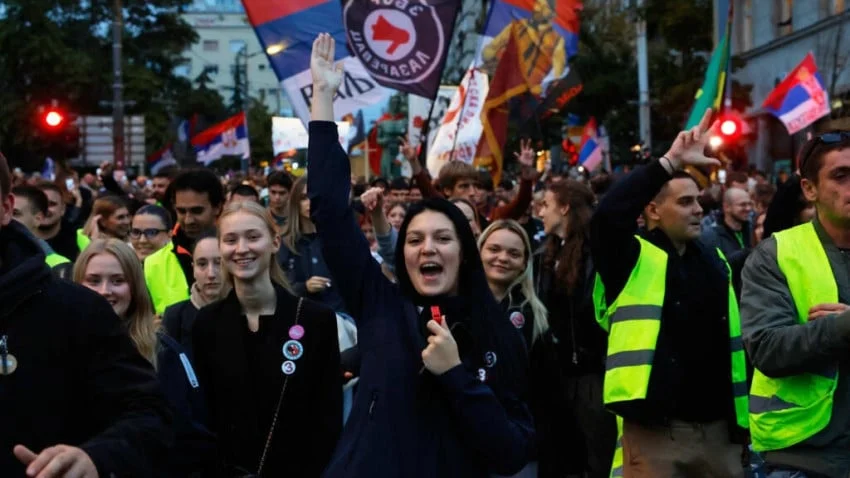
Inside Serbia, the mood is one of cautious anticipation. On the streets of Belgrade, citizens have expressed a wide range of emotions, from jubilation at the prospect of political change to anxiety over the uncertainty of the economic future. The role of the media in the coming weeks will be critical; the new government has promised greater press freedom, a departure from the restricted media environment that characterized the final years of the previous administration.
Concluding Remarks
The victory of the "Student List" represents a fundamental realignment of the Serbian political sphere. As the dust begins to settle, the global community remains focused on how the incoming administration will balance its domestic promises of reform with the geopolitical realities of its position in the Balkans.
The statement from the Kremlin serves as a reminder that regardless of internal political shifts, the strategic gravity of the region remains tied to the complex interplay between great powers. Whether this new government can navigate these currents, satisfy its electorate, and maintain national stability will be the defining narrative of the coming year. As Belgrade prepares for the inauguration of its new leadership, the eyes of the world remain fixed on the nation that has proven, once again, that the political map of Europe is far from static.
The transition is not merely a change in personnel, but a potential turning point in the European project, testing the ability of democratic processes to resolve long-standing national tensions. For now, the global political order observes with interest, waiting to see if the "Student List" can translate their electoral success into a sustainable and prosperous future for Serbia.