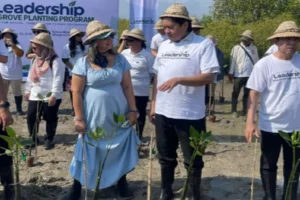
The Chairman of the Regional Leadership Council (DPD) of the Perindo Party for Badung Regency, Tri Tonce Yusak Wibowo, officially launched the Gerakan Bersama Rakyat (GEBRAK), a strategic initiative designed to transform the economic landscape of Bali by empowering the younger generation to transition from job seekers to job creators. Speaking at an event in Badung on Thursday, July 23, 2026, Yusak emphasized that while Bali currently boasts the lowest unemployment rate in Indonesia, the region faces a critical need to diversify its economic foundation through grassroots entrepreneurship. The GEBRAK movement aims to provide the necessary mentorship, resources, and psychological shift required to ensure that the local population does not merely serve as a labor force for external investors but becomes the primary driver of the island’s economic future.
The launch of GEBRAK comes at a pivotal moment for Bali’s economy, which has shown remarkable resilience in the years following global disruptions. According to the latest data from the Central Bureau of Statistics (BPS), Bali’s open unemployment rate was recorded at a mere 1.59 percent as of February 2026. This figure is significantly lower than the national average and represents a benchmark for provincial success in labor absorption. However, Yusak pointed out that these statistics often mask a deeper structural vulnerability: a high dependency on the hospitality and service sectors where the majority of the workforce remains in subordinate positions. The Perindo Party’s new initiative seeks to address this by fostering a culture of "being a boss in one’s own land," a sentiment that resonates with the growing desire for local economic sovereignty.
The Vision Behind the GEBRAK Movement
The GEBRAK initiative, which translates to the "Joint Movement with the People," is structured as a multi-faceted platform for community empowerment. During his keynote address, Yusak highlighted that the primary obstacle to entrepreneurship in Bali is not a lack of opportunity, but a traditional mindset that prioritizes stable employment in established hotels or government offices over the perceived risks of starting a business. He argued that the sectors currently dominating Bali—tourism, trade, services, the creative economy, and digital technology—offer fertile ground for local startups if the youth are given the right tools.
"I want the young people of Bali to have the courage to become bosses in their own country, not just workers," Yusak stated. "Bali needs more entrepreneurs who are capable of creating job opportunities for the community. We have the talent, we have the global exposure, and we have the market. What we need now is a collective movement to turn that potential into ownership."
The GEBRAK program is expected to roll out in stages, starting with Badung Regency—the heart of Bali’s tourism industry—before expanding to other districts. The movement will focus on three core pillars: education and mindset shifting, access to micro-financing, and market networking. By leveraging the Perindo Party’s organizational structure, the initiative aims to bridge the gap between aspiring entrepreneurs and the regulatory or financial resources they often find difficult to navigate.
Analyzing Bali’s Labor Market and Economic Landscape
To understand the necessity of the GEBRAK movement, one must look at the specificities of Bali’s economic recovery. The 1.59 percent unemployment rate reported by BPS in early 2026 is the result of a concerted effort by the provincial government and the private sector to revitalize tourism. Since 2024, visitor arrivals have surpassed pre-pandemic levels, leading to a surge in demand for labor in the hotel, restaurant, and transportation sectors.
However, economic analysts suggest that a low unemployment rate can sometimes lead to stagnation if it is not accompanied by innovation. Much of the current employment is concentrated in low-to-mid-level service roles. The "entrepreneurship ratio" in Bali, while higher than in some other Indonesian provinces, still lags behind other international tourism hubs like Singapore or parts of Thailand. By encouraging youth to enter the "Orange Economy" (creative industries) and the digital sector, GEBRAK seeks to insulate the local economy from the volatility of traditional mass tourism.
Data suggests that the creative economy in Bali—comprising fashion, crafts, digital content creation, and culinary arts—contributes approximately 20% to the regional GDP. Yet, a significant portion of the high-value businesses in these sectors are owned by expatriates or large conglomerates based in Jakarta. The Perindo Party’s intervention through GEBRAK is specifically designed to increase the share of "local ownership" in these high-growth areas.
Chronology of the Initiative and Political Context
The conceptualization of GEBRAK began in late 2025, following a series of town hall meetings conducted by the DPD Perindo Badung. During these sessions, local youth expressed concerns regarding the rising cost of living in Bali and the difficulty of breaking into the entrepreneurial scene due to high land prices and complex licensing processes.
In March 2026, the Perindo Party initiated a pilot project in several villages in Badung, providing "Business Incubation Workshops" for small-scale entrepreneurs. The success of these workshops, which saw a 30% increase in the revenue of participating micro-businesses, provided the momentum for the formal launch of the GEBRAK movement in July.
Politically, this move positions the Perindo Party as a champion of MSMEs (Micro, Small, and Medium Enterprises) in Bali. This is consistent with the party’s national platform, which emphasizes the empowerment of the "Ekonomi Kerakyatan" (People’s Economy). By focusing on Badung, a regency that contributes the largest share of Bali’s Original Regional Revenue (PAD), Perindo is targeting the most influential economic demographic in the province.
Integrating Cultural Preservation with Modern Entrepreneurship
A unique aspect of the GEBRAK movement is its commitment to maintaining the "Taksu" (spiritual essence and energy) of Bali. Yusak emphasized that entrepreneurship should not come at the expense of Balinese culture. On the contrary, the movement encourages businesses that are rooted in local wisdom. This approach was recently mirrored in the party’s support for the Baligia ceremony in Karangasem, where Perindo officials participated in preserving traditional customs.
"Modernity and tradition must walk hand in hand," Yusak explained. "When we talk about the creative economy or digital technology, we are talking about tools. The content, the soul of the business, should remain Balinese. Whether it is an agrotech startup helping farmers in Tabanan or a digital marketing agency in Canggu, the values of Tri Hita Karana (harmony between God, people, and nature) must be the foundation."
This cultural integration is seen as a strategic move to ensure that economic growth is sustainable and socially acceptable to the local community, preventing the "over-commercialization" that has sparked protests in other global tourist destinations.
Reactions and Future Implications
The launch of GEBRAK has garnered positive reactions from various stakeholders. Local youth organizations (Sekaa Teruna Teruni) have welcomed the initiative, noting that access to mentorship is often more valuable than direct financial aid. Wayan Sudarma, a young entrepreneur from Kuta, noted that "the biggest challenge for us is the ‘fear of failure’ and the lack of a network. If GEBRAK can provide a community where we can learn from those who have succeeded, it will be a game-changer."
Economic observers believe that if GEBRAK succeeds in increasing the number of local entrepreneurs, Bali could see a significant rise in its per capita income. Currently, while unemployment is low, the average wage in the tourism sector remains relatively stagnant. Entrepreneurship offers a path toward higher wealth accumulation and economic independence for Balinese families.
Furthermore, the focus on digital technology within the GEBRAK framework aligns with the national "Digital Indonesia" roadmap. As Bali continues to attract "digital nomads" from around the world, the GEBRAK movement aims to ensure that local youth are not just providing services to these nomads but are competing with them on a global scale.
Conclusion: A Strategic Shift for Bali’s Future
The launch of the Gerakan Bersama Rakyat (GEBRAK) by Tri Tonce Yusak Wibowo and the Perindo Party marks a significant shift in the regional discourse on labor and economics. By looking beyond the successful unemployment statistics of 1.59 percent, the initiative identifies the next great challenge for the island: the democratization of ownership and the cultivation of an entrepreneurial spirit.
As Bali moves further into 2026, the success of GEBRAK will likely be measured by the number of new registered MSMEs and the diversification of the local economy away from a sole reliance on hospitality. With a clear focus on youth, culture, and innovation, the movement seeks to ensure that the "Island of the Gods" remains a land of opportunity for its own people, fostering a generation of leaders who are ready to take charge of their economic destiny. The Perindo Party’s proactive stance in Badung serves as a potential blueprint for other regions in Indonesia grappling with the transition from traditional labor markets to a modern, entrepreneur-driven economy.