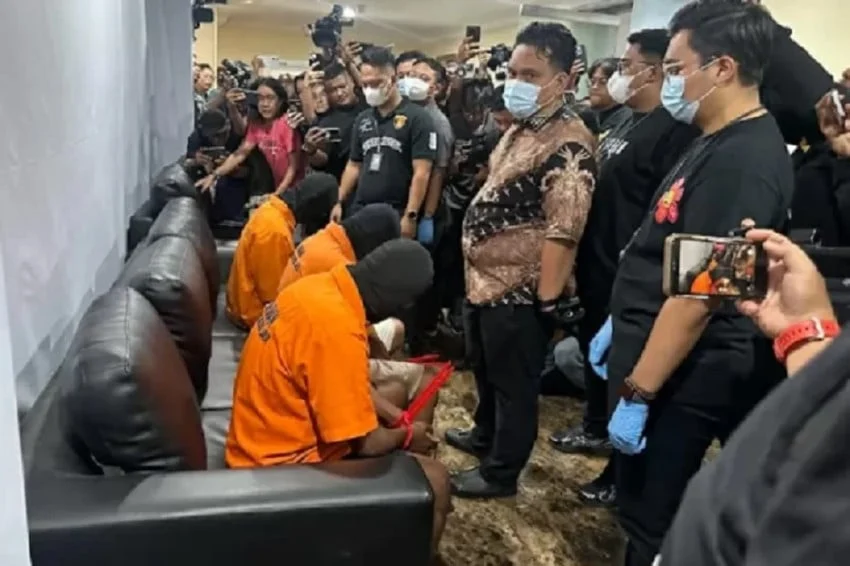
The Directorate of General Criminal Investigation (Ditreskrimum) of the Jakarta Metro Police has successfully identified, tracked down, and apprehended three primary suspects allegedly involved in the brutal assault and homicide of Bambang Setiawan. The fatal incident occurred during the violent civil unrest that erupted on August 27, 2026, in the Pejompongan district of Central Jakarta. The breakthrough in the high-profile case has drawn widespread commendation from legal experts, law enforcement oversight bodies, and security analysts, who have lauded the investigative team for their swift execution of duties and adherence to modern forensic methodologies.
The successful apprehension of the trio in the Babakan Madang area of Bogor, West Java, marks a critical turning point in an investigation that police officials initially described as obscured by the chaos of large-scale civil disturbances. The relentless pursuit of justice by the Jakarta Metro Police has not only brought a measure of closure to the victim’s grieving family but has also underscored the growing efficacy of advanced investigative techniques within the Indonesian National Police (Polri). As the legal process moves forward, the case serves as a focal point for discussions surrounding public safety during mass demonstrations, the application of forensic science in criminal justice, and the ongoing maintenance of public order in metropolitan centers.
Swift Action and Professionalism Praised by Oversight Authorities
Speaking on the rapid development of the case, Edi Saputra Hasibuan, a prominent Police Advisory Expert and former member of the National Police Commission (Kompolnas) spanning the 2012–2016 period, formally expressed his strong appreciation for the tenacity and dedication demonstrated by the Ditreskrimum personnel.
"We deeply appreciate the speed with which the Jakarta Metro Police uncovered and captured the perpetrators responsible for the fatal beating of Bambang Setiawan in Pejompongan," Hasibuan stated on Sunday, September 13, 2026.
Hasibuan, who also serves as a postgraduate lecturer in criminal law, emphasized that the successful resolution of the case within a timeframe of less than two weeks highlights the high level of professionalism and responsiveness embedded within the capital’s police force. According to Hasibuan, the operation exemplifies a modern shift in law enforcement tactics, relying heavily on methodical data collection rather than immediate circumstantial leads.
"The perpetrators were successfully apprehended in less than two weeks. The police’s success in solving this case stems from their prioritization of scientific crime investigation methods," Hasibuan added. He further noted that the investigation initially faced severe hurdles due to the volatile nature of the crime scene and the absence of clear initial identifiers for the suspects.
To overcome these obstacles, investigators utilized public appeals, releasing composite sketches of the suspects based on witness testimonies and digital forensics. This strategic dissemination of information proved vital, ultimately leading to actionable intelligence that pinpointed the suspects’ hideout in Bogor.
Chronology of Events: The August 27 Pejompongan Unrest
The tragic events that claimed the life of Bambang Setiawan unfolded against the backdrop of widespread demonstrations and civil unrest that swept through parts of Jakarta on August 27, 2026. Pejompongan, a densely populated and strategically significant neighborhood in Central Jakarta known for its proximity to vital infrastructure and government installations, became a flashpoint for clashes between security forces and various groups of demonstrators.
As the situation escalated into violent riots, public infrastructure was damaged, traffic was severely disrupted, and civilian movement through the area became perilous. Amidst the chaos, Bambang Setiawan found himself caught in the vicinity of the disturbances. According to preliminary findings released by law enforcement agencies, Setiawan was targeted by individuals who reportedly harbored generalized frustration and aggression while navigating the chaotic environment.
Investigators have clarified that the three detained suspects were not part of any structured or formally organized faction of protesters. Instead, initial interrogations and evidence gathered at the scene indicate that the suspects were opportunistic actors who engaged in acts of collective violence out of sudden anger and frustration as they traversed the riot-torn location. The physical assault inflicted upon Setiawan resulted in severe internal and external trauma, ultimately proving fatal before he could receive emergency medical intervention.
In the immediate aftermath of the homicide, the crime scene offered few immediate clues. The sheer volume of people moving through Pejompongan during the riots, combined with the low visibility and high-stress environment, initially left detectives with a complex puzzle. However, the Jakarta Metro Police’s Ditreskrimum established a dedicated task force to systematically review available video footage, cross-reference traffic and security camera data, and interview dozens of eyewitnesses. This painstaking reconstruction of the timeline allowed authorities to isolate the moments leading up to, during, and after the fatal assault, paving the way for the creation of accurate suspect profiles.
The Role of Scientific Crime Investigation
The pivotal factor in cracking the Pejompongan homicide case was the rigorous deployment of scientific crime investigation (SCI) protocols. In recent years, the Indonesian National Police has aggressively pushed for the integration of forensic science, digital profiling, and data analytics into everyday criminal investigations to reduce reliance solely on confession-based evidence and to enhance transparency and accountability.
In the case of the Bambang Setiawan homicide, forensic investigators utilized high-definition video enhancement technologies to scrutinize amateur video footage and closed-circuit television (CCTV) recordings captured during the riots. By analyzing the biomechanics, clothing, and facial features captured in the digital media, forensic experts were able to construct detailed composite images of the primary assailants.
Furthermore, digital footprint tracking, including mobile phone cell-site analysis and social media intelligence, allowed law enforcement to trace the movement patterns of the suspects as they fled the capital toward the outskirts in Bogor Regency. The convergence of digital forensics and traditional field intelligence ultimately enabled tactical units to execute a precise, bloodless raid in Babakan Madang, securing the three suspects without incident.
Legal Implications and Motives of the Suspects
With the three suspects now in custody at the Jakarta Metro Police headquarters, legal proceedings are advancing rapidly. The individuals face severe criminal charges under the Indonesian Criminal Code (KUHP), specifically relating to collective assault resulting in death (pengeroyokan yang menyebabkan kematian). Under national law, individuals convicted of participating in fatal mob violence can face lengthy prison sentences, depending on their specific degree of culpability during the attack.
Legal analysts and criminology experts have highlighted several critical aspects of the suspects’ motives as revealed by the preliminary police disclosures. The finding that the suspects were independent actors rather than members of an organized militant group or coordinated political faction sheds light on the dangerous psychological phenomenon of mob mentality during civil unrest.
Criminologists note that during high-stress situations such as riots, individuals with latent aggression or emotional volatility are often emboldened by the anonymity of a crowd. The breakdown of social norms and the perception of a lack of immediate legal consequences can trigger impulsive, highly destructive behavior directed indiscriminately at bystanders or perceived symbols of opposition. In the case of Setiawan, his tragic death appears to be the result of being in the wrong place at the wrong time, encountering individuals whose situational frustration manifested as lethal violence.
Broader Social and Security Implications
The violent unrest of August 27, 2026, and the subsequent homicide of Bambang Setiawan have reignited national debates regarding the management of public demonstrations, urban security, and the protection of innocent bystanders during periods of civil unrest. While the constitutional right to peaceful assembly and free expression remains a cornerstone of Indonesia’s democratic landscape, the escalation of protests into rioting poses profound challenges for both civil society and law enforcement agencies.
Civil rights advocates and security analysts have emphasized the necessity for improved crowd-control strategies that can swiftly isolate criminal elements—such as opportunistic violent offenders—from legitimate protesters exercising their right to demonstrate. When riots erupt, innocent citizens commuting or residing near protest zones frequently bear the brunt of the violence, underscoring the urgent need for robust early-warning systems and rapid-response security corridors in major urban centers.
Moreover, the successful resolution of this case by the Jakarta Metro Police sends a strong deterrent message to the public. It reinforces the principle that acts of violence committed under the cover of mass civil unrest will not go unpunished, regardless of the investigative difficulties presented by chaotic environments. The application of transparent, science-backed police work also serves to bolster public trust in the legal system, reassuring citizens that state apparatuses remain fully functional and committed to upholding the rule of law even under adverse conditions.
Conclusion and Next Steps for the Judicial Process
As the investigation enters its final phases, the Ditreskrimum of the Jakarta Metro Police is preparing to hand over the case dossier to the public prosecutor’s office for judicial review. The three suspects remain in detention, undergoing further questioning to determine if any additional individuals played peripheral roles in the assault or assisted the suspects in evading capture following the incident.
The family of the late Bambang Setiawan, supported by community advocates, continues to seek full justice through the courts. Meanwhile, the commendations from figures like Edi Saputra Hasibuan reflect a broader institutional acknowledgment of the police force’s dedication to professional excellence.
Ultimately, while the tragedy in Pejompongan cannot be undone, the swift identification and apprehension of the alleged perpetrators represent a crucial step toward accountability, healing, and the reinforcement of public safety standards across Indonesia’s metropolitan areas.