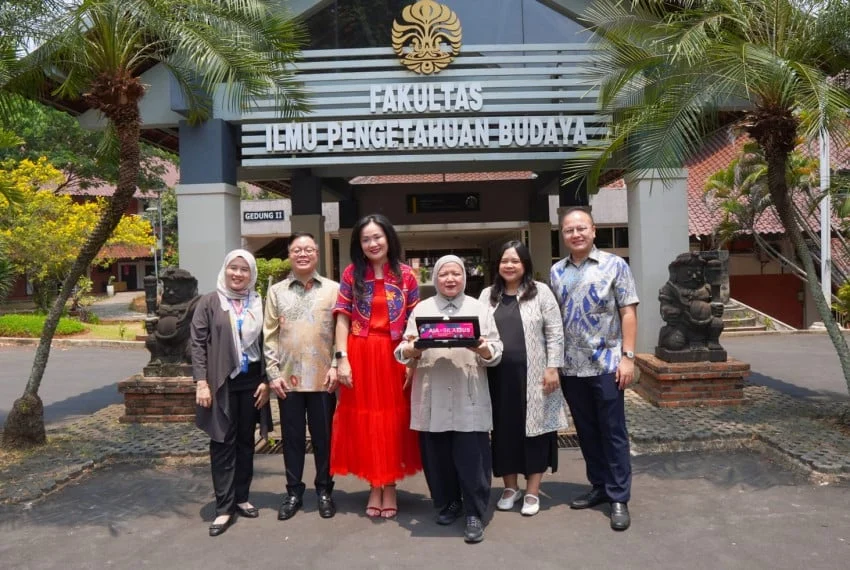
PT AIA Financial (AIA), one of the leading life insurance institutions in Indonesia, has officially brought its pioneering mobile education initiative, the AIA Syllabus bus, to the campus of the prestigious University of Indonesia (UI). This strategic initiative is specifically designed to bolster financial literacy among the younger demographic, targeting students and young scholars who stand at the precipice of entering the professional workforce. By integrating interactive learning environments with expert-led financial workshops, the campaign seeks to address the persistent gap in financial knowledge that often plagues young adults as they navigate an increasingly complex economic landscape.
The deployment of the AIA Syllabus bus at the University of Indonesia is not an isolated event, but rather a vital component of a broader, sustained corporate strategy aimed at fostering fiscal responsibility among Indonesian youth. The interactive mobile unit serves as a dynamic classroom on wheels, equipped with modern multimedia tools, digital simulators, and educational exhibits that demystify economic concepts. Through this engaging platform, students are introduced to the foundational pillars of personal finance, which include effective budgeting, disciplined saving habits, the identification and mitigation of financial risks, and the critical importance of early financial planning and asset protection.
Contextual Background and National Relevance
The urgency for heightened financial literacy in Indonesia has never been more pronounced. According to various national surveys conducted by the Financial Services Authority (Otoritas Jasa Keuangan or OJK), while the national financial literacy index has shown gradual improvement over recent years, a significant disparity remains between urban and rural populations, as well as across different age brackets. Gen Z and Millennial demographics, despite being digitally native and possessing high access to financial technology products such as paylater services, online investments, and digital banking, often lack the foundational risk-management skills required to make sound, long-term economic decisions.
Recognizing this vulnerability, PT AIA Financial has positioned its educational outreach to directly support the GENCARKAN program—an acronym for Gerakan Nasional Cerdas Keuangan—which was officially initiated and heavily promoted by the OJK. The GENCARKAN movement aims to synergize national stakeholders from the government, financial institutions, and educational sectors to elevate financial inclusion and literacy collectively across the archipelago. By aligning the AIA Syllabus initiative with national regulatory objectives, the company reinforces its commitment to societal development and economic resilience.
Insights from Corporate Leadership
During the launch event at the University of Indonesia, Wong Chung Chiat, the Director of Operations at PT AIA Financial, elaborated on the core philosophy driving the initiative. He emphasized that cultivating a robust financial mindset must begin during the formative academic years, long before individuals face major life milestones such as purchasing a home, starting a family, or managing a career.
As part of our continuous corporate commitment to support the GENCARKAN program initiated by the Financial Services Authority, through the AIA Syllabus initiative we aim to empower the younger generation to realize that effective financial planning originates from fundamental, manageable steps, stated Wong Chung Chiat in his official statement released on Thursday, September 17, 2026. He further stressed that these steps include meticulous expenditure tracking, the establishment of consistent saving routines, and proactive preparation to safeguard against unforeseen life contingencies.
Wong underscored that in an era characterized by an overwhelming proliferation of financial products, digital lending platforms, and sophisticated investment options, financial literacy acts as an indispensable armor. The knowledge acquired through immersive programs like the AIA Syllabus is deliberately curated to be practical, ensuring that students can seamlessly translate theoretical concepts into daily habits. Furthermore, AIA encourages participants to act as ambassadors of financial wisdom, sharing their insights within their immediate social circles, families, and communities to generate a multiplier effect of positive economic behavior.
Chronology and Implementation Strategy
The rollout of the AIA Syllabus educational bus is the result of months of meticulous planning and collaboration between corporate stakeholders and academic institutions. The chronology of the program reflects a structured approach to youth engagement:
- Phase One: Conceptualization and Regulatory Alignment (Early 2026). AIA executives collaborated with regulatory bodies to identify key demographic gaps in financial knowledge, aligning the campaign objectives with the OJK’s national financial inclusion framework.
- Phase Two: Mobile Unit Development and Curriculum Design. The AIA Syllabus bus was retrofitted with interactive digital learning stations, tailored specifically to resonate with the cognitive preferences of university students. The curriculum was designed to bridge the gap between academic economics and practical, real-world money management.
- Phase Three: University Campus Tours (Mid to Late 2026). Commencing its flagship university tour, the mobile education bus made strategic stops at major higher education institutions, culminating in the high-profile activation at the University of Indonesia.
- Phase Four: Community Outreach and Peer-to-Peer Dissemination. Following the physical workshops, students are encouraged to participate in digital follow-up modules and community-based financial advocacy projects.
Broader Economic Implications and Future Outlook
The implications of enhancing financial literacy among university students extend far beyond individual household budgets; they touch upon the macroeconomic stability of Indonesia as a whole. As the nation marches toward its vision of a Golden Indonesia, the development of human capital equipped with superior financial competence is a non-negotiable prerequisite.
When young adults understand the mechanics of compounding interest, the dangers of unmanaged debt, and the necessity of health and life insurance protections, they become less susceptible to predatory financial schemes, illegal online loans, and impulsive consumerism. Insurers and financial institutions alike have recognized that promoting financial literacy is not merely a corporate social responsibility checkbox, but a foundational investment in creating a more mature, stable, and resilient customer base for the future.
PT AIA Financial’s proactive stance through the AIA Syllabus tour at the University of Indonesia exemplifies how private enterprises can effectively partner with academia and regulatory bodies to address national challenges. By transforming complex financial jargon into accessible, actionable knowledge, programs of this scale are steadily redefining how the nation’s future leaders view, manage, and protect their wealth. As the campaign continues its trajectory across additional educational institutions, the long-term dividend of these efforts is expected to resonate across Indonesia’s socioeconomic fabric for decades to come.