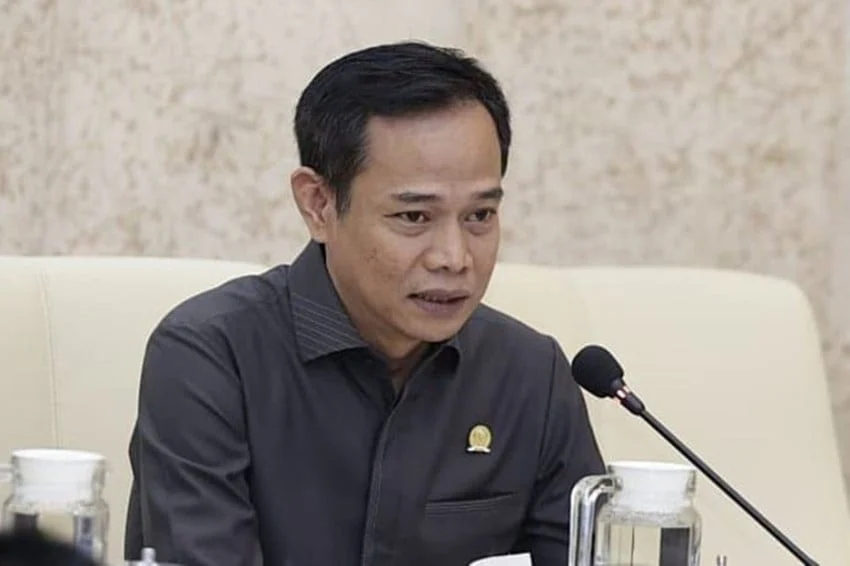
Discontent among Indonesia’s youngest electorate has resurfaced in the national political discourse following statements from a member of the House of Representatives (DPR). Eka Widodo, a legislator representing the National Awakening Party (PKB) from the Central Java IX electoral district, reported widespread frustration among Generation Z constituents concerning Vice President Gibran Rakabuming Raka. According to Widodo, colloquially known as Edo, groups of young voters approached him during his official legislative recess to voice grievances regarding the legal and ethical controversies surrounding Gibran’s rise to power, culminating in explicit demands for his impeachment.
The concerns raised by these constituents center heavily on the perception that the path to the vice presidency compromised constitutional integrity and created an uneven playing field for young political aspirants. As Indonesia navigates a post-election political landscape, the friction between traditional political dynamics and the expectations of a digitally connected, politically engaged younger generation highlights a widening ideological gap. This report examines the background of the controversy, the mechanics of the legislative recess where the grievances were aired, the constitutional background of Gibran’s candidacy, and the broader implications of youth disillusionment on Indonesian governance.
Constituency Encounters and the Voice of Gen Z
The friction between younger voters and the current executive leadership became a focal point during the routine DPR recess period. Lawmakers routinely return to their respective constituencies to absorb local aspirations, evaluate government program implementation, and engage directly with voters. For Widodo, the recess in Central Java IX—encompassing regions such as Brebes, Tegal regency, and Tegal city—proved distinct due to the intensity of youth engagement.
According to the PKB legislator, informal yet vocal delegations of Gen Z constituents cornered him to discuss national politics rather than strictly local infrastructural issues. Their primary grievance was not economic inflation or regional development, but rather the state of democracy and the rule of law. The constituents argued that Gibran’s ascension to the second-highest office in the country tarnished the image of youth leadership. Rather than serving as an inspirational benchmark for young politicians, Gibran’s rapid political trajectory was viewed by these groups as an anomaly facilitated by familial privilege rather than standard democratic competition.
Widodo noted that the sentiment was not isolated to a fringe group but represented a broader undercurrent of disillusionment. The youth felt that the fundamental promise of equal opportunity, which underpins modern democratic systems, had been undermined. By utilizing legal avenues perceived as tailor-made for specific individuals, the political establishment allegedly alienated a generation that values fairness, transparency, and meritocracy.
The Chronology of the Controversy: From MK Ruling to the 2024 Election
To understand the depth of the grievances expressed by Gen Z, it is necessary to examine the chronological sequence of events that enabled Gibran Rakabuming Raka to enter the 2024 presidential race. The foundational catalyst for this controversy was the constitutional debate surrounding minimum age requirements for presidential and vice-presidential candidates.
Prior to October 2023, Article 169 letter q of Law Number 7 of 2017 concerning General Elections stipulated that presidential and vice-presidential candidates must be at least 40 years old. Gibran, born on October 1, 1987, was 36 years old when the registration period for the 2024 presidential election approached, making him formally ineligible under the existing statute.
The legal landscape shifted dramatically on October 16, 2023. The Constitutional Court (Mahkamah Konstitusi or MK), led at the time by Chief Justice Anwar Usman—who is the maternal uncle of Gibran—issued Decision Number 90/PUU-XXI/2023. The ruling granted an exception to the minimum age requirement of 40 for individuals who have previously been or are currently elected to regional public office through direct elections ( kepala daerah). Because Gibran was serving as the Mayor of Solo (Surakarta), this ruling legally cleared the path for his candidacy.
The timeline rapidly accelerated following the MK decision:
- Late October 2023: Prabowo Subianto officially announced Gibran Rakabuming Raka as his vice-presidential running mate, backed by the Advanced Indonesia Coalition (Koalisi Indonesia Maju).
- November 2023: The General Election Commission (KPU) formally declared the candidate pairs eligible under the revised regulations. The decision faced severe ethical scrutiny, leading to an investigation by the Honorary Council of the Constitutional Court (MKMK), which found Chief Justice Anwar Usman guilty of a serious ethical violation regarding conflict of interest and demoted him from his position.
- February 14, 2024: The national election took place, with the Prabowo-Gibran ticket securing a decisive victory in a single round, capturing over 58% of the national vote.
- October 20, 2024: Prabowo Subianto and Gibran Rakabuming Raka were officially inaugurated as President and Vice President of the Republic of Indonesia for the 2024–2029 term.
Despite the electoral victory, the procedural journey leading up to the inauguration left persistent legal and ethical questions among civil society organizations, legal scholars, and politically active youth groups. These unresolved debates form the bedrock of the impeachment calls reported during parliamentary recesses.
Demographic Significance of Generation Z in Indonesian Politics
The political agitation expressed by Gen Z carries substantial weight due to demographic realities. According to data from the General Election Commission (KPU) for the 2024 electoral cycle, voters belonging to Generation Z (individuals born roughly between 1997 and 2012) and Millennials (born between 1981 and 1996) constituted more than 52% of the total 204.8 million registered voters.
Specifically, Gen Z accounted for roughly 22.8% of the electorate, representing approximately 46.8 million voters. This massive demographic bloc was heavily targeted by all political camps during the campaign season through social media engagement, digital policy forums, and youth-centric branding.
However, political analysts note a distinct paradox in how this demographic interacts with political power. While digital platforms allowed for rapid mobilization and critical discourse, the same tools heightened awareness of institutional maneuvers perceived as undemocratic. The dissatisfaction voiced by constituents in Central Java IX reflects a broader national sentiment where educated urban and semi-urban youth demand institutional accountability, separating generational representation from dynastic politics.
Legal Realities of Impeachment under the Indonesian Constitution
While expressions of discontent and demands for political removal resonate within certain activist circles and specific electoral districts, legal experts emphasize that the mechanism of presidential or vice-presidential impeachment in Indonesia is strictly regulated and exceptionally difficult to execute.
Under Article 7A and Article 7B of the 1945 Constitution of the Republic of Indonesia, a president or vice-president can only be dismissed from office during their term under specific, severe conditions:
- Commission of specific crimes: Treason, corruption, bribery, other serious felonies, or disgraceful acts.
- Loss of capability: Failing to meet the physical or mental requirements to execute presidential duties.
Furthermore, the constitutional procedure requires a multi-staged political and judicial process:
- The House of Representatives (DPR) must initiate the inquiry through the right of inquiry ( hak angket) or interpellation, supported by a specific quorum and majority vote.
- The DPR must formally submit an accusation to the Constitutional Court (MK) to review whether the president or vice-president has violated the law or no longer meets the requirements.
- The Constitutional Court must examine and decide on the matter within a designated timeframe.
- If the MK rules that a violation occurred, the DPR holds a plenary session to submit a proposal for dismissal to the People’s Consultative Assembly (MPR).
- The MPR must convene a plenary session attended by at least three-quarters of the members and approved by at least two-thirds of those present to finalize the impeachment.
Given the current composition of the DPR and the MPR, where the vast majority of political parties belong to the governing coalition supporting the Prabowo-Gibran administration, political analysts agree that an impeachment motion holds virtually no parliamentary viability. Consequently, statements regarding impeachment from individual lawmakers function primarily as political barometers of constituent grievance rather than actionable legislative procedures.
Implications for Governance and Political Stability
The emergence of youth-led political resistance poses unique challenges for the executive branch’s efforts to project inclusivity and dynamic leadership. The administration has frequently emphasized youth empowerment, technological integration, and the transition toward a "Golden Indonesia 2045" vision. However, persistent debates over the legitimacy of the vice-presidential office risk creating friction between state institutions and critical segments of the intellectual youth.
Political observers suggest that the administration must proactively address governance concerns through transparent policy-making, anti-corruption initiatives, and demonstrable meritocracy to bridge the trust deficit. Ignoring the structural critiques raised by younger demographics could lead to long-term political alienation, transforming vibrant civic engagement into sustained skepticism toward institutional democracy.
As the legislative term progresses, the ongoing discourse around constitutional integrity, dynastic politics, and youth representation will likely remain a prominent fixture in Indonesia’s evolving democratic landscape, ensuring that the voices from regional recesses continue to echo within the halls of national power.