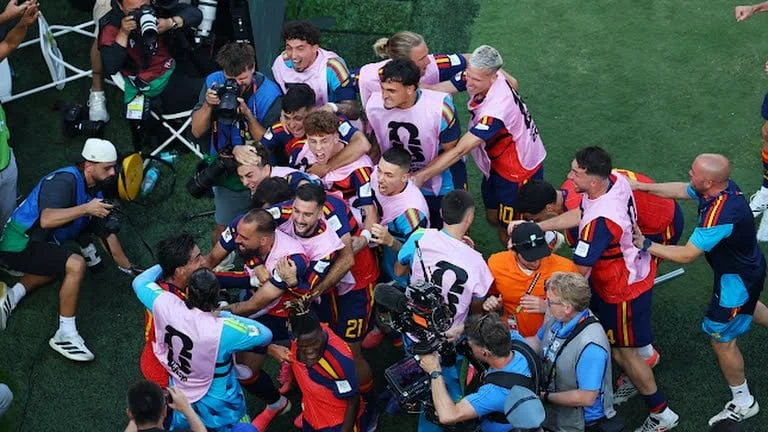
NEW JERSEY – Spain has officially been crowned champions of the 2026 FIFA World Cup, securing their second-ever global title after a hard-fought 1-0 triumph against Argentina in a captivating final held at MetLife Stadium in New Jersey on Monday, July 20, 2026. The decisive moment came in extra time, with Ferran Torres netting the solitary goal that etched Spain’s name onto the coveted trophy once more.
The match, a highly anticipated clash between two footballing powerhouses, delivered on its promise of intense drama and tactical brilliance. From the opening whistle, Spain asserted a dominant presence, dictating the tempo and controlling possession for significant periods. Manager Luis de la Fuente’s tactical setup proved highly effective, stifling Argentina’s attacking threats and creating numerous opportunities of their own.
A Tactical Masterclass and Dominant Performance
Spain’s control of the ball was evident throughout the contest, with statistics showing they enjoyed a remarkable 68% possession compared to Argentina’s 32%. This statistical dominance translated into tangible pressure on the Albiceleste’s defense. Lionel Messi, the perennial talisman for Argentina and a player whose presence often signals decisive influence, found himself largely contained by Spain’s disciplined backline. The meticulous defensive organization, a hallmark of de la Fuente’s coaching philosophy, ensured that Messi and his teammates struggled to find their rhythm and penetrate the Spanish ranks.
The relentless offensive pressure from "La Furia Roja" was undeniable. As the match extended beyond the 105-minute mark, Spain had unleashed a formidable 20 shots, with an impressive 11 of those forcing Emiliano Martínez into action. The Argentine goalkeeper, a celebrated figure for his heroics in previous tournaments, delivered a performance worthy of his reputation. Martínez was instrumental in keeping his team in the game, pulling off a series of spectacular saves that frustrated Spanish attackers and kept the dream of a World Cup title alive for Argentina. His resilience and agility in goal were a testament to his world-class ability, preventing what could have been an earlier and more comfortable victory for the Spanish side.
The Road to the Final: A Journey of Resilience and Determination
Spain’s path to this historic victory was paved with a series of challenging encounters, showcasing their evolution as a team throughout the tournament. Their group stage campaign saw them navigate a competitive pool with a blend of flair and tactical astuteness, securing vital wins that propelled them into the knockout rounds. Key performances from seasoned veterans and emerging talents alike demonstrated the depth of quality within the squad.
The knockout stages presented an even sterner test. In the Round of 16, they faced a determined opponent, emerging victorious through a combination of individual brilliance and unwavering team cohesion. The quarter-finals saw them pitted against another European giant, a match that required immense tactical discipline and a clinical edge in front of goal. The semi-final, a tense affair against a resilient South American contender, ultimately saw Spain emerge triumphant, setting the stage for this momentous final.
Argentina, under the guidance of Lionel Scaloni, also embarked on an impressive campaign. Their journey was characterized by moments of individual magic, particularly from their captain, Lionel Messi, who had vowed to lead his nation to glory in what many believed to be his final World Cup appearance. They displayed grit and determination in overcoming their own set of formidable opponents, often relying on their attacking prowess and the inspirational leadership of their star player. Their route to the final included a dramatic penalty shootout victory and a convincing performance in the semi-finals, highlighting their championship pedigree.
Key Moments and Strategic Decisions
The final itself was a strategic chess match, with both managers meticulously planning their approach. Spain’s early dominance in possession was not merely about territorial control; it was a deliberate tactic to tire the Argentine midfield and create pockets of space for their attackers. Luis de la Fuente’s decision to employ a high-pressing game disrupted Argentina’s build-up play and forced turnovers in dangerous areas.
For Argentina, the strategy revolved around containing Spain’s midfield and looking for opportunities to launch quick counter-attacks, often initiated by Messi’s visionary passing. However, the effectiveness of this strategy was largely nullified by Spain’s superior defensive structure and their ability to quickly recover possession.
The introduction of substitutes in the latter stages of the match also played a crucial role. Both managers utilized their benches to inject fresh legs and tactical variations, seeking to break the deadlock. The goal that ultimately decided the match came from a player who had been a constant threat throughout, demonstrating the depth of Spain’s attacking options.
The Decisive Blow: Ferran Torres’s Moment of Brilliance
The breakthrough arrived in the second period of extra time, a moment that will be etched in the annals of football history. Ferran Torres, who had been a constant menace to the Argentine defense, found himself in a decisive position. A moment of individual skill and composure allowed him to beat the vigilant Emiliano Martínez, sending the Spanish contingent of fans into raptures and silencing the Argentinian faithful. The goal was a culmination of Spain’s persistent pressure and a testament to Torres’s ability to deliver on the biggest stage.
Post-Match Reactions and Celebrations
Following the final whistle, scenes of unbridled joy erupted amongst the Spanish players, staff, and their supporters. Captain Sergio Ramos, who has been a pillar of strength for the national team, hoisted the World Cup trophy, a symbol of their collective achievement. The celebrations are expected to continue for days as Spain basks in the glory of their second World Cup triumph.
Lionel Messi, visibly emotional, was seen embracing his teammates, acknowledging their valiant effort. Despite the disappointment of falling short in the final, his contributions throughout the tournament were widely lauded, solidifying his legacy as one of the greatest players of all time. Reports suggest that while this may mark the end of his World Cup journey, his passion for the game remains undimmed.
Broader Implications and Future Outlook
Spain’s victory has significant implications for the global football landscape. It reaffirms their status as a dominant force in international football and provides a significant boost to their national sporting pride. The success of this generation of Spanish players, who have now achieved the ultimate prize in football, will undoubtedly inspire a new wave of young talent within the country.
The tournament itself, hosted across North America, has been hailed as a resounding success, showcasing the sport’s global appeal and the ability of diverse nations to collaborate on such a grand scale. The innovative use of technology and the seamless organization of matches have set a new benchmark for future FIFA World Cups.
For Argentina, this final represents a painful but ultimately proud conclusion to a remarkable tournament. The team’s resilience and fighting spirit earned them widespread admiration, and they will undoubtedly regroup and aim for future successes. The experience, while bittersweet, will provide valuable lessons for their development.
As the dust settles on this historic 2026 FIFA World Cup final, Spain stands tall as champions, their name forever etched alongside the greatest teams in football history. The memory of Ferran Torres’s decisive goal and the jubilant celebrations at MetLife Stadium will resonate for generations to come, a testament to the enduring power and drama of the beautiful game. The future of Spanish football looks exceptionally bright, fueled by this monumental achievement, while the lessons learned will undoubtedly shape the journeys of many nations in the years to come. The tournament’s success also points towards a growing global embrace of football, with record viewership and engagement figures reported across all continents, underscoring its position as the world’s most beloved sport.