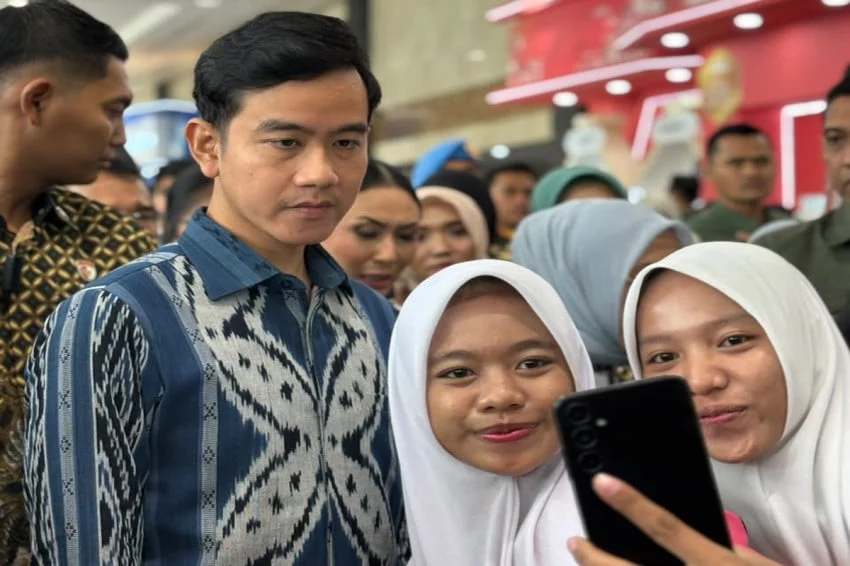
JAKARTA — Political tensions in Indonesia’s capital have escalated sharply following a landmark legal development regarding the validity of Vice President Gibran Rakabuming Raka’s educational credentials. Syarifuddin Sudding, the Chairman of the National Mandate Party (PAN) faction in the People’s Consultative Assembly (MPR RI), has publicly called upon Vice President Gibran Rakabuming Raka to step down from office with grace. This demand comes directly on the heels of a decisive Supreme Court (Mahkamah Agung – MA) ruling that nullified the high school equivalency certificate utilized by the Vice President during his registration for the 2024 presidential election.
The unfolding controversy places the executive branch under intense constitutional scrutiny. Sudding asserted that if the Vice President remains unwilling to relinquish his post voluntarily, the House of Representatives (DPR RI) must act decisively by initiating formal political mechanisms through constitutional pathways. The unfolding crisis bridges intricate legal battles with high-stakes legislative maneuvering, testing the resilience of Indonesia’s state institutions and constitutional framework.
The Supreme Court Verdict: Background and Legal Basis
At the core of the political storm is Supreme Court Cassation Decision Number 742 K/TUN/2026, handed down on October 30, 2026. The high court granted the cassation appeal submitted by petitioner Subhan Palal, who challenged the legal validity of the High School Educational Equivalency Certificate (Surat Keterangan Penyetaraan Pendidikan SMA) belonging to Gibran Rakabuming Raka. The document had previously served as a mandatory administrative requirement during Gibran’s candidacy registration alongside President Prabowo Subianto for the 2024–2029 term.
According to the text of the ruling, the Supreme Court formally declared the equivalency certificate invalid and null and void from its inception (batal demi hukum). Furthermore, the court issued a direct binding order instructing the parties currently holding the document to surrender and completely destroy it. Legal experts have noted that because the certificate formed an integral part of the candidate’s mandatory administrative dossier verified by the General Elections Commission (KPU) ahead of the 2024 polls, its retroactive invalidation introduces profound legal and constitutional questions regarding the integrity of the initial candidacy verification process.
Syarifuddin Sudding emphasized that the Supreme Court’s ruling carries an executive nature (eksekusitorial), meaning it demands immediate enforcement and cannot simply be set aside or ignored by state authorities. "The verdict is clear and carries executory weight. It cannot be left without proper execution," Sudding stated during a press briefing in Jakarta. He argued that upholding the rule of law requires the state to recognize the legal implications of the high court’s decision, which directly undermines the administrative prerequisites fulfilled by the Vice President prior to his election.
Constitutional Pathways and the Threat of Legislative Action
In the event that Vice President Gibran chooses not to resign voluntarily, Sudding maintains that the legislature must fulfill its oversight responsibilities by utilizing constitutional mechanisms. Specifically, he pointed to Articles 7A and 7B of the 1945 Constitution of the Republic of Indonesia (UUD 1945). These specific constitutional provisions outline the exact procedures for the dismissal or impeachment of a president and/or vice president during their term of office.
Articles 7A and 7B stipulate that a president or vice president can be dismissed before their term expires if they are proven to have committed treason, corruption, bribery, other severe criminal offenses, or disgraceful acts, or if they no longer meet the statutory requirements to hold office. The mechanism requires a multi-tiered legislative process:
- The House of Representatives (DPR) must first exercise its right to express an opinion (Hak Menyatakan Pendapat) regarding an alleged violation.
- If the DPR passes this motion by a specified majority, the matter is then forwarded to the Constitutional Court (Mahkamah Konstitusi – MK) for legal examination, trial, and a formal ruling.
- Should the Constitutional Court rule that the president or vice president has indeed violated the law or no longer meets qualification standards, the DPR then submits a recommendation to the MPR to convene a plenary session to officially execute the dismissal.
Sudding’s explicit reference to these articles signifies a dangerous escalation for the executive branch, moving the dispute from the realm of political rhetoric into actionable parliamentary procedure.

Growing Calls from Civil Society and Political Observers
The PAN faction leader’s statement does not exist in a vacuum. It follows a chorus of rising demands from civil society organizations, legal scholars, and political analysts who argue that the executive administration must address the Supreme Court’s ruling transparently.
In the days immediately following the publication of the verdict, prominent figures such as executive director ofjuxtaposing public policy watchdogs, Ray Rangkuti, openly urged the DPR to utilize its constitutional rights. Rangkuti argued that a failure by the legislature to act upon a final and binding Supreme Court decision regarding executive eligibility would create a dangerous legal precedent, suggesting that high-ranking officials are immune to the administrative consequences of fraudulent or invalidated credentials.
Observers note that while the 2024 presidential election concluded with a decisive victory for the Prabowo-Gibran ticket, the foundational administrative documents of the vice-presidential candidate have faced persistent scrutiny. Early challenges during the election cycle were largely deflected by election oversight bodies and courts of first instance. However, this latest cassation decision by the Supreme Court represents the highest judicial authority rendering a definitive verdict on the matter, shifting the battlefield from electoral dispute resolution bodies to administrative law and constitutional impeachment protocols.
Implications for the Executive-Legislative Relationship
The demand for Gibran’s resignation or constitutional removal threatens to strain relations within the "Red and White Cabinet" (Kabinet Merah Putih) and the broader governing coalition. President Prabowo Subianto has built a broad-based coalition incorporating numerous political parties, including PAN, to ensure legislative stability and smooth governance. However, the public stance taken by senior PAN figures like Sudding indicates that party loyalties within the coalition may fracture when confronted with definitive judicial rulings touching upon constitutional legitimacy.
Political analysts suggest several potential implications of this ongoing controversy:
- Legislative Friction: Even if the leadership of major coalition parties attempts to downplay the crisis, individual factions and opposition parties may feel compelled to formally propose the DPR’s right to express an opinion (Hak Menyatakan Pendapat), forcing a divisive floor vote in parliament.
- Public Trust and Legitimacy: The controversy challenges public confidence in the vetting procedures of the General Elections Commission (KPU). If a vice president’s educational credentials are legally nullified post-election, questions regarding administrative oversight will persist throughout the remainder of the presidential term.
- Precedent for State Officials: The strict enforcement of the Supreme Court’s executory order sets a rigorous benchmark for accountability, signaling that administrative documents verified during candidate registration remain subject to judicial review and potential nullification even after assuming high office.
Next Steps and Institutional Responses
As of this reporting, neither Vice President Gibran Rakabuming Raka nor his official legal representatives have issued a comprehensive formal response addressing the specific demands for resignation or the mechanics of Articles 7A and 7B. Representatives from the State Secretariat have emphasized that the administration remains focused on national development programs and economic priorities while monitoring legal developments through the appropriate institutional channels.
Meanwhile, legal experts anticipate that the petitioner, Subhan Palal, along with supporting advocacy groups, will formally request the administrative bodies and law enforcement agencies to ensure the physical seizure and destruction of the invalidated certificate as mandated by the Supreme Court’s ruling.
With political pressure mounting from both the legislative benches and civil society, the coming weeks will prove critical in determining whether the executive branch can successfully navigate this unprecedented legal challenge or whether parliament will be forced to trigger formal constitutional proceedings under Articles 7A and 7B of the 1945 Constitution. The outcome will undoubtedly leave a lasting imprint on Indonesia’s democratic governance, the separation of powers, and the absolute supremacy of the rule of law.