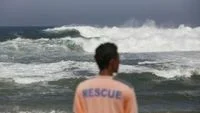
The coastal region of Surabaya faces a heightened state of alert as local authorities implement extensive structural and non-structural mitigations ahead of a projected eleven-day tidal flood threat. Driven by the astronomical phenomenon known as the Super New Moon, the impending coastal inundation is expected to affect low-lying residential and commercial zones along the East Java provincial capital’s coastline. The municipal government, acting through the Regional Disaster Management Agency (Badan Penanggulangan Bencana Daerah, or BPBD), has mobilized resources, reinforced physical barriers, and activated community communication channels to safeguard vulnerable populations and mitigate potential economic disruptions.
According to authoritative forecasts issued by the Maritime Meteorological Station of the Meteorology, Climatology, and Geophysical Agency (BMKG) in Tanjung Perak, the elevated sea levels are projected to impact the Surabaya coastline beginning September 20 and lasting through September 30, 2026. This prolonged meteorological event coincides with a lunar alignment that maximizes gravitational pull, significantly increasing high tide baselines. In response to these warnings, municipal agencies have transitioned from routine monitoring to active disaster preparedness protocols, prioritizing the protection of densely populated coastal neighborhoods and vital industrial corridors.
Background and Oceanographic Context of the Super New Moon
Tidal floods, locally referred to as banjir rob, occur when seawater overflows onto coastal land due to extreme high tides. These events are frequently exacerbated by meteorological conditions such as strong onshore winds and low atmospheric pressure. However, the primary catalyst for the late September 2026 event is the Super New Moon—a lunar phase occurring when the New Moon coincides with perigee, the point in the moon’s elliptical orbit closest to Earth.
During a Super New Moon, the gravitational forces exerted by both the Moon and the Sun align to create spring tides, producing higher high tides and lower low tides than average lunar cycles. When these astronomical conditions synchronize with seasonal wind patterns in the Madura Strait and the regional topography of Surabaya’s coastal zone, the risk of seawater breaching existing shoreline defenses increases substantially. Low-lying areas featuring extensive reclamation zones, river estuaries, and dense settlements lacking natural buffers are particularly susceptible to prolonged inundation.
Comprehensive Mitigation Strategy: Structural Interventions
To counter the anticipated rise in sea levels, the Surabaya City Government has focused heavily on structural mitigations designed to control water flow and protect urban infrastructure. Irvan Widyanto, Head of BPBD Surabaya, outlined the multi-layered engineering approach deployed across vulnerable sub-districts.
The cornerstone of the structural defense mechanism is the optimization and modernization of the city’s drainage and flood control systems. Municipal engineering teams have implemented advanced automated flat gate systems across critical drainage channels and estuaries. These mechanical barriers are engineered to function autonomously, sealing shut when rising sea levels threaten to push saltwater inland, and reopening during ebb tides to discharge accumulated rainwater.
"We are utilizing automated flat gate systems that close independently when seawater rises, while simultaneously maintaining standby operations at strategic pump houses to discharge trapped surface runoff back into the sea," stated Irvan Widyanto during a coordination briefing in Surabaya.
Complementing the gate systems, the city has accelerated a massive dredging and normalization campaign across rivers, canals, and urban retention basins. Years of accumulated silt, riverine sediment, and domestic waste have significantly reduced the water-holding capacity of Surabaya’s primary drainage networks. By deploying heavy machinery to clear these waterways, municipal authorities aim to restore hydraulic efficiency and prevent inland water accumulation from compounding the effects of coastal tidal flooding.
"Our objective is to execute these maintenance cycles at least twice a year to systematically expand water storage and drainage capacity throughout the city," Irvan added, emphasizing the continuous nature of municipal maintenance efforts.
Non-Structural Mitigations, Community Preparedness, and Early Warning Systems
While physical barriers and drainage improvements form the first line of defense, municipal authorities recognize that hardware alone cannot eliminate disaster risk. Consequently, BPBD Surabaya has rolled out an extensive non-structural mitigation framework centered on early warning systems (EWS) and public education.
The early warning system relies on real-time oceanographic telemetry provided by BMKG Tanjung Perak. BPBD monitors tidal surges continuously, translating complex meteorological data into actionable alerts disseminated through local governance structures down to the neighborhood unit (Rukun Tetangga/Rukun Warga) level.
Simultaneously, community resilience programs have been intensified in high-risk coastal pockets. Residents are being trained in self-evacuation procedures, familiarized with designated safe zones, and educated on how to secure electrical appliances and hazardous materials prior to inundation.
To ensure rapid response capabilities during emergencies, the Surabaya City Government maintains a centralized public safety access point. Citizens residing along the coast have been instructed to monitor official updates and report structural failures—such as compromised embankments or damaged seawalls—through dedicated emergency communication channels. The primary emergency hotline, Call Center 112, operates around the clock alongside a dedicated WhatsApp disaster reporting line at 0811-3111-2112, ensuring direct communication between endangered residents and municipal rescue dispatchers.
"We urge all residents living along the Surabaya coastline to actively monitor sea level forecasts and tidal predictions through official BMKG channels. Furthermore, we remind the public to maintain the cleanliness of local drainage channels and to immediately report any compromised embankments or structural damage to our 2d emergency numbers," Irvan concluded.
Economic, Environmental, and Urban Implications
The eleven-day duration of the projected tidal flood event underscores the broader challenges facing coastal urban centers amid shifting environmental baselines and sea-level trends. Beyond immediate property damage and temporary displacement, recurring coastal flooding exerts sustained pressure on municipal finances, urban sanitation, and public health infrastructure.
Prolonged exposure to saltwater intrusion degrades urban soil quality, damages foundational infrastructure, and accelerates the corrosion of concrete and steel utilities in coastal districts. Furthermore, stagnant floodwaters mixed with urban runoff present secondary public health hazards, including waterborne diseases and vector-borne illnesses proliferation if drainage is delayed.
For Surabaya—a major economic engine, logistics hub, and port city in eastern Indonesia—maintaining continuous maritime and land-based trade operations during environmental anomalies is critical. Disruptions to coastal roadways, warehouses, and port access points can generate cascading effects on regional supply chains and commercial activity.
By executing a proactive mitigation strategy that combines advanced engineering controls, aggressive canal dredging, robust communication networks, and community engagement, the Surabaya City Government aims to insulate its coastal communities from the worst impacts of the Super New Moon phenomenon. The success of these measures over the critical eleven-day window will serve as a vital benchmark for urban climate resilience and disaster preparedness in coastal Indonesia.