Indonesia stands at a critical juncture in its socio-economic development, boasting a demographic dividend and an increasingly educated populace, yet grappling with persistent social fractures that test the nation’s foundational ethos. Despite the continuous expansion of schools, vocational institutions, and universities producing thousands of graduates equipped with technical competencies, a fundamental paradox persists: advanced cognitive intelligence does not automatically translate into robust civic character. This disconnect has prompted deep introspection among policymakers, educators, and civil society leaders regarding the true efficacy of the national education system.
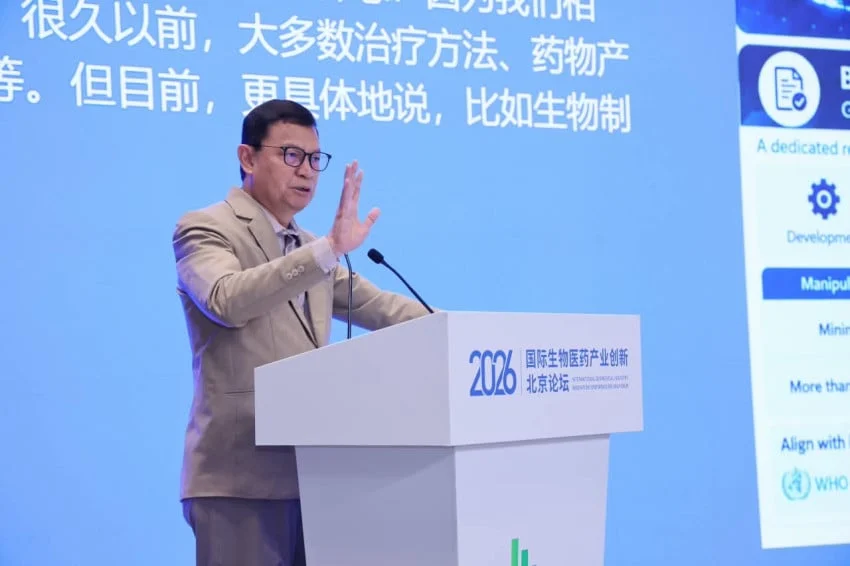
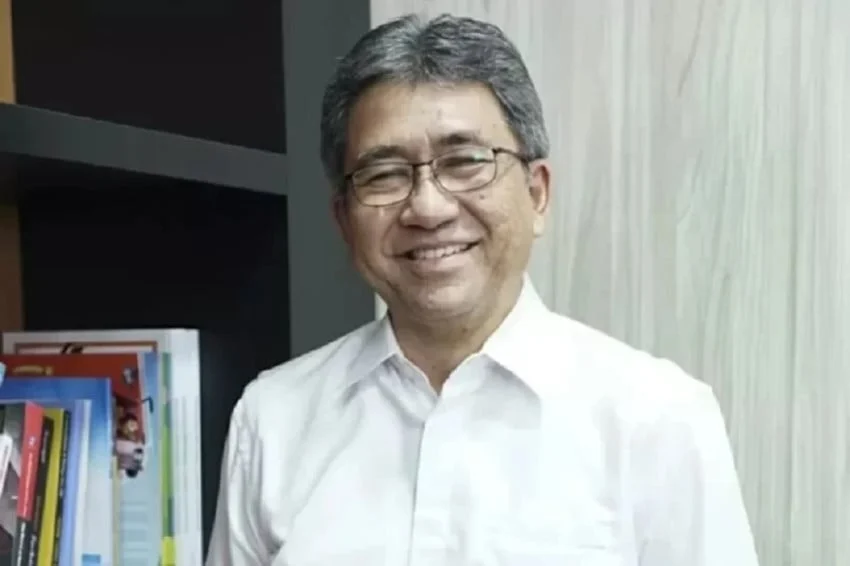
The discourse surrounding character education gained renewed urgency following recent expert analyses highlighting the coexistence of high academic achievement with troubling social phenomena. According to insights shared by Hendarman, Chairman of the Expert Team for the National Association of Policy Analysts (INAKI) and a lecturer at the Postgraduate School of Universitas Pakuan in Bogor, the nation is not facing a deficit of clever individuals, but rather a profound crisis in the qualitative application of that intelligence.
Main Facts and Societal Manifestations
The core dilemma facing contemporary Indonesia is the friction between modern educational outputs and societal behavior. While higher education institutions successfully impart hard skills and specialized knowledge, various negative behavioral trends continue to surface in public spaces and digital domains. These include acts of dishonesty, rising levels of intolerance, campus and workplace bullying, verbal violence, the rapid dissemination of unverified information and hoaxes, apathetic attitudes toward environmental sustainability, and a pervasive tendency to prioritize factional or personal interests over the common good.
It is crucial to contextualize these observations objectively. These behavioral anomalies do not characterize the entirety of the Indonesian population. Millions of citizens continue to uphold traditional values of honesty, mutual aid (gotong royong), religious and cultural tolerance, and social responsibility. However, the presence of systemic negative symptoms serves as an empirical indicator that technological advancement and formal schooling, in isolation, are insufficient catalysts for holistic human development. The overarching challenge is ensuring that human capital development moves beyond the accumulation of credentials to foster individuals who wield knowledge responsibly.
Background Context and Educational Evolution
To understand the current emphasis on character building in Indonesia, one must examine the evolution of the national curriculum. Over the past two decades, the Ministry of Education, Culture, Research, and Technology has iteratively revised educational frameworks—most notably transitioning through the 2013 Curriculum to the current Merdeka Curriculum (Independent Curriculum). Each iteration has increasingly emphasized the Pancasila Student Profile (Profil Pelajar Pancasila), which explicitly integrates faith, global diversity, mutual cooperation, independence, critical reasoning, and creativity.
Despite these policy instruments, the institutional execution often remains tethered to cognitive evaluation. Standardized testing, GPA metrics, and cognitive competencies historically dominated academic assessments, leaving emotional and moral intelligence relegated to subjective, qualitative observations. Hendarman underscores that building human capital cannot rely solely on the mechanical transmission of facts. Drawing upon educational philosophy, true development requires an alignment between what an individual knows, how they feel about moral imperatives, and how they execute ethical decisions in real-world scenarios.
Theoretical Framework: The Triad of Moral Development
Addressing this structural limitation requires a return to established developmental psychology frameworks. Prominent educational theorist Thomas Lickona, in his seminal works on character education, posits that moral development is not merely an exercise in memorizing moral codes or ethical rules. Instead, Lickona argues that character comprises three interconnected and mutually reinforcing dimensions: moral knowing, moral feeling, and moral action.
- Moral Knowing: This cognitive phase involves understanding moral values, identifying right from wrong, taking the perspective of others, moral reasoning, and decision-making. In an Indonesian context, this involves comprehending the tenets of Pancasila and civic responsibilities not just as test subjects, but as universal principles.
- Moral Feeling: Beyond recognizing a moral issue, an individual must emotionally connect with the value. This encompasses conscience, self-esteem, empathy, loving the good, self-control, and humility. Without moral feeling, cognitive knowledge remains cold and clinically detached, susceptible to rationalizing unethical behavior for personal gain.
- Moral Action: The ultimate manifestation of character is behavior. It involves competence in executing moral tasks, the will to persevere through social pressure, and the habituation of ethical conduct until it becomes second nature.
Applying Lickona’s framework exposes the gaps in conventional pedagogical approaches. As noted in recent academic evaluations, educators can readily teach students the theoretical definition of honesty, yet the educational intervention fails if honesty remains strictly a textbook concept unreinforced by practical application. Similarly, discussions regarding tolerance remain abstract unless students encounter, navigate, and actively appreciate interpersonal differences within structured, diverse environments.
Institutional and Policy Responses
In response to growing concerns over social cohesion, various stakeholders—including academic bodies like INAKI, university leadership, and non-governmental organizations—have advocated for systemic reforms in how policies are formulated and evaluated. Policy analysts emphasize that public policy itself must be imbued with character. When national regulations are drafted without ethical foresight, they often generate loopholes exploited by corrupt actors, regardless of the high technical competence of the bureaucrats involved.
Educators at institutions such as Universitas Pakuan argue that institutional curricula must transition from instructional teaching to experiential learning. This involves:
- Integrating moral dilemmas into policy analysis and professional training modules.
- Creating institutional cultures where integrity is modeled by leadership rather than merely mandated by administrative decree.
- Establishing community engagement programs where students apply their specialized knowledge to solve grassroots problems, thereby fostering civic responsibility and empathy.
Furthermore, professional bodies are increasingly calling for policy analysts and public servants to undergo continuous professional development that evaluates not only technical proficiency in data analytics and regulatory design, but also ethical decision-making capacity under pressure.
Broader Impact and Socio-Economic Implications
The implications of failing to bridge the gap between intelligence and character extend far beyond individual behavior; they pose a direct threat to national competitiveness, economic stability, and democratic resilience.
From an economic perspective, corruption, lack of institutional trust, and regulatory unpredictability—all symptoms of compromised integrity among decision-makers—deter foreign direct investment and increase transaction costs. A workforce that excels in technical skills but lacks collaborative character and ethical grounding struggles with innovation ecosystems, which inherently rely on psychological safety, peer trust, and collective problem-solving.
From a sociopolitical standpoint, the unbridled spread of misinformation and identity-based polarization demonstrates that digitally literate populations can still fall prey to societal fragmentation if critical thinking is divorced from moral responsibility. When citizens lack empathy and emotional maturity, democratic discourse degrades into partisan hostility, undermining policy continuity and national development goals such as Indonesia Gold 2045 (Indonesia Emas 2045).
Conclusion and Future Outlook
The trajectory of Indonesia’s development hinges on a recalibration of human capital strategies. Intelligence and technical prowess remain indispensable for navigating the complexities of the Fourth Industrial Revolution and the digital economy. However, as policy experts and educators consistently assert, technical capability without moral grounding is a volatile force.
Transforming the educational and administrative landscape requires a concerted shift away from rote memorization of values toward comprehensive character cultivation rooted in moral knowing, feeling, and action. By embedding these principles across primary schools, higher education institutions, and professional policy environments, Indonesia can cultivate a generation of leaders and citizens capable of wielding knowledge responsibly, ensuring that national progress is matched by enduring ethical strength.