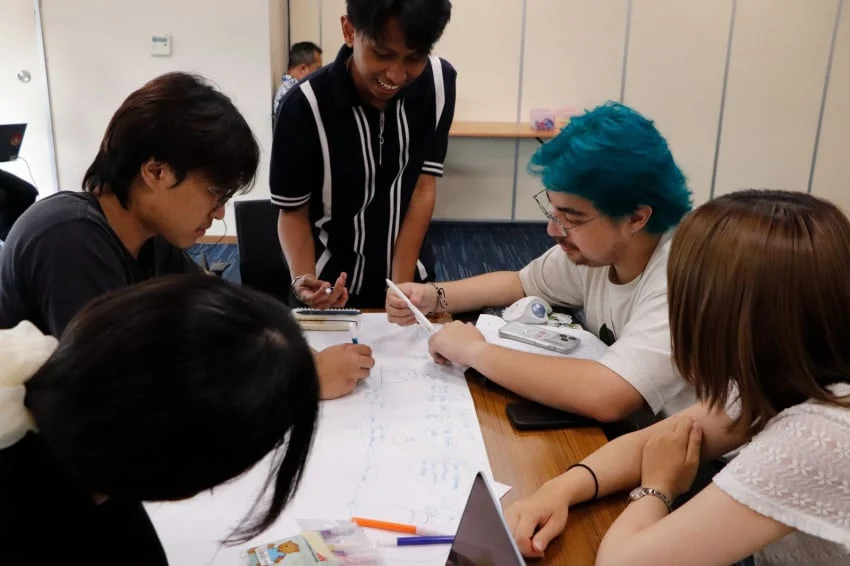
The intersection of academic research, international cooperation, and environmental stewardship has yielded promising results as a cohort of university students from Indonesia and Japan unveiled groundbreaking circular economy innovations. Operating under the framework of the Building Entrepreneurial Mindset for Sustainable Technology and Society (BESTS) Program 2026, the students successfully converted discarded fishing nets from the remote Tanimbar Islands and low-value plastic waste into economically viable, sustainable products. This cross-border initiative directly addresses dual crises: marine pollution in vulnerable archipelagic regions and the systemic need for scalable, green industrial practices.
The initiative represents a strategic convergence of higher education institutions, notably Sampoerna University and the Institute of Science Tokyo, alongside critical industry stakeholders such as INPEX Masela Ltd. By bridging classroom theory with real-world environmental challenges, the program seeks to cultivate a new generation of environmentally conscious entrepreneurs capable of designing market-driven solutions for complex ecological degradation.
The Genesis of BESTS Program 2026 and Cross-Border Academic Collaboration
The journey toward these innovative circular economy solutions began months prior to the public exhibition, grounded in a rigorous academic structure designed to foster interdisciplinary problem-solving. The BESTS Program 2026 was established as a collaborative platform uniting young minds from diverse cultural, linguistic, and technical backgrounds. The primary objective was clear: to move beyond theoretical environmentalism and immerse students in the realities of sustainability crises facing local communities and global industries.
Farid Triawan, Dean of the Faculty of Engineering and Technology at Sampoerna University, emphasized the profound educational shift facilitated by the initiative. "BESTS provides an opportunity for students to step out of the classroom and witness firsthand how sustainability issues manifest in the lives of communities and the industrial world," Triawan stated in an official release on Friday, September 19, 2026.
The program structure mandates international team formations, pairing Indonesian students—who possess contextual, ground-level insights into regional environmental challenges—with Japanese peers renowned for advanced technical proficiency in materials science and waste management engineering. Furthermore, the active participation of multinational energy corporations like INPEX Masela Ltd. ensured that the student projects remained tethered to commercial viability, regulatory frameworks, and genuine industry demands.
Tanimbar Fishing-Net Waste: Transforming Ocean Hazards into Economic Assets
One of the flagship projects emerging from the 2026 cohort is titled A Circular Economy Business for Fishing-Net Waste in Tanimbar. Developed by an interdisciplinary team comprising Chintya Ramadhani, Keyzia Ariola Putri, Stivan Delon Sahertian, Tsukui Shun, and Mardo Malawau, this initiative targets one of the most persistent hazards facing marine ecosystems in eastern Indonesia: abandoned, lost, or otherwise discarded fishing gear (ALDFG), commonly referred to as ghost nets.
The Tanimbar Islands, situated in the Maluku province, form a strategic maritime boundary characterized by rich marine biodiversity and intensive local fishing activities. However, the geographic isolation of the islands historically complicates waste management logistics. Consequently, damaged or obsolete nylon and polyethylene fishing nets frequently accumulate along coastlines or are improperly disposed of at sea, threatening marine fauna, coral reefs, and local livelihoods dependent on sustainable fisheries.
To counter this, the student team designed a comprehensive recycling ecosystem. The project explores advanced mechanical and chemical processes to recondition and upcycle degraded fishing net polymers. By extracting high-purity recycled raw materials from the waste, the initiative facilitates the production of eco-friendly fishing gear and related durable goods. This closes the loop on marine plastic pollution, transforming a persistent environmental liability into a localized economic driver that generates alternative income streams for coastal communities in Tanimbar.
Eco-Fuel Innovation: Converting Low-Value Plastics via Pyrolysis
While the Tanimbar project focuses on marine polymer remediation, a parallel initiative tackled the inland challenge of municipal solid waste and agricultural overheads. Entitled Eco-Fuel, the second major project was spearheaded by Harsen Ramadhan, Luthfi Ahmad, Nona Brillyanti, Koki Nakazaki, and Hiroki Nozaki.
The team identified a dual socioeconomic bottleneck: the skyrocketing cost of conventional liquid fuels utilized in regional agricultural sectors, and the concurrent inability of standard municipal recycling systems to profitably process low-value, single-use plastic waste—such as multilayer packaging and contaminated films that typically end up in landfills or waterways.
To resolve these interconnected issues, the Eco-Fuel team optimized a thermo-chemical conversion process known as pyrolysis. Operating under oxygen-depleted conditions at elevated temperatures, the pyrolysis unit breaks down complex polymer chains within low-value plastics, transforming them into high-energy liquid hydrocarbon fractions. The resulting alternative liquid fuel is specifically tailored to power agricultural machinery, irrigation pumps, and rural transport vehicles.
By simultaneously mitigating plastic pollution and supplying affordable energy inputs to farmers, the Eco-Fuel project presents a compelling model of localized resource independence. It underscores how grassroots technological intervention can stabilize operational costs for agrarian communities while reducing municipal waste burdens.
Broader Implications for Indonesia’s Circular Economy Landscape
The unveiling of these twin innovations arrives at a critical juncture for Indonesia, a nation that has committed ambitious targets to marine plastic debris reduction and greenhouse gas mitigation. As Southeast Asia’s largest economy accelerates its transition toward a low-carbon, resource-efficient economic model, initiatives bridging academic ingenuity with commercial scalability are increasingly vital.
The projects developed under the BESTS Program 2026 align closely with national strategic priorities outlined in the Indonesia Circular Economy Forum and broader sustainable development roadmaps. By demonstrating that localized waste streams—whether discarded nylon nets in Maluku or low-grade plastics in urban-rural fringes—can be systematically converted into high-value commodities, the student innovations challenge traditional linear economic models of "take, make, dispose."
Furthermore, industry observers note that corporate involvement from entities like INPEX Masela Ltd. acts as a crucial catalyst. Private sector sponsorship and mentorship ensure that student-led concepts do not remain academic exercises but possess the operational rigor, scalability, and market compliance required for future commercial incubation. This mentorship model bridges the perennial gap between university laboratories and industrial implementation, offering a blueprint for future STEM education across the region.
Future Outlook and Scalability of Student-Led Green Tech
As the BESTS Program 2026 concludes its current developmental cycle, attention shifts toward the practical deployment and scaling of the Tanimbar recycling framework and the Eco-Fuel pyrolysis units. Stakeholders from Sampoerna University and the Institute of Science Tokyo have expressed intentions to pursue pilot-scale testing in cooperation with local government units in Maluku and targeted agricultural cooperatives.
Key technical milestones for the coming year include optimizing the energy efficiency of the pyrolysis reactors, securing consistent logistics chains for collecting marine waste from remote islands without disrupting local ecosystems, and obtaining environmental safety certifications for the upcycled products.
Ultimately, the achievements of these Indonesian and Japanese students signal a maturing ecosystem of sustainable innovation in Southeast Asia. By transforming environmental liabilities into commercial assets, the initiative proves that addressing climate and ecological crises requires not only regulatory mandates, but also entrepreneurial imagination, cross-cultural collaboration, and rigorous technical execution.