The geopolitical landscape of the Middle East has entered a phase of high-intensity friction as the Islamic Republic of Iran recalibrates its military strategy in response to sustained American kinetic and cyber strikes. In a calculated move to exert maximum pressure on Washington without triggering a full-scale regional conflagration, Tehran has shifted its focus toward targeting the civilian and military infrastructure of neighboring Gulf states and Jordan. This strategic pivot, according to high-level military analysts and regional experts, is designed to exploit the vulnerabilities of U.S. allies while pointedly avoiding direct engagements with high-value U.S. naval assets or the State of Israel. By striking at the periphery of American interests, Iran aims to influence the administration of President Donald Trump through a policy of "controlled escalation," attempting to force a diplomatic or military de-escalation by making the cost of American intervention unsustainable for its regional partners.
The current conflict has seen a dramatic expansion in the scope of targets. While the United States has focused its efforts on degrading Iran’s domestic stability—targeting critical nodes such as railway stations, power generation facilities, telecommunications networks, and water treatment plants—the Islamic Revolutionary Guard Corps (IRGC) has retaliated by striking similar infrastructure in Kuwait, Bahrain, and Jordan. This "tit-for-tat" infrastructure war marks a significant departure from traditional naval skirmishes in the Persian Gulf, signaling a new era of asymmetrical warfare where the economic and social stability of the entire region is held in the balance.
The Logic of Asymmetric Calibration
The decision to bypass U.S. aircraft carriers and destroyers in favor of regional airports and water stations is rooted in a pragmatic assessment of military risk and reward. Analysts suggest that the IRGC is acutely aware of the "red lines" established by the Pentagon. A direct strike on a U.S. carrier strike group would likely trigger a catastrophic response, potentially leading to the total destruction of Iran’s conventional military capabilities and its nuclear program. Elias Hanna, a retired Lebanese Brigadier General and seasoned military analyst, notes that the tactical difficulty of such an operation is a primary deterrent. U.S. naval assets are among the most heavily defended platforms in the world, equipped with integrated air defense systems, Aegis combat systems, and electronic warfare suites that make them nearly impenetrable to the current generation of Iranian drones and missiles.
Furthermore, targeting a sovereign state like Kuwait or Bahrain allows Tehran to frame its actions within a narrative of "collective defense." By claiming that these nations have allowed their soil to be used as launchpads for American strikes, Iran attempts to justify its aggression under the guise of neutralizing immediate threats. This strategy creates a dilemma for Washington: while the U.S. is obligated to defend its allies, the threshold for a full-scale American invasion is much higher when the victims are regional partners rather than American servicemen.
Chronology of Escalation: A Timeline of Conflict
The current cycle of violence can be traced through a series of specific escalatory milestones that have redefined regional security:
- Initial Cyber and Kinetic Strikes (Early March): The U.S. launches a series of sophisticated cyberattacks targeting Iran’s national power grid and railway signaling systems, causing widespread logistical chaos in Teheran and Isfahan.
- First Round of Retaliation (Late March): Iran responds by launching a wave of "Shahed" loitering munitions at water desalination plants in eastern Saudi Arabia and Kuwait, arguing that these facilities support the logistical needs of U.S. bases.
- The April Surge: Following a U.S. strike on an Iranian IRGC command center, Tehran intensifies its operations. For the first time, civilian airports in Bahrain and Kuwait experience disruptions due to electronic interference and drone sightings, leading to temporary closures of regional airspace.
- Jordanian Involvement (Early May): Iran expands its target list to include Jordan, targeting telecommunications hubs near the border. Tehran justifies this by citing Jordan’s role in intercepting Iranian projectiles and hosting U.S. special operations forces.
- Current Stalemate: As of mid-May, the conflict has settled into a pattern of infrastructure attrition. The U.S. continues to degrade Iran’s industrial capacity, while the IRGC maintains pressure on the Gulf’s economic lifelines.
Infrastructure as the New Battlefield
The shift toward infrastructure targeting is not accidental. In the modern Middle East, the stability of a regime is often tied to its ability to provide basic services—water, electricity, and connectivity. By striking at these sectors in the Gulf states, Iran is sending a clear message to the monarchies of the region: their security is not guaranteed by the American presence.
In Kuwait, the targeting of water stations is particularly sensitive. As a nation that relies almost entirely on desalination for its potable water supply, any disruption to these facilities represents an existential threat. Similarly, the targeting of Bahrain’s international airport strikes at the heart of the kingdom’s economy and its status as a regional financial hub. These actions are designed to create domestic pressure within the Gulf states, encouraging them to lobby Washington for a ceasefire or to restrict the U.S. military’s use of their bases.
The "Base Usage" Controversy and Regional Diplomacy
A central pillar of Iran’s rhetoric is the allegation that neighboring states are complicit in American "aggression." Atifeh Taghiani, a professor of political science at the University of Tehran, argues that the Iranian leadership views the presence of U.S. bases in Kuwait, Bahrain, and Qatar as a direct violation of regional sovereignty. From Tehran’s perspective, these bases are not merely defensive installations but are active nodes in a network designed to dismantle the Iranian state.
The Gulf Cooperation Council (GCC) states have repeatedly denied these claims, asserting that their security agreements with the United States are purely defensive. However, the IRGC has dismissed these assurances. The ongoing strikes have deepened the diplomatic rift between Tehran and its neighbors, undoing years of tentative rapprochement. The "normalization" of targeting civilian infrastructure has created a sense of permanent insecurity, leading many regional players to reconsider their long-term strategic alignments.
Technical Analysis of Iranian Capabilities
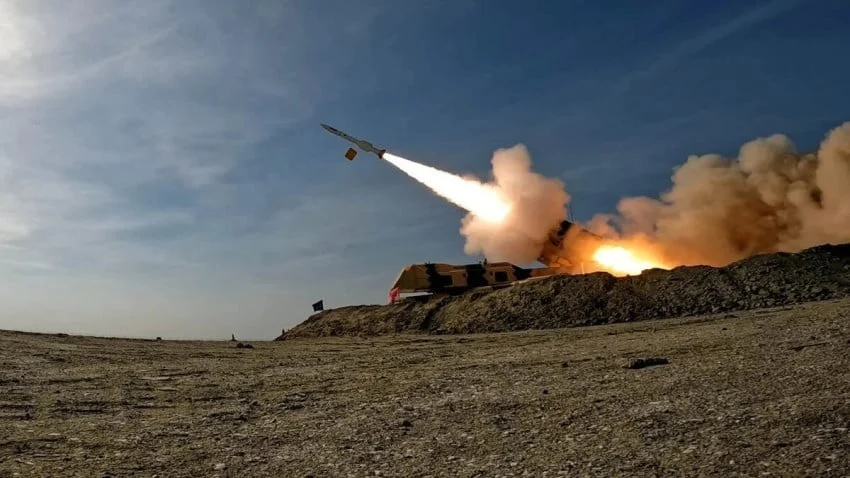
Iran’s ability to strike regional targets with precision has evolved significantly. The use of low-cost, mass-produced drones like the Mohajer-6 and the Shahed series allows the IRGC to overwhelm local air defenses through sheer volume. Unlike U.S. naval vessels, which possess multi-layered defense systems, civilian infrastructure in the Gulf is often protected by point-defense systems that can be saturated.
Furthermore, Iran has increasingly integrated cyber warfare into its kinetic operations. By disabling the software that controls power grids or water pumps before a physical strike, they maximize the duration of the outage and complicate the repair process. This hybrid approach makes the IRGC a formidable opponent in the realm of infrastructure warfare, where the goal is not to hold territory but to induce societal paralysis.
Official Responses and Global Implications
The international response to this "infrastructure war" has been one of mounting concern. The U.S. State Department has condemned the IRGC’s actions as "acts of state-sponsored terrorism" and has vowed to enhance the integrated air and missile defense systems of its partners. However, the Trump administration has also signaled a desire to avoid a "forever war," creating a complex diplomatic environment where both sides are testing each other’s resolve.
Kuwait and Bahrain have issued formal protests through the United Nations, calling for an immediate cessation of hostilities against civilian targets. Meanwhile, global markets have reacted with volatility. The threat to desalination plants and power hubs has raised concerns about the long-term stability of oil production in the region, leading to spikes in energy prices and insurance premiums for maritime trade.
Broader Impact and Future Outlook
The strategy of targeting regional infrastructure instead of the U.S. military represents a sophisticated understanding of Western political sensitivities. By avoiding American casualties, Iran limits the political capital President Trump can use to justify a massive ground or air campaign. Instead, the conflict remains in a "gray zone"—intense enough to cause real damage, but ambiguous enough to prevent a unified international military response.
In the long term, this strategy may backfire on Tehran. The systematic targeting of its neighbors is driving a rapid militarization of the Gulf states and fostering a level of intelligence sharing between the GCC and Israel that was previously unthinkable. While Iran may succeed in pressuring the U.S. in the short term, it risks becoming a regional pariah, surrounded by neighbors who view its existence as a fundamental threat to their survival.
As the conflict progresses, the primary victims remain the civilian populations of the region. Whether it is the Iranian citizens facing power outages or the residents of the Gulf dealing with water shortages, the "infrastructure war" highlights the devastating human cost of modern geopolitical maneuvering. The coming months will be critical in determining whether this cycle of retaliation can be broken or if the Middle East is heading toward a period of prolonged, systemic instability that will reshape the global order.