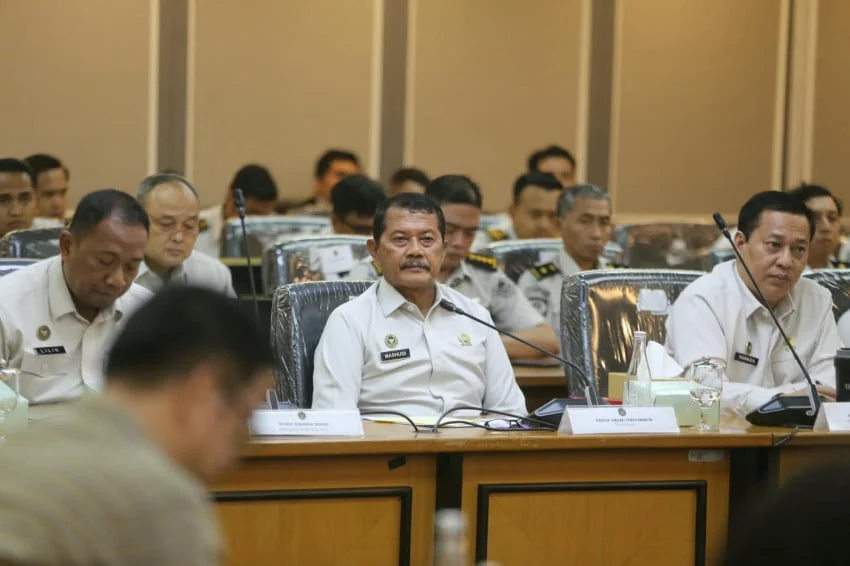
In a decisive move aimed at restoring institutional integrity and operational standards within the Indonesian correctional system, the Director General of Corrections (Dirjen Pas) at the Ministry of Immigration and Corrections, Mashudi, has issued a strict directive mandating the immediate demolition of all unauthorized structures within prisons (Lapas) and detention centers (Rutan) across the nation. This directive, announced during a formal hearing with Commission XIII of the House of Representatives (DPR RI) in Jakarta on Monday, September 28, 2026, marks a significant shift toward transparency and regulatory compliance in a sector long plagued by allegations of internal mismanagement.
The policy specifically targets infrastructure that deviates from official architectural blueprints or legal zoning within correctional facilities. Among the facilities highlighted for immediate scrutiny is the Class IIA Cibinong Penitentiary in West Java, which has recently come under intense legislative fire regarding its internal governance and infrastructure management.
The Catalyst: Legislative Pressure and Oversight
The directive from the Director General follows a heated and highly publicized Rapat Dengar Pendapat (RDP)—a formal hearing—between the Directorate General of Corrections and Commission XIII of the DPR RI. During the session, lawmakers expressed profound dissatisfaction with the current state of correctional facility management. The atmosphere was characterized by intense questioning, with members of the Commission directly challenging the leadership of the Cibinong Penitentiary regarding the transparency of their operational activities.
The parliamentary session served as a turning point, where the oversight body demanded accountability regarding the presence of non-compliant structures. Lawmakers argued that unauthorized buildings within prison walls are not merely architectural discrepancies but potential hubs for illicit activities, security breaches, and the erosion of the state’s authority over penal institutions. The severity of the criticism directed at the Kalapas (Head of Penitentiary) of Cibinong, which included accusations of dishonesty regarding the facility’s internal operations, underscored the urgency of the Director General’s subsequent commitment to reform.
Directive Scope and Implementation Strategy
Director General Mashudi emphasized that the order is not a suggestion but a mandatory instruction for all heads of regional offices (Kakanwil), heads of penitentiaries (Kalapas), heads of detention centers (Karutan), and heads of security (KPLP) nationwide. To ensure compliance, the Directorate General has officially disseminated formal letters to all regional units, outlining the requirement to audit and dismantle any structures that lack legal standing or violate existing operational protocols.
"We have sent letters to all regional office heads and technical unit heads," Mashudi stated during the parliamentary hearing. "Any structure that does not conform to the established regulations must be brought into order or demolished. This is a directive that we are enforcing across the entire correctional landscape."
The administration has made it clear that failure to comply will result in administrative sanctions for the leadership of the facilities. Mashudi’s tone suggested a departure from previous administrative leniency, signaling a move toward stricter internal discipline. He explicitly warned that the Directorate General would not hesitate to take firm action against any Kakanwil or Kalapas who fails to execute these demolition orders.
The Broader Context: Security and Infrastructure Integrity
To understand the significance of this policy, one must consider the historical context of the Indonesian correctional system. For years, the rapid growth of the prison population has often outpaced infrastructure development. This has led to overcrowding, which in turn has created a vacuum where informal, makeshift structures—often used for unauthorized commercial activities, improved living conditions for affluent inmates, or clandestine operations—have proliferated.
The existence of such structures compromises the security of the facility. If a building is not registered in the official site plan, it becomes a "blind spot" for security personnel. The current initiative is designed to standardize the environment, ensuring that every square meter of a facility is accounted for, monitored, and compliant with national security standards. By removing these "invisible" zones, the Ministry of Immigration and Corrections aims to mitigate risks such as the smuggling of prohibited items, illegal telecommunications, and the creation of unequal living standards among inmates.
Chronology of the Regulatory Crackdown
The push for reform follows a series of internal and external audits conducted throughout 2026. While the September 28 session was the most public display of this initiative, the planning for this audit began months prior, following reports of operational irregularities in various facilities across West Java and beyond.
- Q1 2026: Initial reports regarding infrastructure misuse in various regional penitentiaries begin circulating within the Ministry.
- Q2 2026: Parliamentary Commission XIII initiates a series of site visits to key correctional facilities, including Class IIA Cibinong, to investigate allegations of mismanagement.
- Late Q3 2026: Internal investigations reveal that several facilities had expanded their footprint with non-permitted structures.
- September 28, 2026: The RDP takes place, where lawmakers demand a concrete plan of action. Director General Mashudi publicly commits to the immediate demolition of all non-compliant infrastructure.
- Post-September 28, 2026: The implementation phase begins, with regional heads required to report progress back to the central Ministry.
Fact-Based Analysis: The Implications of Reform
The decision to dismantle these structures carries significant implications for the future of the correctional system in Indonesia.
First, from an administrative standpoint, this move re-establishes the central authority of the Ministry of Immigration and Corrections. By compelling regional heads to follow centralized directives, the Director General is curbing the "fiefdom" culture that has historically plagued the prison system, where some facility heads operated with a degree of autonomy that bypassed central oversight.
Second, the financial implications cannot be overlooked. While the demolition may result in a loss of investment in the structures themselves, the long-term cost of maintaining security in compromised facilities is substantially higher. The removal of unauthorized buildings is a prerequisite for any future expansion or renovation projects that are actually in accordance with the law.
Third, the impact on inmate management is critical. When facilities provide "extra" amenities or unauthorized spaces, it often leads to discrimination within the prison population. By standardizing the physical environment, the Ministry is taking a step toward ensuring that all inmates are subject to the same standard of living, thereby reducing the influence of wealth and power dynamics that currently interfere with the rehabilitation process.
Challenges and Future Outlook
Despite the firm rhetoric, the implementation of this policy faces significant challenges. The primary hurdle is the sheer scale of the corrections network, which encompasses hundreds of facilities across a vast archipelago. Ensuring that every Kalapas adheres to the order requires a robust monitoring system that goes beyond mere paperwork.
There is also the challenge of facility overcrowding. Demolishing structures—even unauthorized ones—may temporarily reduce the available space for inmates. The Ministry will need to balance the need for regulatory compliance with the urgent requirement for adequate inmate capacity. However, as Mashudi noted, the priority is clearly shifting toward the rule of law.
The political will demonstrated by the Ministry during the recent RDP suggests that this is not a temporary campaign but a sustained effort to restructure the correctional system. If successful, the initiative will leave a lasting mark on the management of Indonesian prisons, shifting the culture from one of informal, unchecked growth to one of standardized, transparent, and legally sound infrastructure management.
As the Directorate General moves forward, all eyes will be on the Class IIA Cibinong Penitentiary and other high-profile facilities. The success of this policy will likely be measured by the speed and transparency with which these unauthorized structures are removed, and whether the Ministry can maintain this level of accountability in the face of institutional resistance. For now, the message from the central government is clear: the era of informal, unauthorized construction within Indonesia’s prisons has reached its end.