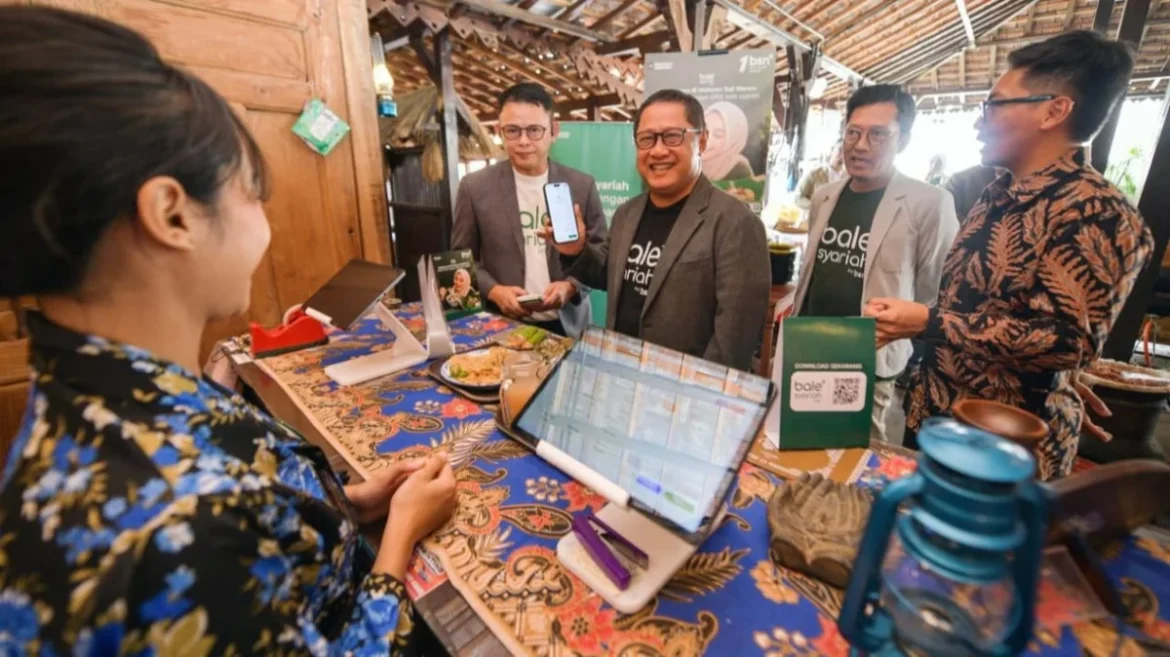
PT Bank Syariah Nasional (Bank BSN) has officially intensified its efforts to capture a larger share of the digital banking market in Indonesia, focusing its latest strategic deployment on the vibrant economic landscape of Bandung, West Java. On Friday, September 11, 2026, the institution launched its "Serbu Ekosistem" (Ecosystem Storm) program, a comprehensive initiative designed to embed sharia-compliant financial services directly into the daily operational workflows of businesses, educational institutions, and healthcare providers.
The launch, held at the Saji Marem restaurant, marks a pivotal shift in Bank BSN’s approach to customer acquisition and retention. By moving away from traditional branch-centric models toward an integrated ecosystem approach, the bank aims to provide seamless digital financial services that align with the rapid digitalization of the Indonesian economy.
Strategic Objectives of the Serbu Ekosistem Program
The "Serbu Ekosistem" program is not merely a marketing campaign; it represents a fundamental change in Bank BSN’s operational strategy. According to Alex Sofjan Noor, the President Director of Bank BSN, the program is built on the premise that financial institutions must evolve to become invisible facilitators of trade and commerce.
"We are moving beyond the concept of a bank as a destination. We want to be the infrastructure that powers daily interactions," Noor stated during the launch event. The program encompasses a wide array of sub-initiatives, including "Serbu Resto" (targeting the F&B sector), "Serbu Kampus" (targeting higher education), "Serbu Rumah Sakit" (healthcare), "Serbu Masjid" (religious community hubs), and "Serbu Toko" (general retail). By segmenting these initiatives, Bank BSN can tailor its digital banking features—such as liquidity management for merchants and instant payment solutions—to the specific pain points of each sector.
Financial Performance and Market Position
The aggressive expansion strategy is backed by a period of robust financial performance. As of the end of August 2026, Bank BSN reported total assets of Rp81.5 trillion, reflecting a significant year-on-year growth of 20.75%. This trajectory confirms the bank’s status as the second-largest sharia banking entity in Indonesia, a position it has secured through a combination of prudent risk management and an aggressive digital transformation agenda.
This growth is mirrored by the surging adoption of the bank’s digital platforms. The "Bale by Syariah" mobile banking application has become a cornerstone of the bank’s retail strategy, currently supporting 238,897 active users. The sheer volume of traffic on the platform—totaling 3.29 million transactions with a cumulative value of approximately Rp6.57 trillion—demonstrates a high level of consumer trust and engagement with the digital interface.
Furthermore, the bank’s QRIS (Quick Response Code Indonesian Standard) adoption has surpassed initial projections. With 2,102 merchants now integrated into the Bank BSN QRIS network, the bank has facilitated 2.07 million transactions, accounting for a total transaction volume of Rp552.1 billion. These figures are critical indicators of the bank’s successful pivot toward a cashless ecosystem, particularly in urban centers like Bandung where merchant density is high.
A Community-Centric Approach in Bandung
The selection of Bandung for the official launch of "Serbu Ekosistem" was deliberate. As a major hub for creative industries, tourism, and education, Bandung offers an ideal testbed for digital sharia banking services. Alex Sofjan Noor, who previously served as a regional branch manager in the city, utilized the event to bridge the gap between corporate strategy and ground-level implementation.
During the session with local entrepreneurs and merchants, the dialogue shifted from top-down directives to collaborative problem-solving. Noor noted that the success of the program depends heavily on the feedback loop between the bank and the business owners. "I want to hear directly from you—what works, what is broken, and what gaps remain in our service offering," he told the assembly, which included representatives from prominent local brands such as Mayoutfit, Rurik, Flottilicious, Ghalibia, Belyanza, and institutional partners like the Asy-Syifa school network.
The Technological Edge: Bale by Syariah and QRIS Integration
At the heart of the "Serbu Ekosistem" program is the "Bale by Syariah" application. The bank has invested heavily in the UI/UX design of the platform to ensure that it caters to the specific demographic of young, tech-savvy, and socially conscious Indonesian consumers. The digital platform provides more than just fund transfers; it integrates features such as zakat and waqf payments, halal lifestyle tracking, and merchant-specific discount vouchers.
The integration of QRIS has been equally transformative. For small and medium-sized enterprises (SMEs) in Bandung, the shift to QRIS payments has reduced the friction of manual cash handling and improved the speed of reconciliation. By offering instant transaction notifications and automated accounting summaries, Bank BSN is effectively acting as a digital CFO for its merchant partners.
Broader Economic Implications for Sharia Banking
The expansion of Bank BSN has significant implications for the broader Indonesian Islamic banking sector. As the country aims to become a global leader in the halal economy, the role of sharia-compliant financial institutions becomes increasingly vital. The shift toward digital ecosystem banking helps dispel the misconception that Islamic banking is inherently traditional or slower than conventional counterparts.
By digitizing the "ekosistem" (the ecosystem), Bank BSN is proving that sharia principles of fair trade and profit-sharing can be seamlessly applied to high-frequency digital commerce. The move also helps in financial inclusion, as it encourages businesses that were previously outside the formal banking system to adopt digital records, thereby making them eligible for micro-financing and other credit products in the future.
Challenges and Future Outlook
Despite the strong momentum, the road ahead is not without challenges. The digital banking space in Indonesia is highly competitive, with both traditional banks and fintech startups vying for market share. Bank BSN must continue to iterate on its security protocols and ensure that the "Bale by Syariah" platform remains resilient against the rising tide of cyber threats targeting the financial sector.
Furthermore, the scalability of the "Serbu Ekosistem" program depends on the bank’s ability to maintain a high level of customer service even as the user base expands. The "high-touch" approach, characterized by physical events and direct engagement with merchants, is resource-intensive. Balancing this with the low-cost model of digital banking will be the primary challenge for the bank’s leadership in the coming fiscal year.
However, the outlook remains positive. The commitment of partners like PT Bestow Harapan Indah and PT Verindo Klaras Utama suggests that there is strong institutional demand for the specific services that Bank BSN is providing. By anchoring its services in the daily habits of its users—whether they are students at Asy-Syifa or fashion retailers in the Bandung creative district—Bank BSN is positioning itself not just as a financial service provider, but as a lifestyle partner.
Conclusion
The launch of the "Serbu Ekosistem" program in Bandung signals a new chapter for Bank BSN. By combining robust financial health, a rapidly growing digital user base, and a focus on localized economic integration, the bank is successfully carving out a dominant niche in the Indonesian sharia banking market. As it scales these initiatives across other major Indonesian cities, the industry will be watching closely to see if this ecosystem-based model can continue to deliver the growth rates observed in the first three quarters of 2026. For now, the "City of Flowers" serves as the blueprint for how a modern, digital-first Islamic bank can thrive in a highly competitive and evolving economic landscape.