
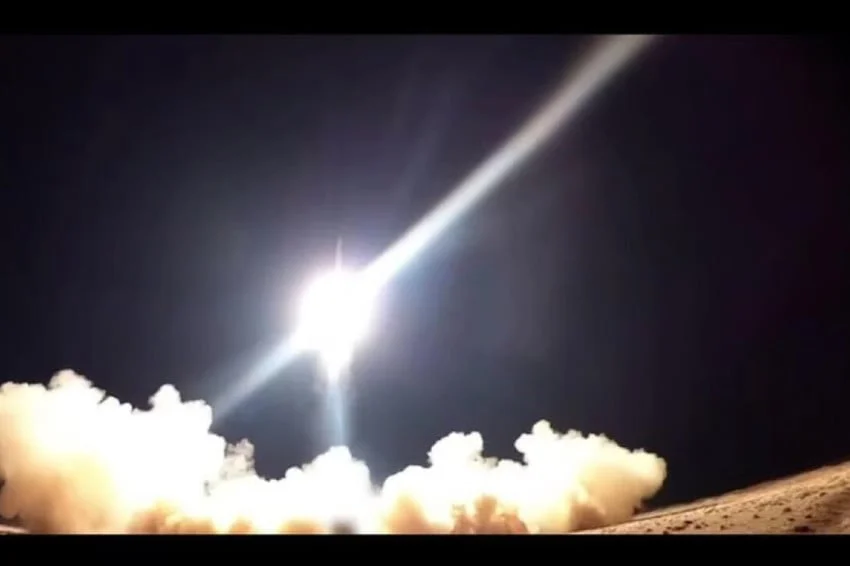
The United States Department of Defense has officially confirmed the deaths of two American service members and the disappearance of a third following a sophisticated large-scale assault by Iranian forces against a military installation in Jordan. The attack, which utilized a combination of high-precision ballistic missiles and loitering munitions—commonly referred to as kamikaze drones—targeted the Al-Muwaqqar Air Base, a facility critical to U.S. regional operations. This incident marks a significant and lethal escalation in the ongoing hostilities between Washington and Teheran, which have intensified since early 2026.
According to a detailed statement released by the United States Central Command (CENTCOM) on Saturday, the fatalities occurred during a period of intense kinetic engagement on Friday. U.S. and partner forces were reportedly engaged in active defensive maneuvers to intercept an incoming barrage of Iranian-made weaponry when the casualties were sustained. The Pentagon noted that while several projectiles were successfully neutralized by integrated air defense systems, the sheer volume of the saturation attack allowed multiple warheads to impact the facility’s infrastructure.
In addition to the two confirmed deaths and the ongoing search for the missing soldier, CENTCOM reported that four other U.S. personnel sustained injuries significant enough to require medical evacuation. These individuals were transported to a nearby Jordanian medical facility for stabilization. Officials have since confirmed that these four soldiers have been treated and subsequently discharged, though they remain under observation for potential long-term effects, such as traumatic brain injuries (TBI), which are common in the aftermath of heavy missile strikes.
Immediate Aftermath and Official Responses
The gravity of the situation was underscored by U.S. Secretary of Defense Pete Hegseth, who addressed the nation via a statement on the social media platform X. Hegseth confirmed the loss of life and emphasized the resilience of the American military in the face of direct aggression. "The sacrifice of these brave service members only serves to strengthen our national resolve," Hegseth stated. "We will not be deterred by acts of state-sponsored terror, and those responsible for this unprovoked escalation will be held to account."
The incident in Jordan represents the first instance of American combat fatalities since the most recent cycle of violence between Washington and Teheran reignited earlier this month. Reports from Axios indicate that this latest strike brings the total number of U.S. military fatalities to 16 since the onset of the broader regional campaign launched by the U.S. and Israel against Iranian interests in late February 2026.
Footage released by Iranian state-affiliated media outlets, including Mehr News Agency, purportedly shows the scale of the destruction at Al-Muwaqqar. The recordings depict massive fires and secondary explosions within the perimeter of the airbase, suggesting that fuel depots or ammunition storage sites may have been struck. While the Pentagon has acknowledged "significant damage" to certain structures, they have maintained that the base remains operational, albeit at a reduced capacity.
Chronology of the 2026 Escalation
The attack on Al-Muwaqqar Air Base is not an isolated event but rather the culmination of a months-long deterioration of security in the Middle East. To understand the significance of this event, it is necessary to examine the timeline of the 2026 conflict:
- Late February 2026: Following a series of maritime provocations and cyberattacks, the United States and Israel launched a joint military campaign aimed at degrading the Islamic Revolutionary Guard Corps (IRGC) infrastructure across Syria and western Iran. This marked the end of the "shadow war" and the beginning of overt kinetic operations.
- March – May 2026: Iran responded with a series of proxy-led strikes against U.S. bases in Iraq and Syria. During this period, the U.S. intensified its "Maximum Pressure 2.0" strategy, involving both economic sanctions and targeted airstrikes against drone manufacturing facilities inside Iran.
- June 2026: Tensions spiked when a U.S. Navy vessel intercepted a large shipment of advanced ballistic missiles allegedly bound for regional militias. Teheran warned that any further interference with its "strategic exports" would be met with a direct response.
- Early July 2026: Conflict reignited with renewed vigor as Iran began utilizing its domestic soil to launch direct attacks on regional targets, moving away from its traditional reliance on proxies.
- July 18, 2026: The coordinated strike on Al-Muwaqqar Air Base in Jordan occurs, resulting in the highest single-day U.S. casualty count of the year.
Technical Analysis of the Attack
Military analysts suggest that the strike on Al-Muwaqqar utilized a "swarm and strike" tactic designed to overwhelm modern air defense systems like the MIM-104 Patriot and the Counter Rocket, Artillery, and Mortar (C-RAM) systems. The attack likely involved Shahed-series kamikaze drones acting as decoys to saturate the radar and exhaust the interceptor inventory of the base.
Following the drone swarm, Iran is believed to have launched Fateh-110 or Zolfaghar short-range ballistic missiles (SRBMs). These missiles are known for their high terminal velocity and precision-guided capabilities, making them difficult to intercept once they enter their final descent phase. The combination of slow-moving, low-altitude drones and high-speed, high-altitude missiles creates a "layered threat" that complicates the task of any air defense commander.
The presence of a missing soldier suggests that the impacts may have caused significant structural collapses or that the individual was caught in the open during the chaos of the bombardment. Search and rescue (SAR) teams are currently scouring the debris and the surrounding desert area, though the Pentagon has remained tight-lipped regarding the specific circumstances of the soldier’s disappearance.
Geopolitical Implications for Jordan and the Region
The choice of Jordan as a target is strategically significant. Jordan has long been a stable and crucial ally for the United States in the Middle East, hosting several thousand U.S. troops and serving as a hub for logistical and intelligence operations. By striking a base on Jordanian soil, Teheran is sending a clear message: no country in the region is safe if it continues to facilitate U.S. military presence.
This attack places the Jordanian government in a precarious position. While Amman maintains a deep security partnership with Washington, there is significant domestic pressure regarding the kingdom’s involvement in regional conflicts. The violation of Jordanian sovereignty by Iranian missiles could force a diplomatic crisis, as the Jordanian government must balance its alliance with the U.S. against the risk of becoming a permanent battlefield for foreign powers.
Furthermore, the strike signals a shift in Iranian doctrine. Historically, Iran has sought to maintain "plausible deniability" by using groups in Iraq, Lebanon, or Yemen to carry out attacks. However, the use of ballistic missiles—which are easily traced back to their launch points within Iran—indicates that Teheran is no longer concerned with deniability and is prepared for a direct state-to-state confrontation.
Domestic and International Fallout
In Washington, the deaths of American soldiers have sparked a firestorm of political debate. Members of the Senate Armed Services Committee have called for an immediate and "disproportionate" response to the attack. There is growing pressure on the administration to target IRGC command centers or economic infrastructure within Iran to establish a credible deterrent.
Conversely, some international observers and humanitarian organizations fear that a heavy-handed U.S. response could trigger a full-scale regional war that would disrupt global energy markets and lead to a catastrophic loss of civilian life. The Strait of Hormuz, a vital artery for global oil shipments, remains a primary concern; any escalation could lead to an Iranian attempt to blockade the waterway, sending global oil prices to unprecedented levels.
The United Nations Security Council is expected to convene an emergency session to discuss the escalation. However, with global powers deeply divided, it is unlikely that any binding resolution will be passed. Russia and China, which have strengthened their ties with Teheran in recent years, are expected to call for "restraint from all parties," while the U.S. and its European allies will likely push for increased international sanctions.
The Path Forward
As the search for the missing soldier continues, the U.S. military has reportedly moved additional air defense assets into the region. Sources within the Pentagon suggest that a "retaliatory package" is being prepared, though the timing and nature of the response remain classified. The primary challenge for U.S. policymakers is to craft a response that is strong enough to deter future Iranian attacks without providing Teheran with the pretext to launch an all-out war.
The deaths at Al-Muwaqqar Air Base have changed the calculus of the 2026 conflict. For months, the engagement remained a series of low-intensity skirmishes and tactical strikes. Now, with American blood spilled on Jordanian soil, the conflict has entered a more volatile and unpredictable phase. The international community now watches closely, as the decisions made in the coming days will determine whether the Middle East can pull back from the brink of a much larger and more devastating conflagration.
The Pentagon has stated it will release the names of the deceased service members 24 hours after the notification of next of kin is complete. Until then, the military community and the nation remain in a state of mourning, even as the drums of war beat louder across the sands of the Middle East.
