
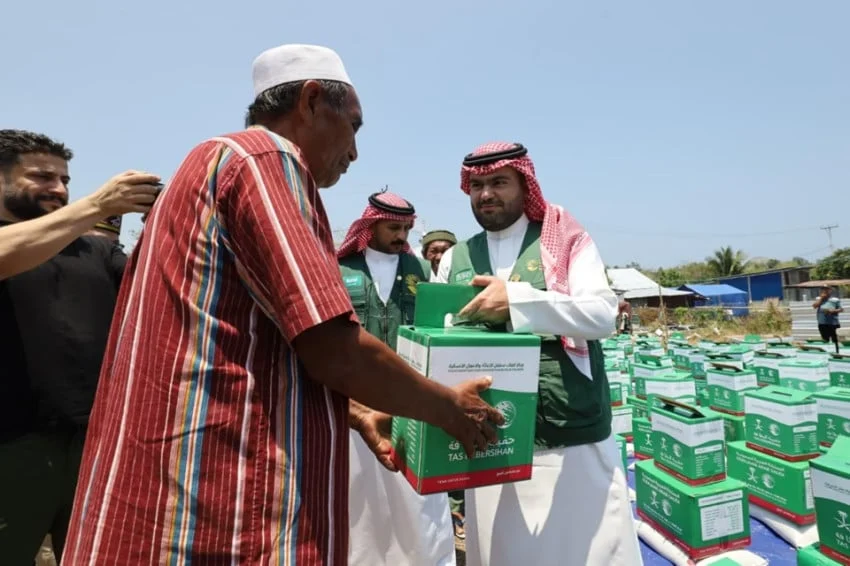
The humanitarian landscape in East Nusa Tenggara (NTT), Indonesia, has been significantly bolstered by the arrival of a massive relief consignment from the King Salman Humanitarian Aid and Relief Centre (KSrelief). This international intervention, valued at approximately Rp18 billion (roughly USD 1.1 million), provides a vital lifeline to thousands of survivors following the devastating M7.7 earthquake that struck the Flores region. The aid distribution, coordinated in partnership with the National Zakat Agency of the Republic of Indonesia (Baznas RI), represents a critical juncture in the ongoing recovery phase, offering essential supplies to displaced families struggling to rebuild their lives amidst the wreckage.
The logistical operation reached its peak on Thursday, November 5, 2026, when officials from Baznas RI accompanied the delivery of goods to the Waso Refugee Post in Kampung Sori, Satar Kampas Village, located in the Lamba Leda Utara district of East Manggarai. The mission, however, was fraught with geopolitical and logistical complexities. Despite internal instability in Saudi Arabia and the temporary closure of Riyadh Airport, which necessitated the selection of difficult, non-traditional flight routes, the KSrelief delegation maintained its commitment to ensuring the aid reached the most vulnerable populations in Indonesia.
Chronology and Context of the Flores Disaster
The seismic event that triggered this humanitarian crisis remains one of the most significant natural disasters in the region in recent years. On the date of the primary M7.7 earthquake, the tectonic activity caused widespread structural collapse across Flores and its neighboring islands. According to official government data, the disaster resulted in a tragic death toll of 142 individuals. Of these, 94 deaths occurred directly within the confines of refugee camps, underscoring the precarious conditions faced by survivors who had already lost their homes and were struggling to access basic sanitation and medical support.
The disaster created a cascade of secondary emergencies, including the disruption of clean water supplies, the destruction of schools, and the displacement of thousands of families. The aftermath was characterized by frequent aftershocks, which hampered initial search and rescue operations and delayed the establishment of formal humanitarian corridors. By the time the KSrelief aid arrived, the community had been contending with the consequences of the quake for several weeks, with resources at local village posts nearing total depletion.
Scope of the Humanitarian Intervention
The relief package distributed by Baznas and KSrelief is comprehensive, designed to address the immediate physiological needs of the displaced population. Idy Muzayyad, the leader of the distribution and empowerment division at Baznas RI, confirmed that the aid consists of 15,000 food packages (sembako) and 15,000 personal hygiene and health kits.
"The contribution of Rp18 billion is not merely a financial figure; it is a manifestation of the solidarity between the Kingdom of Saudi Arabia and the people of Indonesia," Muzayyad stated during his visit to East Manggarai on November 6, 2026. "On behalf of the Indonesian government and the victims of the NTT earthquake, we express our profound gratitude to King Salman and the KSrelief team for their unwavering attention during our darkest hour."
The distribution process was conducted systematically, prioritizing remote areas that had been historically underserved by larger aid organizations. The collaboration between an international Saudi-based relief agency and Indonesia’s national Zakat authority highlights a strategic approach to humanitarian logistics, leveraging local knowledge of regional geography to ensure equitable aid delivery.
Strategic Roadmap: Beyond Emergency Relief
While the current distribution focuses on immediate survival, the partnership between Baznas and KSrelief has already established a long-term framework for recovery. The humanitarian strategy is divided into distinct phases to ensure sustainability and effective reconstruction.
Phase two of the operation, which is currently in the planning and procurement stages, focuses on the rehabilitation of essential social infrastructure. This includes:
- Health Infrastructure: The establishment of mobile medical clinics and the provision of portable medical equipment to replace destroyed local health centers (Puskesmas).
- Housing Solutions: The deployment of temporary housing units (huntara) designed to provide safe, weather-resistant shelter for families who lost their primary residences.
- Sanitation Facilities: The construction of communal MCK (mandi, cuci, kakus) facilities, which are essential to prevent the outbreak of waterborne diseases in crowded refugee settlements.
Furthermore, Baznas has launched a specialized initiative to protect the educational future of NTT’s youth. Acknowledging that many students from the region face financial ruin due to the loss of their families’ livelihoods, the agency has allocated a scholarship fund of Rp3 million per individual for 3,000 university students originally from NTT. This initiative is designed to prevent a secondary crisis of school dropouts, ensuring that the economic impact of the earthquake does not permanently derail the academic prospects of the next generation.
Impact Analysis and Geopolitical Significance
The involvement of KSrelief in the Indonesian earthquake response is indicative of the "humanitarian diplomacy" practiced by the Kingdom of Saudi Arabia. By mobilizing resources during a period of domestic volatility in the Middle East, the organization demonstrated a high level of operational resilience. For Indonesia, the arrival of this aid provides a necessary buffer against the fiscal pressure of a large-scale disaster, allowing the national budget to be distributed more efficiently across other recovery sectors.
From a sociological perspective, the presence of external aid providers in remote areas like Lamba Leda Utara provides a psychological boost to the survivors. The knowledge that the international community is monitoring their recovery process can mitigate the feelings of abandonment often experienced by rural disaster victims. However, experts note that the success of this aid will ultimately depend on the transparency and efficiency of the "last-mile" delivery, ensuring that the aid is not redirected and reaches the families who are currently residing in temporary, makeshift structures.
Challenges in Post-Disaster Recovery
Despite the influx of aid, the road to recovery for NTT remains arduous. The geographical profile of East Nusa Tenggara, characterized by rugged terrain and maritime isolation, poses constant challenges to the distribution of heavy construction materials needed for permanent housing. Furthermore, the persistent aftershocks mentioned in recent geological reports have created an environment of "permanent instability," where residents are hesitant to invest in permanent structural repairs for fear of future seismic damage.
Baznas has urged the local government to implement stricter building codes for future reconstruction efforts. The high mortality rate in the refugee camps suggests that the initial evacuation protocols were insufficient to protect survivors from the dangers of secondary disasters, such as landslides and infrastructure failure. The current focus on building "resilient housing" under the joint Baznas-KSrelief initiative is expected to set a new standard for post-disaster planning in the region.
Looking Ahead: A Call for Sustained Support
As the humanitarian operation enters its next phase, the focus must shift from relief to sustainable development. The partnership between Baznas and KSrelief serves as a model for how Zakat-based institutions can partner with global humanitarian entities to bridge the gap in emergency funding.
Idy Muzayyad concluded his remarks by emphasizing the need for continued patience and resilience. "The road ahead is long, and the scars of this earthquake will take time to heal. We call upon all stakeholders, both domestic and international, to maintain their support. Baznas will remain on the ground as long as necessary to ensure that every cent of this aid contributes to the restoration of dignity and safety for the people of NTT."
As of mid-November 2026, the combined efforts of the government, non-governmental organizations, and international partners have managed to stabilize the immediate crisis. However, the true measure of success will be the speed with which the 3,000 students can return to their studies and the efficiency with which the temporary housing units are transitioned into stable, long-term environments. The NTT earthquake stands as a sobering reminder of the volatility of the Indonesian archipelago, and the ongoing intervention by KSrelief provides a essential pillar of support in the face of nature’s unpredictable power.
