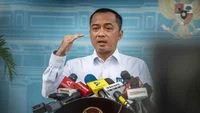
The Indonesian government has officially announced a sweeping administrative reform concerning the national workforce, confirming that part-time Government Employees with Employment Agreements (PPPK or P3K) will be transitioned into full-time status effective January 1, 2027. This landmark decision was confirmed by Minister of State Secretary Prasetyo Hadi following a high-level finalization meeting with the House of Representatives (DPR RI) and various ministerial stakeholders at the Parliamentary Complex in Senayan, Jakarta, on Friday, November 6.
This policy shift represents a significant departure from previous labor arrangements within the civil service, aiming to streamline the status of non-permanent government personnel and provide greater job security and standardized benefits for hundreds of thousands of public servants across the archipelago.
Chronology of the Policy Development
The path to this announcement has been marked by a series of strategic deliberations between the executive and legislative branches. The discourse surrounding the status of part-time PPPK personnel gained momentum throughout 2026 as the government sought to address inconsistencies in public service delivery and the precarious nature of contractual employment in the public sector.
Initial signals regarding this policy were first brought to public attention by the Minister of Basic and Secondary Education, Abdul Mu’ti, in late September 2026. During a hearing with Commission X of the DPR RI on July 21, 2026, Minister Mu’ti emphasized that the transition for educators would be conducted without the need for additional competency assessments. This "no-test" policy was designed to recognize the existing service and experience of current personnel, allowing for a seamless transition as the country moves into the 2027 fiscal year.
The finalization process culminated in the November 6, 2026, inter-ministerial meeting, where the scope of the transition was expanded beyond the education sector to include various critical public service roles.
Expanding the Scope: Beyond Education
While the initial focus of the transition was heavily concentrated on teaching staff—who have long voiced concerns regarding job stability—the government has recognized the systemic necessity of including other essential frontline workers. Minister Prasetyo Hadi clarified that the transition to full-time status will encompass a diverse array of sectors, including:
- Higher Education: Lecturers currently serving under part-time agreements.
- Emergency and Security Services: Firefighters and personnel within the Public Order Agency (Satpol PP).
- Healthcare: Medical personnel and support staff working within the public health system.
- Technical and Administrative Services: A broad category covering specialized technical roles and general administrative service providers.
This inclusive approach reflects a broader government mandate to strengthen the resilience of public institutions. By formalizing these roles, the state aims to enhance service quality, reduce turnover, and ensure that personnel tasked with public safety and health have the long-term institutional support required to perform their duties effectively.
Supporting Data and Administrative Logistics
The logistical foundation for this transition rests on a rigorous data collection process currently being spearheaded by local governments. As Minister Mu’ti noted during his earlier sessions with the legislature, the Ministry has requested that regional governments submit comprehensive databases of their current part-time staff. This data verification is critical to ensure that the transition is both accurate and inclusive, preventing administrative gaps that could leave eligible workers in limbo.
The scale of this transition is substantial. According to civil service data, the number of non-permanent or part-time government employees in Indonesia has been a subject of intense scrutiny for years. Historically, the "honorary" (honorer) status created a fragmented employment landscape. The shift to full-time PPPK status is a final phase in the government’s long-term plan to phase out the honorer system entirely, replacing it with a more sustainable and regulated employment framework.
Official Responses and Legislative Oversight
The decision has received broad support from the DPR RI, which has been pushing for a definitive resolution to the employment status of regional contract workers. Legislative members have argued that the uncertainty of part-time status hinders the performance of essential workers, particularly in regions where public services are understaffed.
The administrative burden of this shift will be managed through the state budget (APBN) and regional budgets (APBD). Analysts note that while this represents a significant increase in recurrent government expenditure—specifically regarding salary adjustments, social security (BPJS), and pension considerations—it is expected to yield long-term gains in productivity and public service reliability. By formalizing the workforce, the government can implement stricter professional standards and performance-based evaluation metrics, which are often difficult to enforce with contract-based or part-time personnel.
Implications for the Public Sector
The transition, scheduled for January 1, 2027, will have far-reaching implications for the Indonesian bureaucracy. Among the most notable impacts are:
- Standardization of Compensation: Full-time PPPK status provides a standardized wage structure that is commensurate with state-level professional requirements. This mitigates the wide pay disparities often seen between local and central government employees.
- Professional Development: Transitioning to full-time status allows employees access to state-sponsored training programs, certification pathways, and career development opportunities that were previously restricted to permanent civil servants (PNS) or full-time PPPK holders.
- Human Capital Retention: The public sector, particularly in healthcare and education, has faced challenges in retaining talent due to the volatility of part-time contracts. This move is expected to stabilize the workforce, ensuring that skilled professionals remain within the public system rather than seeking employment in the private sector.
- Administrative Efficiency: By consolidating disparate employment categories into a single, recognized status, the government simplifies its payroll and human resources management, reducing the bureaucratic complexity that has long characterized the Indonesian civil service system.
Challenges and Future Considerations
Despite the positive reception of the announcement, experts warn that the transition will not be without challenges. The primary hurdle remains the fiscal capacity of regional governments, which are responsible for the payroll of many of these workers. Ensuring that local budgets can sustain the shift from part-time to full-time compensation packages will require careful coordination between the Ministry of Finance and local authorities.
Furthermore, the "no-test" policy for the transition, while popular and efficient for immediate implementation, raises questions regarding long-term quality control. The government will need to implement robust post-transition evaluation systems to ensure that the personnel who are now granted full-time status meet the performance expectations required for their respective roles.
Minister Prasetyo Hadi’s confirmation has provided much-needed clarity for millions of workers, marking the beginning of a new chapter for Indonesia’s public service. As the calendar approaches January 1, 2027, all eyes will be on the Ministry of Administrative and Bureaucratic Reform and the Ministry of Finance as they finalize the regulatory frameworks necessary to implement this transition across the nation.
Broader Socio-Economic Context
The decision to elevate these workers to full-time status is not merely an administrative adjustment; it is a socio-economic imperative. In a period of global economic uncertainty, the provision of stable, government-backed employment serves as a stabilizer for the middle class. The inclusion of healthcare workers and teachers is particularly significant, as these sectors are the pillars of the country’s Human Development Index (HDI).
By prioritizing these sectors, the government is signaling a commitment to improving the quality of public life. For the individual workers, this transition means the realization of social security benefits, fixed monthly incomes, and the dignity of recognized public service status.
As the implementation phase begins, the government is expected to issue a series of technical decrees and guidelines to assist regional governments in the transition. This period of preparation will be vital for ensuring that no eligible individual is overlooked during the administrative conversion. The successful execution of this policy will likely be viewed as a milestone in the administration’s efforts to reform the Indonesian civil service, creating a more professional, secure, and effective government workforce for the years to come.
Ultimately, the policy serves as a testament to the ongoing evolution of the Indonesian state. By moving away from the precarious "honorary" model and embracing a modernized, full-time employment structure, the government is laying the groundwork for a more robust public sector, capable of meeting the challenges of a rapidly changing nation. The transition on January 1, 2027, will not only change the status of individual employees but will fundamentally alter the relationship between the Indonesian state and the workforce that sustains it.