
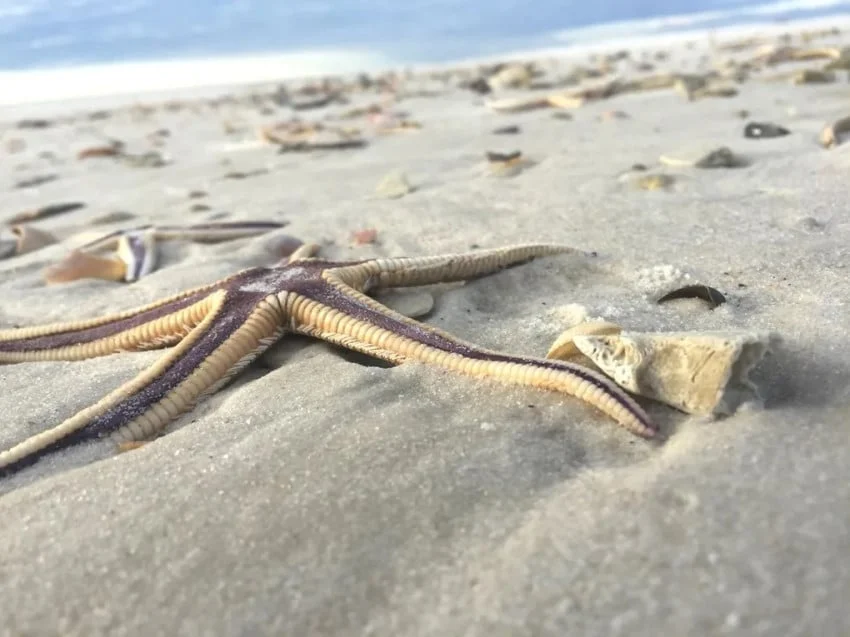
The serene shores of Karon Beach in Phuket, Thailand, became the site of a perplexing ecological phenomenon on Wednesday morning as hundreds of starfish were discovered washed ashore, many appearing to be lifeless. The incident, which rapidly gained traction across social media platforms, has prompted calls for an immediate investigation into the environmental stability of the Andaman Sea coastline. The sighting, documented by local residents and visitors, has raised significant questions regarding the health of the local marine ecosystem and the potential catalysts for such an unusual mass stranding event.
The discovery was brought to public attention when a local Facebook user, Dechaphawida Chueanak, posted photographic evidence of the incident. The images depicted an extensive stretch of the Karon coastline littered with numerous starfish, characterized by their elongated, multi-armed bodies adorned with distinct, alternating light and dark patterns. The sheer volume of the marine creatures strewn across the sand prompted immediate concern from both the local community and international tourists who frequent this popular destination in the Mueang Phuket district.
Chronology of the Incident
The sequence of events began in the early hours of Wednesday morning. Local beachgoers arriving for sunrise walks first observed the atypical concentration of starfish along the intertidal zone. By mid-morning, the scale of the stranding became clear, as the animals spanned a significant portion of the beach’s length.
As the morning progressed, the influx of social media documentation began to circulate, leading to heightened interest from local authorities and marine biologists. However, by midday, the natural tidal cycle began to intervene. As the tide rose and waves pushed further up the sandy slope, the majority of the stranded starfish were carried back into the depths of the Andaman Sea. While this effectively cleared the beach of the visible debris, it also presented a challenge for researchers, as the immediate collection of physical specimens for autopsy and chemical analysis was significantly hampered.
Marine Ecological Context and Potential Causes
In the field of marine biology, the mass stranding of echinoderms—the phylum to which starfish belong—is rarely an isolated event. While it is not uncommon for small numbers of starfish to be displaced by turbulent currents, a mass event of this magnitude typically suggests a more systemic environmental trigger.
Experts generally categorize the causes of such events into three primary domains: biological, physical, and anthropogenic.
-
Physical and Hydrodynamic Factors: Phuket’s coastline is subject to seasonal monsoon shifts. Strong undersea currents, particularly those associated with rapid changes in water pressure or temperature, can inadvertently sweep benthic creatures from their habitats and deposit them in the surf zone. The "Karon phenomenon" may be linked to specific localized eddy currents that occurred during the night, effectively trapping the starfish in the shallow, high-energy environment of the beach.
-
Water Quality and Environmental Stress: Fluctuations in water chemistry, such as sudden changes in salinity or oxygen levels—often caused by seasonal runoff or localized algal blooms—can distress marine populations. When oxygen levels drop, starfish, which require consistent water movement for respiration, may become incapacitated and vulnerable to being swept away by tidal movements.
-
Anthropogenic Influence: While there is currently no evidence of direct chemical pollution or industrial waste being the culprit, the proximity of Karon Beach to major tourism hubs necessitates an examination of water runoff and maritime traffic. However, marine biologists caution against premature conclusions, noting that similar events have been recorded in the past that were attributed entirely to natural shifts in oceanographic conditions.
Official Responses and Marine Conservation Protocols
The Department of Marine and Coastal Resources (DMCR) in Thailand frequently monitors the health of Phuket’s marine biodiversity. In the wake of the Karon Beach incident, the department is expected to conduct a comprehensive review of water samples taken from the area. While the starfish were returned to the sea by the tide, environmental agencies often utilize the timing and location data of such events to map potential "danger zones" for marine life.
Local authorities have urged the public to refrain from handling such marine life if future incidents occur. Aside from the potential for the starfish to be alive and sensitive to physical trauma, certain species possess natural defenses or can harbor bacteria that may be harmful to humans. Conservationists emphasize that the primary goal in these scenarios is to allow the animals to recover in their natural habitat if they are still living, rather than interfering with their biological processes.
Broader Implications for Phuket’s Ecosystem
The incident at Karon Beach serves as a reminder of the fragility of coastal ecosystems, even in heavily monitored tourist regions. Phuket acts as a gateway to the Andaman Sea, a region of immense biodiversity that includes protected coral reefs and sensitive seagrass beds. Starfish serve as vital indicators of the health of these reefs; as predators and scavengers, their population density and behavior provide data on the overall balance of the seabed.
If the mass stranding is determined to be a result of human-induced environmental change, such as climate-driven shifts in sea temperature or localized pollution, it could necessitate a stricter regulatory framework for the hospitality and shipping industries operating along the Phuket coast. If, conversely, the event is identified as a natural, cyclical phenomenon, it underscores the need for more robust early-warning systems to protect marine species during periods of high oceanic volatility.
Historical Precedent and Comparative Analysis
This is not the first time that marine creatures have washed up on the shores of southern Thailand. In recent years, incidents involving jellyfish blooms and the occasional stranding of mollusks have been recorded along the Andaman coastline. However, the specific species of starfish involved in the Karon Beach event has prompted specific interest due to their physical robustness.
Historically, mass strandings of echinoderms have been observed globally, from the coasts of California to the Mediterranean. In many of these cases, the culprits were found to be "hypoxic events," where deep, oxygen-depleted water is pushed up onto the shore, effectively suffocating the creatures on the seafloor before they are washed up. Researchers will be looking for data from local water sensors to determine if a similar localized hypoxic event occurred off the coast of Karon.
Conclusion and Future Outlook
The disappearance of the starfish by the afternoon tide has left researchers with limited physical evidence, but the digital footprint left by social media users has provided a crucial timeline for the event. As Phuket continues to balance its status as a world-class tourism destination with its responsibility to protect its natural resources, incidents like this serve as a critical catalyst for scientific dialogue.
For the local community, the event has sparked a renewed interest in marine conservation. Many residents have expressed a desire for more transparency from environmental agencies regarding the health of the sea, noting that the ocean is the lifeblood of the island’s economy and culture.
Moving forward, the DMCR is likely to increase surveillance along the western coast of Phuket. The public is encouraged to continue reporting such anomalies to local authorities immediately, ensuring that future events can be studied with the necessary scientific rigor. While the "Karon Beach mystery" remains, for now, a case of nature’s unpredictable behavior, it reinforces the necessity of maintaining a vigilant watch over the precious marine environment that defines the Andaman region. Scientists remain optimistic that with continued monitoring, they can determine whether this was a singular, anomalous event or a sign of deeper environmental shifts requiring more significant intervention. Until then, the beaches of Phuket remain a site of both wonder and, as demonstrated this Wednesday, cautionary tales regarding the delicate balance of the sea.
