
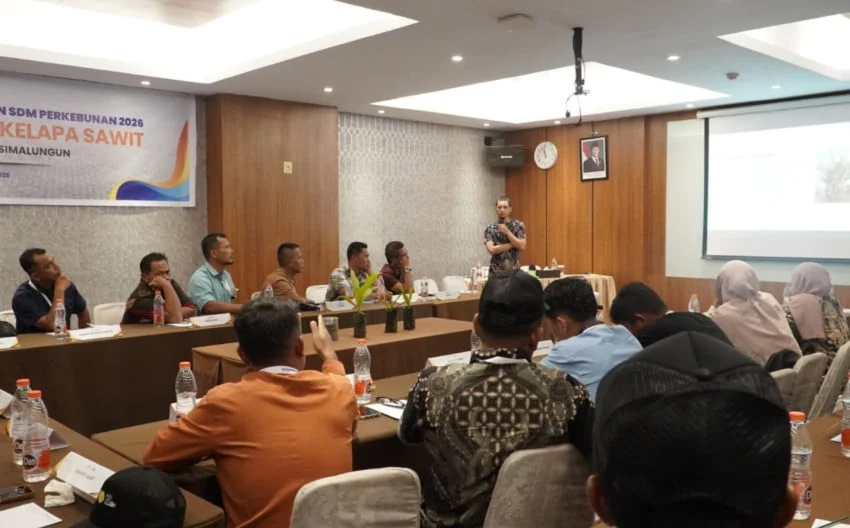
The Indonesian palm oil industry stands at a critical juncture where the enhancement of smallholder productivity has become the primary pillar for national economic stability. Addressing this imperative, the Pusat Penelitian Kelapa Sawit (PPKS), operating under the umbrella of PT Riset Perkebunan Nusantara (RPN), has officially concluded a high-impact technical training program aimed at 126 smallholder farmers from Simalungun, North Sumatra. The initiative, conducted as part of the broader 2026 Human Resource Development Program (SDMP) for Palm Oil, serves as a bridge between high-level agricultural research and the practical realities faced by farmers on the ground.
The Strategic Context of the SDMP 2026 Initiative
The palm oil sector remains the backbone of Indonesia’s agricultural exports. However, a significant productivity gap exists between large-scale industrial plantations and smallholder-managed plots. Smallholders currently manage approximately 40% of the country’s total oil palm plantation area, yet their yields consistently lag behind corporate-run estates. This discrepancy is often attributed to limited access to high-quality planting materials, suboptimal fertilization regimes, and traditional harvesting techniques that fail to optimize the oil extraction rate.
The SDMP 2026 program, supported by the Badan Pengelola Dana Perkebunan Kelapa Sawit (BPDPKS) and the Directorate General of Estates (Ditjenbun) at the Ministry of Agriculture, is designed to systematically dismantle these barriers. By facilitating a week-long intensive workshop held in Medan from September 13 to September 19, 2026, the RPN aimed to empower farmers with actionable knowledge that directly addresses the nuances of local soil and climate conditions in Simalungun.
Chronology of the Training Program
The program was meticulously structured to balance theoretical foundations with empirical field applications. The chronology of the event unfolded as follows:
- September 13, 2026: Commencement of the training in Medan, bringing together 126 selected participants from various cooperatives in Simalungun. The opening session emphasized the transition from conventional farming to modernized plantation management.
- September 14–17, 2026: Technical modules were delivered, covering advanced nursery practices, integrated nutrient management, precision fertilization, and sustainable pest and disease control.
- September 18, 2026: Field simulation and discussion sessions where participants presented specific challenges from their own plantations. This interactive component allowed experts from PPKS to provide tailored consultancy.
- September 19, 2026: The official closing ceremony, where Manager of Consultation Services at PPKS-RPN, Agus Eko Prasetyo, underscored the importance of post-training implementation and the long-term commitment of the organization to track progress in Simalungun.
Bridging the Gap: Knowledge Transfer and Technology Adoption
A central theme of the training was the integration of local wisdom with scientific expertise. Agus Eko Prasetyo emphasized that the farmers brought years of practical experience, which, when combined with the latest research from PPKS, could yield significant breakthroughs in yield per hectare.
"The objective is not merely to issue certificates," Prasetyo stated during the closing remarks. "True success is measured by the tangible changes in the plantation—improved canopy health, optimized fruit bunches, and, ultimately, a measurable increase in the farmer’s net income."
The curriculum focused on four critical pillars of modern palm oil cultivation:
- Nutrient Management: Moving away from blanket fertilizer application toward site-specific recommendations based on soil testing and leaf analysis.
- Plant Protection: Advanced identification and management of Ganoderma, a major threat to palm oil longevity, and other invasive organisms.
- Sustainability Practices: Adherence to Indonesian Sustainable Palm Oil (ISPO) standards to ensure that production does not compromise environmental integrity.
- Harvesting Optimization: Timing the harvest to ensure peak oil content, thereby increasing the value of the Fresh Fruit Bunches (FFB) sold to local mills.
Supporting Data and Industry Implications
To understand the urgency of this training, one must look at the national yield statistics. Smallholder plantations currently produce an average of 2.5 to 3 tons of Crude Palm Oil (CPO) per hectare per year, compared to the 5 to 7 tons achieved by state-owned and private industrial estates. Narrowing this gap by even 10% through better agronomy would represent a massive injection of capital into the rural economy of North Sumatra.
The inclusion of 126 farmers from Simalungun is part of a larger national roadmap. Simalungun is a key region for palm oil production in North Sumatra, characterized by diverse topography that requires specific technical interventions. By focusing on this region, the RPN and BPDPKS are targeting a high-potential area that can serve as a model for other districts.
The reliance on BPDPKS funding highlights the strategic use of export levies to reinvest in the industry’s human capital. By subsidizing education for smallholders, the government is effectively ensuring that the industry remains competitive in the global market, where sustainability and high-yield efficiency are increasingly demanded by international buyers.
Expert Analysis: The Path Forward
The impact of this program will likely manifest in the next two to three harvest cycles. According to agricultural analysts, the success of such initiatives is heavily dependent on the "extension service" model. Once the 126 farmers return to their communities, they are expected to act as "lead farmers" or facilitators, sharing their knowledge with fellow smallholders who were not able to attend the workshop.
However, challenges remain. The primary hurdle is the capital requirement for implementing advanced technology. While knowledge is provided, the cost of high-quality fertilizers and specialized equipment often requires access to micro-credit or cooperative-based purchasing power. Consequently, the collaboration between the RPN and the Directorate General of Estates is crucial, as it provides the institutional backing needed to facilitate these financial pathways.
Furthermore, the integration of technology into smallholder farming is not a one-time event. It is a continuous process of learning and adaptation. The PPKS has signaled that it will maintain a consultative role, providing a feedback loop for these farmers. This ongoing partnership model is a departure from traditional "one-off" training sessions and aligns with global best practices for agricultural development.
Broader Impact on the Regional Economy
In Simalungun, the palm oil sector acts as the primary economic driver for thousands of households. By increasing the efficiency of these smallholders, the training program contributes to:
- Poverty Alleviation: Higher yields translate directly to higher household incomes, allowing for better access to education and healthcare for farming families.
- Climate Resilience: Sustainable farming practices, such as proper soil management and water conservation, help plantations better withstand the impacts of climate change, including unpredictable rainfall patterns.
- Supply Chain Stability: Mills in the region benefit from a more consistent and higher-quality supply of FFB, reducing the risk of processing delays and improving the overall efficiency of the regional value chain.
As Indonesia continues to defend its position as the world’s leading palm oil producer, the emphasis on the "Human Capital" aspect of the industry has never been more vital. The PPKS-RPN initiative, backed by the BPDPKS, is a testament to a shift toward high-tech, knowledge-based farming. As the 126 participants return to their fields, the expectation is that they will not only transform their own plantations but also become the catalysts for a regional movement toward higher productivity and sustainable growth in the North Sumatran palm oil sector. The success of this 2026 program may well serve as a blueprint for the next decade of smallholder development across the Indonesian archipelago.
