
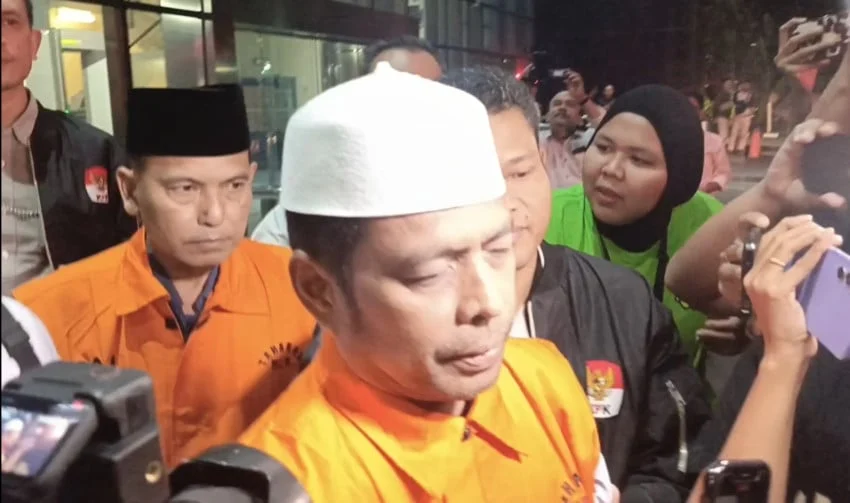
The Indonesian Corruption Eradication Commission (KPK) has detained three individuals implicated in a bribery scheme involving grant funds from the East Java Provincial Budget for the years 2021-2022. The suspects, identified as Achmad Yahya (AY), M. Fathullah (MF), and Ra. Wahid Ruslan (RWR), all described as private individuals from Pasuruan and Bangkalan regencies, are accused of offering a bribe amounting to Rp 6.9 billion to a member of the East Java Regional House of Representatives (DPRD Jatim), identified as AS, who has since been elected to the national House of Representatives (DPR). The alleged bribe was intended to secure favorable allocations of grant funds for community groups (Pokmas).
Background of the East Java Grant Scheme
The case centers around the disbursement of grant funds through the East Java Provincial Budget, a mechanism often utilized by regional governments to support community-driven initiatives and development projects. While intended to foster local development and empower community organizations, such grant schemes can also become susceptible to corruption if not properly managed and overseen. Allegations suggest that in the 2021-2022 period, the process of allocating these funds was allegedly influenced by illicit payments.
Community groups, or "Kelompok Masyarakat" (Pokmas), are typically registered entities aimed at implementing community-based programs, ranging from infrastructure development to social welfare initiatives. The provincial government, through its budgetary allocations, provides financial assistance to these groups to facilitate their projects. However, the distribution and oversight of these funds are crucial to ensure transparency and accountability.
The Alleged Bribery Mechanism
According to the KPK’s preliminary findings, the three detained suspects allegedly conspired to bribe AS, a sitting member of the East Java DPRD at the time and now a national DPR member. The substantial sum of Rp 6.9 billion was reportedly offered to AS to ensure that Pokmas groups associated with or influenced by the suspects would receive a larger share of the available grant funds.
"Then, based on the grant fund allocation obtained by AS, AY, RWR, and MF engaged in conditioning to secure a portion for their respective regions," stated Achmad Taufik Husein, Acting Director of Investigation at the KPK, during a press conference on Wednesday, July 22, 2026. This statement implies a coordinated effort by the suspects to leverage their connections and financial influence to manipulate the grant distribution process. The phrase "conditioning" suggests that the suspects were actively working to create favorable circumstances or exert pressure to ensure their desired outcomes.
The role of AS, as a legislator, is central to these allegations. Members of regional legislative bodies often have a degree of influence in budget deliberations and the allocation of discretionary funds, including grants. If the allegations hold true, AS’s alleged acceptance of the bribe would represent a significant breach of public trust and a direct violation of anti-corruption laws.
Chronology of Events Leading to Detention
While the full timeline of the alleged bribery scheme is still under investigation, the KPK’s recent action indicates a culmination of intelligence gathering and evidence collection. The KPK typically initiates investigations based on reports from the public, whistleblowers, or findings from their own surveillance operations.
The period under scrutiny is 2021-2022, suggesting that the alleged illicit activities took place over an extended duration. The KPK’s press conference on July 22, 2026, marks the public disclosure of the investigation and the detention of the three suspects. This signifies a critical stage in the legal process, where the KPK believes it has sufficient evidence to proceed with formal charges.
The KPK’s statement indicates that after AS secured a portion of the grant funds, the suspects then worked to ensure they received their desired share for their regions. This suggests a multi-stage process: first, influencing the allocation of funds through the legislator, and second, managing the subsequent distribution to benefit their local interests.
Supporting Data and Context
The scale of the alleged bribe, Rp 6.9 billion, is substantial and points towards significant financial interests at play. Grant funds for community development can range from millions to billions of Rupiah, depending on the scope of the projects and the regional budget. In East Java, a populous and economically significant province, the total allocation for community grants could be considerable.
For context, the East Java provincial budget for a given year often runs into tens of trillions of Rupiah. A portion of this budget is allocated for discretionary spending and grants aimed at supporting various sectors, including community empowerment. The specific amount disbursed as grants to Pokmas in 2021-2022 would provide further insight into the potential magnitude of the funds being influenced.
The KPK’s focus on this specific case highlights the ongoing challenge of ensuring probity in public fund management. Bribery and corruption in the allocation of grants can divert much-needed resources away from genuine community development projects, ultimately hindering the progress and welfare of the intended beneficiaries. This can lead to substandard project execution, lack of accountability, and a general erosion of public trust in governance.
Official Responses and Public Reaction
The KPK, as the primary anti-corruption agency in Indonesia, has a mandate to investigate, prosecute, and eradicate corruption. Their detention of the three suspects and the public announcement of the case underscore their commitment to enforcing anti-corruption laws. The KPK’s Acting Director of Investigation, Achmad Taufik Husein, provided the initial official statement, outlining the core allegations.
While direct statements from the accused have not yet been publicly reported, their legal representatives are expected to respond to the charges. The individual identified as AS, currently a member of the DPR, would likely face scrutiny and potential investigation by the KPK as well, depending on the evidence gathered. The KPK has a history of pursuing high-profile cases, including those involving public officials and legislators.
Public reaction to such cases in Indonesia is often one of concern and a demand for accountability. Corruption involving public funds, especially those meant for community development, is viewed as a betrayal of public trust. Citizens often look to law enforcement agencies like the KPK to act decisively and ensure that those found guilty are brought to justice.
Broader Impact and Implications
The implications of this case extend beyond the immediate legal proceedings. Firstly, it raises questions about the transparency and oversight mechanisms in place for the disbursement of grant funds in East Java. The KPK’s investigation may lead to recommendations for strengthening these processes to prevent future abuses. This could involve stricter eligibility criteria, more rigorous vetting of grant proposals, enhanced monitoring of fund utilization, and greater public access to information regarding grant allocations.
Secondly, the alleged involvement of a legislator, particularly one who has ascended to national office, can have a significant impact on public perception of political integrity. It underscores the need for robust ethical codes and enforcement mechanisms for elected officials at all levels of government. The case also highlights the persistent challenge of "money politics," where financial influence is used to gain or maintain political power and access to resources.
Thirdly, the diversion of funds through bribery can have tangible consequences for the communities that were intended to benefit from the grants. Projects may be delayed, underfunded, or never initiated, leading to missed opportunities for local development and a perpetuation of existing socio-economic disparities.
The KPK’s action in detaining the three suspects is a crucial step in holding individuals accountable for alleged corruption. The subsequent investigation and potential prosecution will be closely watched, as they will determine the extent of culpability and the potential for systemic reforms to safeguard public funds and ensure equitable development. The case serves as a stark reminder of the continuous fight against corruption and the importance of strong governance and transparency in public administration. The Rp 6.9 billion alleged bribe is not merely a financial figure but represents a potential loss to public good and a challenge to the principles of fair and just governance.
