
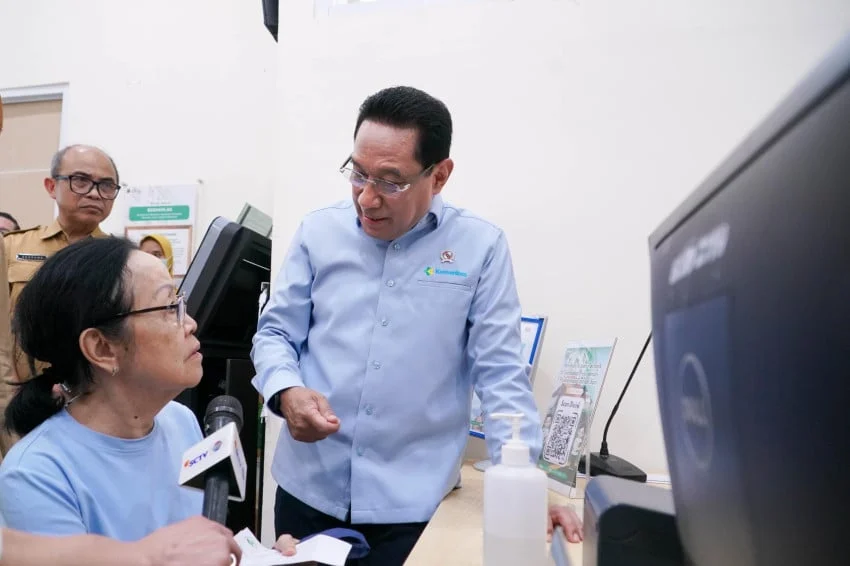
The Ministry of Health of the Republic of Indonesia has reported a substantial breakthrough in the national fight against tuberculosis, with DKI Jakarta achieving a notable 26 percent coverage rate for Tuberculosis Preventive Therapy (TPT). This figure represents a dramatic improvement compared to the baseline of approximately 5 percent recorded between 2021 and 2022. The data emerged following an intensive monitoring and evaluation session led by Deputy Minister of Health, Dr. Benjamin Paulus Octavianus, in the Taman Sari District of West Jakarta. The visit involved collaborative oversight from the Jakarta Provincial Health Office, eight local Community Health Centers (Puskesmas), and key regional healthcare facilities, including Pelni Hospital, Sumber Waras Hospital, and Cengkareng Regional General Hospital.
Contextualizing the Tuberculosis Crisis in Indonesia
Tuberculosis (TB) remains a critical public health challenge in Indonesia. According to the World Health Organization (WHO) Global Tuberculosis Report, Indonesia consistently ranks among the countries with the highest burden of TB cases globally. For decades, the national strategy focused predominantly on curative measures—identifying symptomatic patients and ensuring they completed the standardized medication regimen. While this approach has saved countless lives, it often failed to address the reservoir of latent TB infection among individuals who have been in close contact with active cases but have not yet manifested the disease.
The shift toward a more proactive preventive strategy is part of Indonesia’s broader commitment to the "End TB Strategy," which aims to reduce TB incidence by 90 percent and TB deaths by 95 percent by 2035. The acceleration of TPT coverage in Jakarta serves as a pilot success story, demonstrating that localized, multi-stakeholder intervention can effectively bridge the gap between screening and prophylactic treatment.
Chronology of the Intervention and Evaluation
The recent progress in Jakarta is the culmination of a multi-year strategic pivot initiated by the Ministry of Health. In the 2021-2022 period, the national TB program faced significant setbacks due to the disruption of health services caused by the COVID-19 pandemic. During this era, TB case notification rates plummeted, and preventive efforts were largely sidelined.
In early 2024, the Ministry of Health designated Jakarta and the Bangka Belitung Islands as priority provinces for accelerated TB elimination. This designation triggered a series of operational changes:
- First Quarter 2024: Strengthening of the contact tracing protocol. The Ministry mandated that every diagnosed TB patient must have their household and close contacts screened within 48 hours of notification.
- Second Quarter 2024: Deployment of digital monitoring tools at the Puskesmas level to track TPT compliance in real-time.
- Third Quarter 2024: Integration of hospital-based TB services with primary care providers, ensuring that patients treated at major institutions like RS Pelni were referred back to their local Puskesmas for follow-up on family contacts.
- November 2026: The evaluation visit by Deputy Minister Dr. Benjamin Paulus Octavianus in Taman Sari, which officially confirmed the 26 percent milestone.
Analyzing the 26 Percent Coverage Rate
The jump from 5 percent to over 26 percent is statistically significant and indicates a fundamental change in clinical practice. In the public health sector, TPT is often viewed as a difficult intervention to scale because it requires high levels of patient adherence—often involving several months of medication for individuals who feel perfectly healthy.
The success in Jakarta can be attributed to several factors. First, the move toward shorter, more tolerable TPT regimens—such as the 3HP (three months of once-weekly Isoniazid and Rifapentine) regimen—has improved patient retention compared to the older, six-month daily Isoniazid monotherapy. Second, the intensification of the "Investigate, Screen, and Treat" model has ensured that resources are directed precisely where the risk of transmission is highest.
However, health experts note that while 26 percent is a major achievement, it remains below the national target for optimal TB control, which usually aims for upwards of 80 percent coverage among eligible close contacts. This suggests that while the trajectory is positive, the system must now focus on sustainability and expanding the reach to more vulnerable or mobile populations.
Official Stance and Strategic Directives
During the evaluation in Taman Sari, Dr. Benjamin Paulus Octavianus underscored the importance of shifting the focus from reaction to prevention. He emphasized that the efficacy of the national TB program is currently bifurcated: excellent in patient management, but lagging in preventive surveillance.
"We have mastered the art of treating TB patients. However, our primary challenge today is the preventive architecture," Dr. Benjamin stated in his official address on Friday, November 6, 2026. "If we identify close contacts who are at risk of infection, they must be traced immediately and provided with preventive medication. We must intervene before the latent infection evolves into an active disease. This is the only way to stop the chain of transmission effectively."
The Ministry of Health’s position is clear: the goal is to stop the emergence of new cases at the source. By treating contacts before they become infectious, the state not only protects individual health but also reduces the long-term economic burden of TB treatment, which is significantly higher for active cases requiring intensive, multi-drug regimens.
Broader Implications for National Health Policy
The Jakarta model is currently being observed by the Ministry of Health as a blueprint for other high-burden provinces. If the strategies employed in Taman Sari—namely the seamless integration between hospitals and community clinics—can be replicated in provinces with lower infrastructure capacity, the national TB trajectory could change significantly.
Implications for Public Health Systems:
- Inter-sectoral Collaboration: The success in Jakarta proves that TB control is not merely a clinical issue but a logistical one. The cooperation between the Jakarta Health Office and multiple hospital systems suggests that data-sharing and patient-referral pathways are the keys to success.
- Resource Allocation: The increase in TPT coverage suggests that the Ministry has successfully optimized the distribution of preventive drugs, ensuring that no supply chain bottlenecks hinder the treatment of asymptomatic contacts.
- Future Challenges: As coverage increases, the health system will face a "compliance burden." Monitoring thousands of patients who are not "sick" but are on medication requires a robust digital tracking system and constant patient counseling to prevent dropouts.
Fact-Based Analysis: Moving Toward Elimination
The current progress is an encouraging sign that Indonesia’s TB elimination strategy is becoming more sophisticated. By focusing on contact tracing, the program is effectively targeting the "silent spreaders" of the disease. However, the path forward requires addressing social determinants of health, such as overcrowding, poor ventilation, and the stigma still associated with TB.
The evaluation in Taman Sari serves as both a validation of current efforts and a call to action. The 26 percent figure is a milestone, not an endpoint. The Ministry of Health is expected to utilize this data to lobby for increased budgetary support for the 2027 fiscal year, aiming to expand these preventive programs into the most densely populated urban areas across the archipelago.
Conclusion
The substantial rise in TPT coverage in Jakarta stands as a testament to the effectiveness of targeted, data-driven public health interventions. By bridging the gap between hospital care and community-based preventive services, the Ministry of Health has demonstrated a viable path toward reducing the burden of tuberculosis. As the government continues to refine these protocols, the focus will likely shift from achieving these initial gains to ensuring long-term adherence and system-wide scalability. The experience in Taman Sari proves that when the bureaucratic silos are broken and the focus is placed squarely on preventing transmission, significant public health outcomes are within reach. For the millions of Indonesians living in high-risk areas, this progress represents a critical step toward a future where tuberculosis is no longer a persistent health threat.
