The Indonesian Ministry of Housing and Settlement Areas (PKP) has announced a significant milestone in its flagship financing initiative, reporting that the realization of the Housing Program Credit (Kredit Program Perumahan or KPP) has successfully surpassed Rp25.29 trillion. This extensive financial injection has directly benefited 108,862 debiturs nationwide, reflecting an accelerating demand for affordable housing solutions and targeted grassroots economic stimulation. In response to this high absorption rate and the pressing need for structural housing reforms across the archipelago, the government has proactively increased the overall KPP financing ceiling from the initial Rp36 trillion to a robust Rp50 trillion.

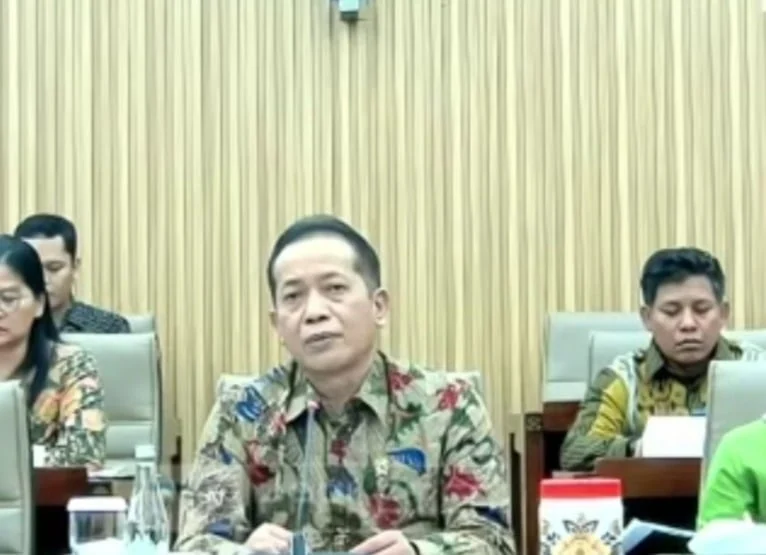
The announcement was made during a formal government press briefing outlining the latest updates on priority housing programs and the overarching mission to accelerate the provision of decent, affordable living spaces for low-income communities. As urbanization pressures mount and the backlog of adequate housing remains a persistent socioeconomic challenge, the expansion of the KPP framework underscores the administration’s commitment to bridging the gap between housing supply and demand. By systematically tackling both consumer and developer financing, the Ministry of PKP aims to construct a sustainable, inclusive housing ecosystem that supports vulnerable populations while simultaneously energizing local commercial activity.
Strategic Vision: Empowering Grassroots Economies and Eliminating Predatory Lending
At the heart of the KPP initiative is a dual-purpose developmental strategy championed by Minister of PKP Maruarar Sirait: broadening financial inclusion for everyday citizens while aggressively dismantling the operational space of predatory lenders, commonly known locally as "rentenir." Initiated under the policy directives of President Prabowo Subianto, the program is specifically engineered to provide accessible, low-cost capital to micro, small, and medium-sized enterprises (MSMEs) and working-class families who have traditionally faced exclusion from conventional banking channels.

A cornerstone of this pro-people financing model is the elimination of collateral requirements for loans valued below Rp100 million. Borrowers accessing credit beneath this threshold are exempt from putting up physical assets as security, significantly lowering the barrier to entry for small business owners and homeowners seeking liquidity. Furthermore, the program enforces a highly competitive interest rate capped at 0.5 percent per month, adhering strictly to the subsidized guidelines established by the state.
Minister Maruarar emphasized that the program directly targets the systemic vulnerabilities faced by small-scale entrepreneurs. By cutting out predatory moneylenders who trap vulnerable business owners in cycles of unsustainable debt, the government is offering a viable, regulated financial alternative that fosters long-term economic resilience. The strategy recognizes that housing and small business development are deeply intertwined, particularly for informal sector workers who operate their commercial ventures directly out of their residential properties.

A Dual-Pronged Approach: Demand and Supply Ecosystem Integration
The execution of the KPP framework relies on a comprehensive, dual-sided distribution model designed to stimulate both ends of the housing market simultaneously. From the demand side, the financing is utilized directly by end-users—including individual homeowners and small business proprietors—to fund essential property acquisitions, large-scale structural expansions, and residential renovations. This direct infusion of capital ensures that substandard dwellings are upgraded into safe, healthy living environments.
Conversely, the supply-side mechanism of the KPP framework provides critical financial backing to commercial actors operating within the broader residential construction ecosystem. This includes licensed property developers, independent contractors, and local building material suppliers. By ensuring that the supply chain remains liquid and well-capitalized, the ministry mitigates project delays, stabilizes construction material costs, and encourages developers to scale up the production of affordable housing units.

This holistic integration ensures that the housing sector functions as a cohesive economic multiplier. When a homeowner secures a loan to renovate a house, the capital flows directly into local hardware stores and construction labor markets. This local economic activity generates sustainable employment, enhances community infrastructure, and bolsters regional gross domestic product.
Banking Sector Participation and Regional Distribution Insights
The distribution of the KPP portfolio is executed through a consortium of major state-owned financial institutions, known collectively as the Himbara (Himpunan Bank Milik Negara) banks. Among these participating lenders, PT Bank Rakyat Indonesia (Persero) Tbk (BRI) has emerged as the leading disburser, channeling an impressive Rp11.975 trillion in program funds. BRI’s extensive rural and micro-banking network has played a pivotal role in reaching unbanked and underbanked populations in regional areas.

Following BRI, PT Bank Tabungan Negara (Persero) Tbk (BTN)—historically recognized as the primary engine of Indonesia’s mortgage market—has recorded a substantial distribution of Rp5.243 trillion. BTN’s ongoing integration into the KPP framework reinforces its institutional mandate to champion national housing initiatives. Meanwhile, PT Bank Negara Indonesia (Persero) Tbk (BNI) and PT Bank Mandiri (Persero) Tbk have channeled Rp2.394 trillion and Rp1.880 trillion respectively, contributing to a well-balanced banking participation model that guarantees nationwide reach and operational stability.
Geographically, the distribution data highlights a heavy concentration of absorption within the densely populated provinces of Java, mirroring broader demographic trends and existing regional economic centers. Central Java leads the national statistics, recording total loan disbursements of Rp5.650 trillion distributed across 30,531 active debiturs. East Java follows closely behind, with Rp4.120 trillion channeled to 21,842 beneficiaries. West Java rounds out the top three regions, registering Rp3.880 trillion in allocated funds supporting 17,759 debiturs.

This regional distribution underscores the acute demand for affordable financing in Java’s economic hubs, where rapid population growth and industrialization have exacerbated housing affordability gaps. However, ministry officials continue to design outreach strategies aimed at accelerating disbursement in outer islands and eastern Indonesian provinces to ensure equitable national development.
Socioeconomic Impact: Transforming Homes into Productive Economic Units
A qualitative assessment of the current 108,862 debitur portfolio reveals a fascinating trend regarding how ordinary citizens utilize state-backed credit. Statistical insights provided by the Ministry of PKP indicate that approximately 86,000 debiturs—representing the overwhelming majority of program beneficiaries—are MSME operators who have strategically allocated their KPP funds for dual purposes: residential renovation and business expansion.

For these micro-entrepreneurs, the home is not merely a domestic shelter, but the primary operational headquarters of their livelihood. By securing low-interest, uncollateralized financing under the KPP scheme, these individuals have been able to structurally upgrade their dwellings while simultaneously expanding home-based enterprises such as neighborhood provision stores, culinary ventures, tailoring workshops, and craft manufacturing units. This phenomenon effectively transforms substandard living quarters into productive economic assets, lifting families out of poverty through self-generated commercial enterprise.
Minister Maruarar noted that the high rate of loan absorption serves as empirical validation of the program’s absolute necessity. Rather than operating as an isolated bureaucratic intervention, the KPP framework is continuously synchronized with a broader suite of national housing policies. These include slum upgrading programs, the construction of vertical public housing for urban workers, and targeted subsidies for citizens currently residing in uninhabitable structures.

Broader Economic Implications and Future Outlook
The expansion of the KPP ceiling to Rp50 trillion arrives at a critical juncture for the Indonesian economy, carrying significant macroeconomic and structural implications. As the country navigates complex global economic currents, bolstering domestic consumption and strengthening the purchasing power of the working class remain paramount policy objectives. The housing sector, renowned for its extensive backward and forward linkages to more than 150 related industries—ranging from cement manufacturing and logistics to interior design and financial services—acts as a powerful catalyst for broad-based economic recovery.
However, financial analysts point out that expanding credit programs must be accompanied by rigorous risk management and monitoring frameworks. Recent macroeconomic data from Bank Indonesia indicates subtle pressures within certain segments of the property market, such as rising non-performing loan (NPL) ratios in specific non-subsidized middle-to-low mortgage categories. While the KPP is heavily insulated by state backing and targeted micro-lending parameters, maintaining high asset quality and ensuring responsible lending practices will be vital to safeguarding the financial health of participating state-owned banks over the long term.

Looking ahead, the Ministry of PKP intends to scale up its collaborative efforts with local governments, private developers, and financial institutions to streamline administrative bottlenecks and accelerate the physical delivery of housing units. By maintaining strict oversight over interest rate compliance, eliminating bureaucratic red tape for uncollateralized micro-loans, and expanding outreach to informal sector workers, the administration aims to make sustained headway against the national housing backlog.
Ultimately, the steady progress of the Kredit Program Perumahan illustrates a concerted policy shift toward inclusive, grassroots-driven financial architecture. By treating housing not merely as a physical construction challenge, but as an integrated engine for social dignity, micro-enterprise empowerment, and equitable economic growth, the government is laying a resilient foundation for Indonesia’s long-term developmental trajectory.