
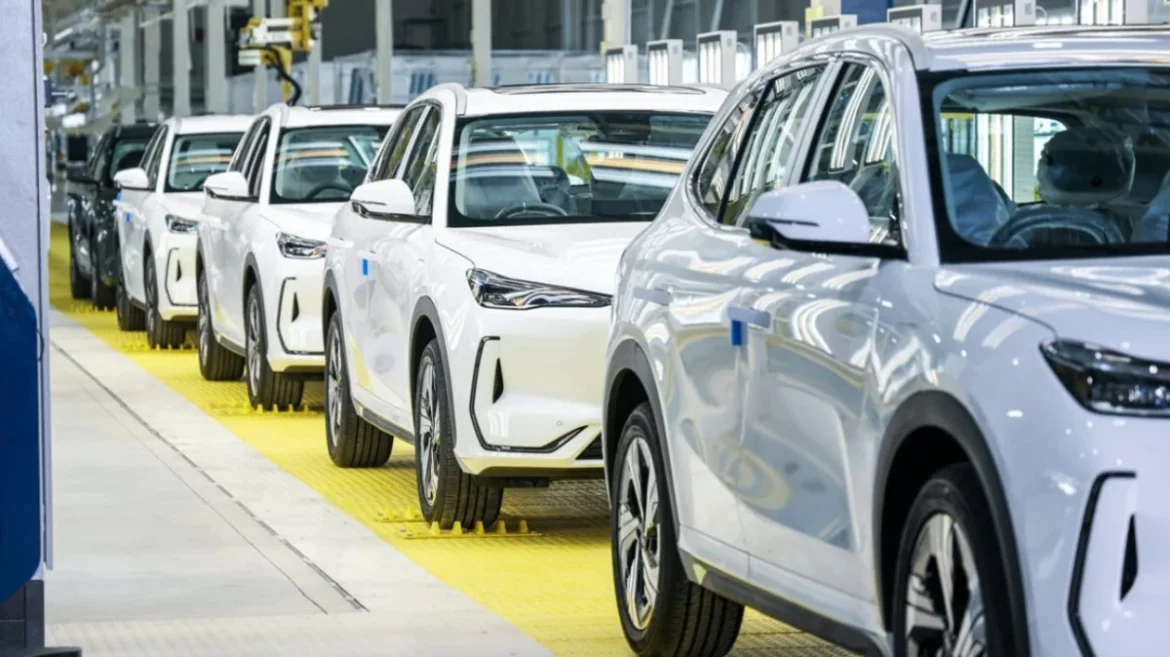
Kuala Lumpur, Malaysia – July 22, 2026, 21:00 WIB – The stronghold of national car brands in Malaysia’s automotive landscape continues to strengthen, with Proton and Perodua significantly expanding their market share in the first half of 2026. This surge in domestic sales has placed considerable pressure on foreign automotive marques operating within the country. Data released by the Malaysian Automotive Association (MAA) reveals a robust performance for the nation’s automotive flagships, solidifying their position as the primary drivers of the Malaysian car market.
First Half 2026: A Record Period for National Brands
Throughout the first six months of 2026, the Malaysian automotive sector witnessed a total sales volume of 385,353 units. This figure represents a healthy increase of approximately 3% when compared to the corresponding period in the previous year. At the forefront of this growth were Proton and Perodua, the two prominent Malaysian automotive manufacturers. Collectively, these national brands achieved a remarkable sales figure of 256,304 units during the January to June 2026 period. This accomplishment translates to a commanding market share of approximately 67% of the total Malaysian automotive market, underscoring their entrenched consumer preference.
This performance marks a notable improvement from the first half of 2025, when Proton and Perodua recorded combined sales of 235,961 units, securing a market share of 63%. Over the course of a single year, the two national carmakers have not only increased their sales by over 20,000 units but have also successfully expanded their collective market share by a significant four percentage points. This sustained upward trajectory highlights a growing confidence in Malaysian-manufactured vehicles among consumers.
Foreign Brands Face Mounting Pressure
In stark contrast to the success of the national brands, the performance of non-national or foreign automotive marques in Malaysia has been less auspicious. During the first six months of 2026, the combined sales of all foreign brands amounted to 129,049 units. This figure signifies a reduction in their market share, which has now dipped to 33%.
For comparative context, in the first half of 2025, these foreign brands had managed to achieve sales of 137,675 units, holding approximately 37% of the market. The decrease of over 8,600 units within a year indicates a clear shift in market dynamics, with consumers increasingly favoring local offerings. This trend suggests a more challenging operating environment for international automakers seeking to capture or maintain a significant presence in Malaysia.
A Deepening Trend of National Car Dominance
The current market performance is not an isolated incident but rather a continuation of a well-established trend. Over the past several years, Proton and Perodua have consistently demonstrated their ability to maintain and even enhance their dominance in the Malaysian automotive sector, even as the market has seen the introduction of new international players.
The MAA’s data further illustrates this point by highlighting the declining market share of non-national brands since 2024. In that year, Proton and Perodua collectively sold 505,689 units, capturing a substantial 62% of the total national vehicle sales. The dominance of national cars was even more pronounced in 2023, when the two brands commanded an impressive 66.9% of the market. In 2022, their market share stood at 65.1%, further solidifying the long-term ascendancy of domestic manufacturers. This consistent growth pattern suggests a strategic alignment between the offerings of Proton and Perodua and the evolving preferences of Malaysian car buyers.
Factors Driving National Car Success
Several key factors contribute to the robust performance and enduring appeal of Proton and Perodua in the Malaysian market. One of the most significant is the comprehensive and diversified product portfolio offered by both manufacturers. They cater to a wide spectrum of consumer needs and preferences, ranging from compact and fuel-efficient city cars to versatile SUVs and even performance-oriented models. This broad range ensures that there is a Proton or Perodua vehicle suitable for nearly every demographic and budget.
Furthermore, the extensive sales and service network established by both Proton and Perodua across Malaysia plays a crucial role. Their widespread presence ensures accessibility for consumers, both in terms of purchasing vehicles and receiving after-sales support, including maintenance and repairs. This localized support infrastructure fosters customer loyalty and provides a significant advantage over foreign brands that may have more limited dealership networks.
Competitive pricing has also been a cornerstone of the success of national car brands. Proton and Perodua have consistently strived to offer vehicles that provide strong value for money, making them attractive options for a large segment of the Malaysian population. This focus on affordability, coupled with continuous improvements in quality and features, has allowed them to resonate deeply with the domestic consumer base.
Strategic Outlook and Future Implications
The sustained dominance of Proton and Perodua in the first half of 2026 carries significant implications for the broader Malaysian automotive industry. It signals a maturing domestic market where national pride and a focus on local economic contributions are increasingly influencing purchasing decisions. For foreign automakers, this trend necessitates a strategic re-evaluation of their market entry and retention strategies. They may need to consider increased localization of production, more competitive pricing models, or a greater emphasis on niche market segments to effectively compete.
The success of the national brands also bodes well for the Malaysian economy. Increased domestic sales translate to higher production volumes, which in turn can lead to job creation, investment in research and development, and a stronger overall manufacturing sector. The government’s continued support for the automotive industry, often channeled through incentives and policies favoring local production, is likely to play a pivotal role in sustaining this momentum.
Official Reactions and Industry Analysis
While specific official statements from Proton and Perodua regarding the H1 2026 sales figures were not immediately available in the provided source, industry analysts and observers have widely acknowledged the growing strength of the national automotive players. Dr. Analysts at various automotive research firms have pointed to the strategic product development and marketing efforts by both companies as key drivers of their market share expansion.
"The consistent growth of Proton and Perodua is a testament to their understanding of the Malaysian consumer," stated a senior analyst from a leading automotive consulting firm, who preferred to remain anonymous. "They have successfully adapted to changing market demands, offering vehicles that are not only affordable but also increasingly sophisticated and feature-rich. The focus on building a strong domestic ecosystem, from manufacturing to after-sales, is yielding significant dividends."
The MAA’s role in meticulously tracking and disseminating these sales figures is crucial for providing transparency and enabling informed analysis of the automotive market’s trajectory. Their data serves as a vital benchmark for manufacturers, policymakers, and industry stakeholders.
Broader Impact and the Road Ahead
The implications of this sustained national car dominance extend beyond mere sales figures. It reflects a growing sense of national pride and a desire to support local industries. As Malaysia continues to develop its technological capabilities and manufacturing prowess, the success of its automotive sector serves as a powerful indicator of its economic progress.
Looking ahead, the automotive landscape in Malaysia is likely to remain dynamic. While foreign brands will undoubtedly continue to compete, the strong foundation laid by Proton and Perodua suggests that they will remain formidable players. The challenge for international manufacturers will be to innovate and adapt, offering compelling value propositions that can sway consumer preference.
The first half of 2026 has firmly established the dominance of Malaysian national cars in their home market. With a commanding market share and a clear upward trend, Proton and Perodua are not just selling cars; they are reinforcing a national industrial success story, setting a precedent for other domestic industries and demonstrating the power of strategic focus and consumer alignment. The automotive sector in Malaysia is undeniably charting a course steered by its own flagships.
