

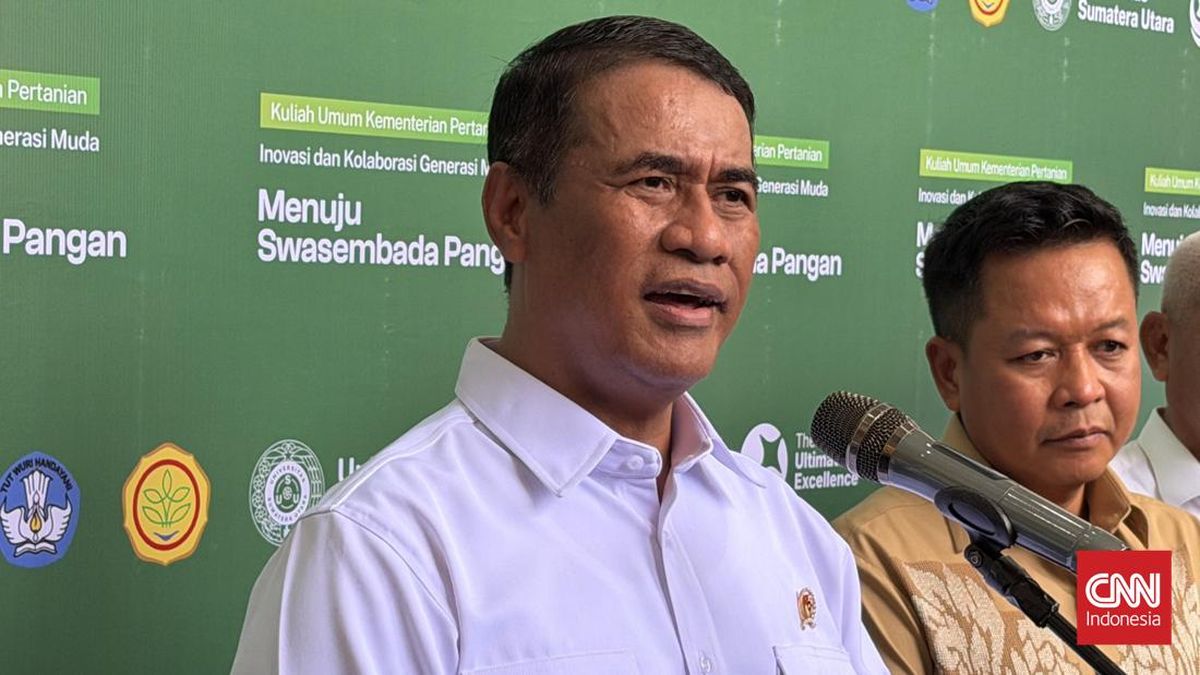
Agriculture Minister Andi Amran Sulaiman has issued a stern directive to PT Sinergi Gula Nusantara (SGN) and law enforcement agencies to investigate seven private companies suspected of refusing to purchase sugarcane and processed sugar from local farmers. The order was delivered during a high-level coordination meeting focused on the acceleration of national sugar self-sufficiency held in Surabaya, East Java, on Wednesday, July 22. The Minister’s decisive action comes amid reports that these companies are intentionally stalling the absorption of local yields, a move that threatens the livelihoods of thousands of smallholder farmers and undermines the government’s ambitious food security agenda.
During the session, Minister Amran received detailed reports indicating that several entities were bypassing local produce in favor of other sources or simply refusing to honor purchase agreements. Upon hearing the names of the companies involved, the Minister immediately addressed the President Director of PT SGN, Mahmudi, instructing him to conduct a thorough internal audit and verification of the claims. Furthermore, in a display of the administration’s "zero tolerance" policy toward practices that harm the agricultural sector, Amran utilized the meeting to contact the Directorate of Special Criminal Investigation (Dirkrimsus) of the Indonesian National Police. He requested a formal legal inquiry into the seven firms to determine if their actions constitute a violation of trade regulations or economic subversion.
The Minister emphasized that the excuses provided by these companies—ranging from logistical bottlenecks and a lack of shipping containers to general trade distribution hurdles—were unacceptable. He characterized the refusal to support local farmers as a moral and economic failure, particularly given that many of these industrial players have built their wealth through the Indonesian market. Amran noted that at a time when the state is mobilizing all resources to achieve sugar self-sufficiency, the private sector must act as a partner rather than a hindrance. He questioned the ethics of these corporations, suggesting that after decades of profiting from the domestic landscape, they should be willing to support the very farmers who sustain the industry.
The Strategic Context of Sugar Self-Sufficiency
The investigation into the "Sugar Seven" is set against the backdrop of Indonesia’s urgent push to reduce its reliance on sugar imports. For years, Indonesia has remained one of the world’s largest importers of raw sugar, with a significant gap between domestic production and national consumption. Currently, Indonesia’s national sugar demand for both household consumption and industrial use stands at approximately 6.7 to 7 million tons per year. However, domestic production often hovers around 2.2 to 2.5 million tons, leaving a deficit of over 4 million tons that must be filled by imports from countries like Thailand, Brazil, and Australia.
The administration under President Prabowo Subianto has identified food sovereignty as a pillar of the "Asta Cita" national vision. Minister Amran Sulaiman has been tasked with closing the production gap within a two-year timeframe. The strategy involves a multi-pronged approach: the expansion of sugarcane plantations (particularly in regions like Merauke, Papua), the revitalization of aging sugar mills, and the implementation of modern agricultural technology to increase yield per hectare. For this roadmap to succeed, the "off-take" mechanism—whereby mills and industrial users guarantee the purchase of farmer yields—must function flawlessly. When companies refuse to absorb local sugar, it creates a surplus at the farm level, causing prices to collapse and discouraging farmers from continuing their cultivation, thereby sabotaging the national production targets.
Chronology of the Dispute and Government Intervention
The tension began to surface during the peak of the current milling season. Farmers in East Java, the heartland of Indonesia’s sugar industry, reported that their harvests were piling up because several private refineries and distributors were not placing orders. In the Surabaya meeting, representatives of farmer associations voiced their frustrations, noting that while their costs of production have risen due to fertilizer prices and labor, the lack of market certainty was pushing them toward bankruptcy.
Minister Amran’s response was immediate. By involving the Dirkrimsus, the Ministry of Agriculture is signaling that the refusal to absorb local produce is being treated as more than just a contractual dispute; it is being viewed as a potential threat to national economic stability. The Minister’s reference to "underinvoicing" in the Crude Palm Oil (CPO) sector during the same meeting suggests that the government believes the sugar industry may be plagued by similar "mafia-style" tactics. Underinvoicing is a practice where companies report lower values for goods to evade taxes or manipulate market supply, costing the state trillions of rupiah in lost revenue.
"The President is focused on chasing down those who infiltrate and disrupt our economy," Amran stated, linking the sugar issue to a broader crackdown on agricultural cartels. He asserted that any company found to be intentionally disadvantaging local farmers to prioritize cheaper imported raw materials or to manipulate prices would face severe consequences, which could include the revocation of business licenses and criminal prosecution.
The Role of PT Sinergi Gula Nusantara (SGN)
PT Sinergi Gula Nusantara, often referred to as SugarCo, plays a pivotal role in this investigation. As a sub-holding of the state-owned plantation enterprise PTPN III (Persero), SGN was created to consolidate the management of state-owned sugar mills across Indonesia. Its primary mission is to professionalize the industry and spearhead the self-sufficiency drive. By ordering SGN to "examine" the seven companies, Minister Amran is utilizing the state’s corporate arm to exert pressure on the supply chain.
SGN is currently overseeing the modernization of several mills in East and Central Java to improve the "rendemen" (sugar content recovery rate) from the current average of 7-8% to a target of 10% or higher. However, technical improvements at the mill are irrelevant if the commercial ecosystem is broken. The Minister’s directive ensures that SGN acts as a buffer and a watchdog, ensuring that the private sector does not cherry-pick when to support the national interest based solely on short-term profit margins.
Economic Data and the Plight of the Farmer
The economic stakes are high. Sugarcane farming involves roughly 450,000 smallholder farmers across the archipelago. Unlike large-scale corporate plantations, these smallholders are highly vulnerable to market fluctuations. If the seven companies in question continue to reject local sugar, it could lead to a "supply glut" in local markets that depresses the price below the government-mandated floor price (HAP).
According to data from the National Food Agency (Bapanas), the government recently adjusted the purchase price of sugarcane at the farm level to help farmers cope with inflation. However, these price protections are only effective if there is an active buyer. In 2023, Indonesia imported nearly 5 million tons of sugar. The government’s goal is to slash this number by 50% by 2026. This requires an additional 700,000 to 1 million hectares of new plantation land and a 100% absorption rate of all domestically grown cane.
Analysis of Implications
The Minister’s move to involve the police highlights a shift in Indonesian agricultural policy from mere subsidization to active enforcement. This "security approach" to food commodities suggests that the government views food as a strategic asset. If the investigation reveals that the seven companies were colluding to suppress local prices or were prioritizing imported raw sugar in violation of their permits, it could lead to a major shake-up in the Indonesian sugar trade.
For the private sector, this serves as a warning: the era of "business as usual" regarding imports may be ending. Companies operating in Indonesia will likely be required to demonstrate a "Farmer First" commitment in their procurement policies. For the farmers, the Minister’s intervention provides a temporary sense of security, but the long-term challenge remains the structural inefficiency of the local industry. High production costs and low mill efficiency still make Indonesian sugar more expensive than the global average.
Conclusion and Outlook
The investigation into the seven companies is a litmus test for Minister Amran Sulaiman’s leadership and the broader government’s ability to rein in powerful industrial players. As the Dirkrimsus begins its probe, the industry will be watching closely to see if the government follows through with sanctions.
In the coming months, the Ministry of Agriculture is expected to release a more detailed roadmap for the "Two-Year Self-Sufficiency" plan. This will likely include stricter quotas on sugar imports tied to a company’s performance in absorbing local crops. For now, the message from Surabaya is clear: the Indonesian government will no longer tolerate a lopsided relationship where farmers bear the risks while corporations reap the rewards of a protected market. The path to sugar self-sufficiency is not just a matter of planting more cane; it is about ensuring that the entire value chain—from the field to the refinery—operates with transparency, patriotism, and legal integrity.
