
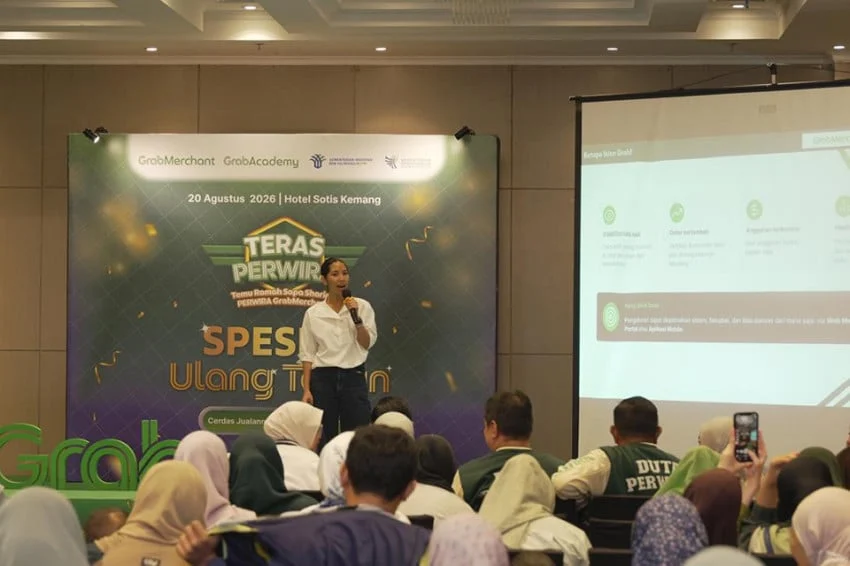
In an ongoing effort to bolster the resilience and digital capabilities of micro, small, and medium enterprises (MSMEs) throughout Indonesia, Grab and OVO Finansial have officially concluded the Teras Perwira (Temu Ramah Sapa dan Sharing Perkumpulan Wirausaha) 2026 program. Marking its fifth consecutive year of implementation, this nationwide initiative successfully engaged 1,400 selected GrabMerchant partners across ten major urban centers, aligning closely with the commemoration of National MSME Day on August 12 and the Financial Literacy Month initiatives promoted by the Financial Services Authority (OJK).
The 2026 edition of Teras Perwira, carrying the overarching theme Cerdas Jualannya, Tangguh Usahanya (Smart Selling, Resilient Business), was meticulously structured to address the contemporary challenges faced by digital-first entrepreneurs. As consumer behavior rapidly shifts toward digital ecosystems, small business owners face continuous pressure to adapt to technological innovations, heightened market competition, and complex financial management requirements. By bridging the gap between traditional trade and digital proficiency, the program served as a collaborative learning hub where merchants could exchange practical insights, refine operational strategies, and scale their businesses sustainably.
A Nationwide Footprint: Chronology and Execution of Teras Perwira 2026
Spanning nearly a month from August to early September 2026, the roadshow covered a geographically diverse spectrum of Indonesian cities, ensuring that both established metropolitan hubs and growing regional markets received targeted business development interventions. The program officially commenced in Makassar on August 19, setting a dynamic tone for the subsequent regional stops.
Throughout late August, the roadshow traveled through Medan, Bandung, Palembang, Semarang, Yogyakarta, Surabaya, Denpasar, and Balikpapan, before culminating in a simultaneous double-closing event held in Palembang and Semarang on September 7, alongside major engagement sessions in Jakarta.
Participation in Teras Perwira 2026 was not open indiscriminately; instead, merchants underwent a rigorous curation process. Candidates were selected based on demonstrated enthusiasm for continuous learning, business growth potential, and a willingness to share operational experiences with fellow GrabMerchant partners. This selective approach ensured that workshop sessions maintained a high level of engagement, fostering a community of proactive entrepreneurs eager to implement advanced technological tools in their daily workflows.
Comprehensive Curriculum: Addressing the Three Pillars of MSME Survival
At the core of the Teras Perwira 2026 workshops was a practical curriculum designed around three fundamental needs of modern merchants: maximizing product discoverability, calculating accurate cost structures, and identifying emerging market trends ahead of competitors.
To achieve discoverability, merchants received in-depth training on digital marketing strategies utilizing GrabAds. Instructors demonstrated how targeted advertising within the ecosystem could significantly elevate storefront visibility, transforming passive platform users into active, recurring customers.
Equally critical was the financial mechanics segment, which introduced participants to BisaMatika. This tool is specifically engineered to help business owners calculate the Cost of Goods Sold (COGS), service fees, and promotional commissions with absolute precision. By mastering BisaMatika, merchants can determine online selling prices that protect profit margins while remaining competitive in digital marketplaces.
Furthermore, the integration of cutting-edge technology was highlighted through the introduction of the GrabMerchant AI Assistant. Functioning as a 2024-ready virtual business consultant, this tool enables merchants to converse directly regarding store performance analytics, menu innovation inspirations, and customized promotional strategies. By lowering the barrier to entry for data-driven decision-making, the AI assistant empowers small business owners—many of whom operate without dedicated marketing or financial departments—to optimize their operations with institutional-grade insights.
Synergy with Financial Literacy Month and Inclusive Credit Access
Running concurrently with the Financial Literacy Month agenda, the program placed heavy emphasis on sound financial management practices and responsible borrowing. Organizers recognized that while sales growth is essential, long-term business survival depends heavily on cash flow management and access to formal financial services.
To mitigate the common vulnerability of capital shortages among MSMEs, Grab and OVO Finansial introduced participants to GrabModal Mantul by OVO Finansial. Designed to provide quick disbursement processes and manageable installment structures, the financing facility aims to give merchants peace of mind as they invest in inventory, equipment, or business expansion.
Addressing unforeseen personal or operational disruptions, the program also highlighted the Jeda Bayar (Payment Pause) feature. This mechanism provides temporary repayment relief when merchants encounter exceptional life events, such as severe illness, family emergencies, or bereavement, preventing short-term personal crises from translating into systemic business failure or default.
Economic Implications and Broader Impact on Indonesia’s Digital Economy
The conclusion of Teras Perwira 2026 underscores the critical role played by private sector ecosystems in driving national economic resilience. MSMEs account for the vast majority of business units in Indonesia and contribute significantly to gross domestic product (GDP) and employment. However, formalization, digital adoption, and financial inclusion remain persistent hurdles for a substantial segment of the micro-enterprise population.
Industry analysts note that initiatives combining hands-on technological training with accessible financial products yield higher retention and growth rates among digital merchants compared to passive educational campaigns. By embedding training directly within platforms that merchants use daily, platforms like Grab and OVO Finansial shorten the learning curve and accelerate practical application.
Looking forward, the insights gathered from the 1,400 participants across the ten cities are expected to inform future iterations of merchant support programs. As Indonesia’s digital economy matures, the emphasis is shifting from mere onboarding to deep-level optimization, profitability enhancement, and risk management. Programs like Teras Perwira illustrate a scalable model for public-private alignment in achieving sustainable financial inclusion and digital empowerment for the grassroots economy.
