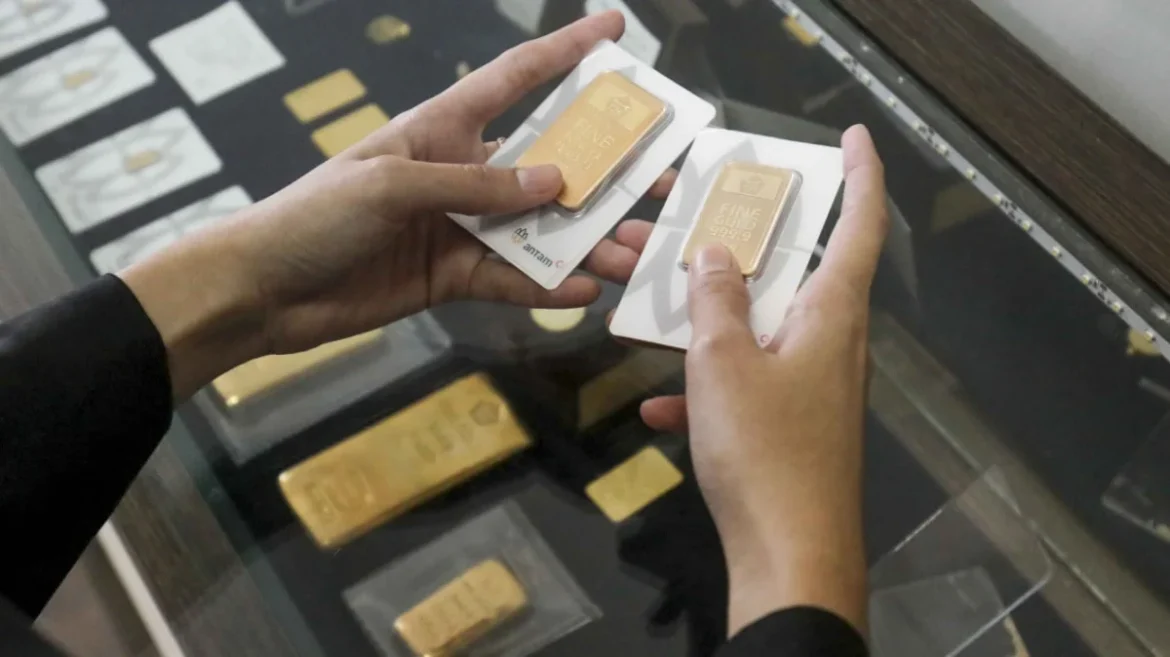
Published on Saturday, July 18, 2026, at 17:05 WIB, the persistent discrepancy between the purchase and buyback prices of gold continues to be a significant point of concern for investors, particularly as the precious metal frequently experiences periods of value appreciation. While many leverage rising prices to divest long-held gold assets, often anticipating substantial gains, they are frequently met with the unwelcome reality that the buyback price offered by retailers or institutions is markedly lower than their original acquisition cost. This phenomenon often prompts questions about the fundamental profitability of gold as an investment and the underlying mechanics of the precious metals market.
Understanding the Core Disparity: The ‘Spread’ Explained
The fundamental reason behind the lower buyback price for gold, even on the same day of purchase, lies in what is commonly known as the "spread." This spread represents the difference between the buying price (ask price) and the selling price (bid price) in the market. When an individual purchases gold, the price paid is not merely a reflection of the intrinsic value of the pure metal. Instead, it encompasses a multitude of embedded costs and operational expenses that the seller incurs to bring the product to market and ensure its quality and authenticity.
These components typically include, but are not limited to:
- Production and Refining Costs: The expenses associated with extracting raw gold, refining it to the desired purity (e.g., 99.99%), and forming it into bars, coins, or other marketable forms.
- Minting and Fabrication Costs: For bullion products like bars and coins, there are costs involved in the minting process, including machinery, labor, and quality control.
- Certification and Assaying: Official certification by recognized bodies (like the London Bullion Market Association – LBMA) and independent assaying to verify purity adds significant credibility and cost. Each bar or coin often comes with a certificate of authenticity, which is a value-added service.
- Distribution and Logistics: Secure transportation, insurance, and storage of high-value precious metals from refineries to distributors and then to retail points contribute to the overall cost.
- Operational Overheads: Retailers and institutions bear costs such as rent, utilities, employee salaries, security infrastructure, and marketing.
- Retailer’s Margin: Every business operates to generate profit. A portion of the purchase price is the retailer’s gross margin, which covers their operating costs and provides a return on investment.
When an investor decides to sell their gold back, these embedded costs and the retailer’s original profit margin are generally not recouped by the seller. The buyback price offered by the institution is closer to the current spot price of gold, adjusted downwards to account for their own operational costs in re-acquiring, re-assaying, and re-selling the metal, as well as to build in a new margin for their subsequent sale. This means that gold purchased and immediately sold back will almost invariably incur a loss due to this inherent spread.
Anticipating Market Fluctuations: Risk Mitigation in Buyback Pricing
Beyond the direct cost components, another critical factor influencing lower buyback prices is the need for institutions to mitigate the inherent risks associated with gold’s price volatility. Gold prices are subject to continuous fluctuation, driven by a complex interplay of global economic conditions, geopolitical events, inflation expectations, interest rate policies from central banks, and currency exchange rates (particularly the strength of the US dollar).
Institutions that offer gold buyback services face the risk that the market price of gold could decline between the moment they purchase gold from a customer and the time they are able to resell it in the wholesale or retail market. To protect themselves against such potential losses, they establish a buyback price that is strategically lower than the prevailing spot market rate. This buffer acts as a form of insurance against adverse price movements, ensuring that the institution can maintain profitability even if the market experiences a short-term downturn. This mechanism is a standard practice across commodities markets, reflecting a prudent approach to risk management in a dynamic environment.
Physical Condition and Authenticity: Determinants of Resale Value
The physical condition and verifiable authenticity of gold also play a substantial role in determining its buyback value. Gold bullion, such as bars or coins, that remains sealed in its original tamper-proof packaging, accompanied by its official assay certificate, typically commands a higher buyback price. This is because its purity and weight are easily verifiable, reducing the need for costly and time-consuming re-assaying by the buyer.
Conversely, gold that is damaged, scratched, or removed from its original packaging, or jewelry whose purity is less certain or requires assessment, may fetch a lower price. Institutions might need to incur additional costs for testing, refining, or re-fabrication before such items can be resold, and these costs are factored into the lower buyback offer. The absence of a verifiable certificate of authenticity can also lead to a discount, as the buyer assumes a higher risk of fraud or impurity. For gold jewelry, the "melt value" (the value of its pure gold content) is often significantly lower than its retail purchase price, as the original price included design, craftsmanship, brand premium, and other non-gold material costs, which are largely discounted during a buyback.
The Broader Context: Gold as a Strategic Investment
Despite the buyback price disparity, gold has historically proven to be a resilient and valuable asset, often serving as a safe haven during economic uncertainty and a hedge against inflation. Its appeal is global, transcending cultures and economies. Central banks worldwide hold substantial gold reserves as a strategic asset, diversifying their portfolios and underpinning monetary stability. Individual investors are often drawn to gold for similar reasons:
- Inflation Hedge: Gold tends to retain its purchasing power during periods of high inflation when fiat currencies lose value.
- Diversification: Including gold in an investment portfolio can help reduce overall risk, as its price often moves independently or inversely to other asset classes like stocks and bonds.
- Store of Value: Over long periods, gold has demonstrated its ability to preserve wealth, acting as a tangible asset that is not subject to counterparty risk.
- Geopolitical Hedge: During times of political instability or conflict, gold prices often surge as investors seek refuge in tangible, universally accepted assets.
However, the buyback mechanism underscores the importance of a long-term perspective for gold investors. Short-term trading of physical gold is rarely profitable for retail investors due to the inherent spread. The strategic benefit of gold investment typically materializes over extended periods, allowing sufficient time for the appreciation in gold’s intrinsic value to overcome the initial spread and generate a net gain.
Statements from Market Participants and Expert Insights
Major gold retailers and financial institutions, such as Pegadaian (the original source mentioned), consistently emphasize the long-term nature of gold investment. A spokesperson from a leading precious metals dealer, speaking on condition of anonymity due to internal policy, recently commented, "The pricing structure for gold, including the buyback mechanism, is a reflection of the real costs involved in a highly regulated and secure industry. We encourage our clients to view gold as a long-term store of value, not a short-term speculative instrument. The spread ensures market stability and operational viability for all participants."
Economists often concur, highlighting that the efficiency of the gold market, while seemingly opaque to novice investors, operates on well-established principles. Dr. Anya Sharma, a financial markets analyst, noted, "The bid-ask spread is a fundamental characteristic of any liquid market. For physical commodities like gold, additional factors such as assaying, storage, and logistical costs are naturally embedded. Investors who understand this dynamic are better equipped to make informed decisions, focusing on strategic accumulation and patient holding periods."
Navigating the Gold Market: Strategies for Investors
For those considering or actively involved in gold investment, understanding the buyback disparity is crucial for developing an effective strategy:
- Long-Term Horizon: Approach gold as a long-term investment (typically 5-10 years or more) to allow sufficient time for market appreciation to overcome the initial spread.
- Buy from Reputable Dealers: Purchase gold from well-established and certified dealers who offer transparent pricing and provide official certificates of authenticity. This simplifies future buyback processes.
- Maintain Physical Condition: For physical gold, preserve its original packaging and ensure it remains in pristine condition to maximize its resale value.
- Consider Different Forms of Gold: While physical gold (bars, coins) is popular, investors can also consider gold-backed Exchange Traded Funds (ETFs) or gold mining stocks. These options may have different cost structures and liquidity profiles, though they also carry their own unique risks and fee structures.
- Monitor Market Trends: Stay informed about global economic indicators, inflation rates, and geopolitical developments that influence gold prices. This knowledge can help in timing both purchases and sales more strategically.
- Diversify Your Portfolio: Gold should be part of a diversified investment portfolio, not the sole component, to balance risk and reward across various asset classes.
- Understand Transaction Costs: Be aware that beyond the bid-ask spread, some institutions might charge additional transaction fees for buybacks. Always clarify these terms upfront.
Timeline and Chronology of Gold Market Evolution (Brief Context)
The mechanisms governing gold trading have evolved significantly over centuries. From ancient barter systems to the modern electronic trading platforms, the principles of supply, demand, and transactional costs have remained constant. The establishment of formal gold markets, such as the London Gold Market (with its historical "fixing" process), helped standardize pricing and purity. The late 20th and early 21st centuries saw the proliferation of digital platforms and gold-backed financial products, democratizing access to gold investment while simultaneously highlighting the nuances of physical versus paper gold. The current pricing models, including the buyback spread, are a culmination of these historical developments, designed to ensure market integrity, liquidity, and profitability for market makers in a globally interconnected financial system.
Implications for Investor Behavior and Market Transparency
The inherent spread between gold purchase and buyback prices serves as a critical educational point for new investors. It underscores that while gold is a tangible asset, it is not immune to market forces and operational costs. For the broader market, this pricing mechanism contributes to stability by allowing dealers to manage risk and maintain inventory, thereby ensuring liquidity. Transparency regarding these costs is improving, with many reputable dealers now explicitly outlining their buyback policies and pricing methodologies. This allows investors to make more informed decisions, aligning their expectations with the economic realities of precious metals trading.
In conclusion, the disparity between gold’s purchase and buyback price is not an anomaly but a standard feature of the precious metals market, rooted in operational costs, risk management, and the physical characteristics of the asset. For investors, recognizing this ‘spread’ and adopting a disciplined, long-term approach is paramount to successfully leveraging gold as a valuable component of their financial strategy. As global economic landscapes continue to shift, gold’s role as a fundamental store of value is expected to endure, making a thorough understanding of its market dynamics more relevant than ever.