The fragile security situation in Indonesia’s easternmost region has once again captured national attention following the brutal killing of Aris Sanda, a civilian travel driver originating from Toraja, South Sulawesi. Known affectionately by his passengers and community as Bapak Tasya, Sanda’s routine professional journey turned into a fatal nightmare when his vehicle was intercepted by an armed separatist group along the remote route connecting Wamena to Mbua in Jayawijaya Regency, Highland Papua (Papua Pegunungan).
His remains were discovered inside his charred vehicle near the picturesque yet isolated Lake Habema region. The incident has sent shockwaves through local communities, drawing sharp condemnations from human rights observers, regional representatives, and national lawmakers. It has also reignited pressing debates regarding the safety of civilian workers, logistics providers, and public transportation operators who brave Papua’s treacherous and politically volatile interior highways on a daily basis.
Main Facts of the Incident
The fatal encounter unfolded in the early hours of Tuesday, September 15, highlighting the extreme vulnerabilities faced by civilian transport workers operating in conflict-prone districts. Aris Sanda was operating a "lajuran"—a local term for long-distance public transport vehicles that ferry passengers, supplies, and basic logistics between urban centers like Wamena and remote highland enclaves such as Mbua in Nduga Regency.
According to official reports released by the military and law enforcement agencies, Sanda was transporting a standard group of civilian passengers when his convoy was ambushed. The perpetrators, identified by security forces as elements linked to the West Papua National Liberation Army (TPNPB), operating under the organizational umbrella of the Free Papua Movement (OPM) Kodap III Ndugama, systematically halted the vehicle at a makeshift roadblock near the Lake Habema intersection in Gunung Boy, Trikora District.
While the passengers onboard were subjected to identification checks and ultimately ordered to turn back toward Wamena unharmed, Sanda was forcibly separated from the group. Eyewitness accounts and subsequent intelligence gathered by joint military and police forces indicate that the driver was abducted and taken deeper into the Lake Habema territory.
Subsequent digital footprints exacerbated the gravity of the situation. Before his vehicle and remains were found destroyed, a circulating video emerged on social media showing Sanda standing in the middle of a remote road surrounded by armed individuals. The distressing footage depicted the unarmed driver being coerced into holding the banned Bintang Kejora (Morning Star) separatist flag while making forced political statements under duress. Security agencies immediately initiated forensic investigations into the digital artifacts to trace the dissemination network and accurately reconstruct the final hours of the victim’s life.
Detailed Chronology of Events
The unfolding tragedy followed a tense multi-day timeline that tested the logistical and tactical capabilities of local security apparatuses navigating extreme geographical hurdles in Highland Papua:
- Tuesday, September 15, 06:00 WIT: Aris Sanda departs Wamena driving his transport vehicle toward Mbua with a full complement of passengers. Near the Lake Habema intersection in Gunung Boy, armed individuals intercept the vehicle, separate Sanda from his passengers, and send the travelers back to Wamena on foot or via alternative means.
- Tuesday, September 15 (Afternoon/Evening): Reports of a missing driver surface alongside circulating video footage depicting Sanda in captivity, being interrogated and forced to handle separatist symbols. Joint security personnel from the Habema Joint Operations Command (Koops TNI Habema) launch preliminary search and rescue protocols.
- Wednesday, September 16 (Morning): Joint search teams mobilize early to scour the rugged terrain around Lake Habema. Initial efforts face severe impediments due to sudden weather shifts, heavy highland fog, and low visibility characteristic of the high-altitude zone, temporarily stalling the location of the victim and his automobile.
- Wednesday, September 16 (Midday to Afternoon): Breaking through weather barriers, search units locate a completely burned-out vehicle chassis matching Sanda’s transport car near Lake Habema. Inside the charred wreckage, forensic teams discover human remains later confirmed to belong to Aris Sanda.
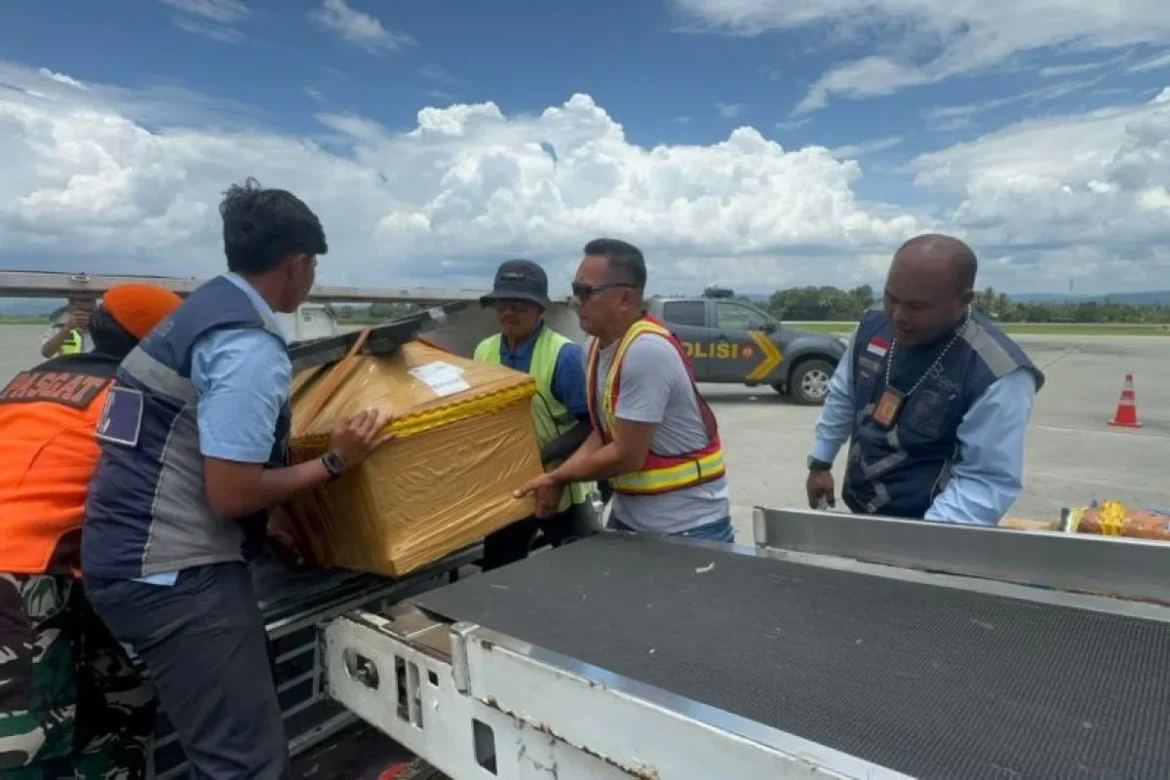
- Wednesday, September 16 (Evening): The recovered remains are evacuated under heavy security guard to the Wamena Regional General Hospital (RSUD Wamena) for formal identification, post-mortem examination, and preliminary forensic processing.
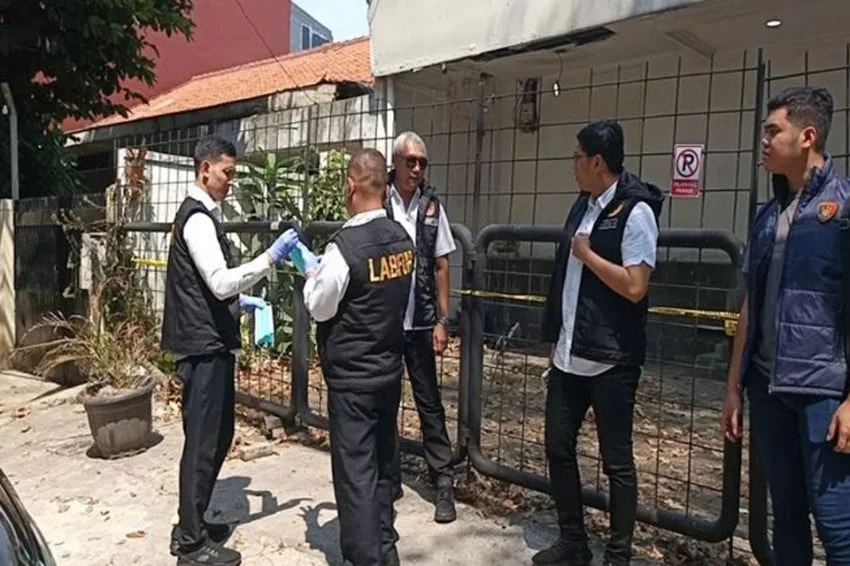
- Thursday, September 17: Law enforcement and military investigators conduct comprehensive crime scene investigations (Olah TKP), gathering physical evidence, interviewing surviving passengers, and formally classifying the incident as an act of terror and murder committed by an armed criminal group (KKB). Preparations begin to repatriate Sanda’s body to his grieving family in Makassar and subsequently to Toraja for final burial rites.
Security Challenges and Operational Context
The geography surrounding Lake Habema and the roads connecting Wamena, Mbua, and surrounding highland regencies presents profound operational challenges for both civilian travelers and security forces. Situated at an altitude of over 3,200 meters above sea level, the region is frequently engulfed in dense fog, plagued by unpredictable sub-alpine weather, and characterized by steep, winding mountain passes surrounded by thick tropical highland forests.
These natural barriers render infrastructure development difficult and create vast security vacuums. Armed separatist factions operating in the central highlands have historically exploited these geographic vulnerabilities, using remote jungle corridors to stage ambushes, execute hit-and-run attacks, and disrupt vital supply lines. For local inhabitants and transport workers, these roads represent economic lifelines necessary for survival, education, and healthcare access. However, they simultaneously double as high-risk zones where civilian lives remain exposed to asymmetric warfare tactics.
Transportation workers like Aris Sanda serve as the unseen backbone of Papua’s domestic economy. By ferrying essential foodstuffs, fuel, construction materials, and everyday commuters across isolated regencies, they bridge the economic gap between urban economic hubs and impoverished mountain villages. The targeting of civilian transport operators marks a severe escalation in tactics, shifting the burden of conflict directly onto non-combatants who have no political affiliation or military role.
Official Responses and Parliamentary Condemnations
The brutal murder of Aris Sanda has drawn swift, unified condemnation from across Indonesia’s political and military establishments. High-ranking military officials reiterated their commitment to tracking down the perpetrators responsible for the heinous crime, emphasizing that the actions of the armed group constitute gross violations of human rights and clear acts of terrorism against innocent citizens.
Members of the national legislature have also weighed heavily on the crisis. Representatives from House of Representatives (DPR RI) Commission I, which oversees defense, foreign affairs, and intelligence, released strong statements underscoring that the deliberate targeting of civilian drivers in Papua represents an intolerable threat to the safety of ordinary citizens. Lawmakers emphasized that while security stabilization efforts must continue, the government must simultaneously reassess how intelligence-gathering networks protect critical civilian infrastructure routes.
Furthermore, discussions within legislative bodies such as the Regional Representative Council (DPD RI) Special Committee (Pansus) on Papua have reignited calls for a comprehensive evaluation of the state’s overall approach to resolving long-standing conflicts in the region. Analysts note that sustainable peace in Papua requires a delicate dual-track strategy: robust law enforcement to neutralize violent armed groups that terrorize civilians, coupled with accelerated socio-economic development, dialogue, and enhanced protective measures for transport workers and public servants.
Broader Economic and Humanitarian Implications
The psychological and economic fallout of Aris Sanda’s death extends far beyond the immediate grief of his family in Toraja. Transport unions and local driver associations across Highland Papua have expressed deep anxiety regarding their safety. Many drivers are now contemplating halting their operations along high-risk routes, fearing that they could become the next targets of arbitrary violence.
A localized transport boycott or slowdown carries severe humanitarian consequences. If commercial and public transport vehicles refuse to travel to interior districts like Mbua, Nduga, and surrounding areas, the flow of essential commodities—including staple foods, medical supplies, and fuel—will grind to a halt. This disruption threatens to trigger artificial scarcity, skyrocketing inflation, and severe hardship for local civilian populations who rely entirely on these supply chains.
The incident underscores the urgent need for structural security guarantees along Papua’s developmental corridors. Experts argue that establishing permanent security posts at strategic intervals, enhancing real-time communication networks for remote drivers, and deploying intelligence assets to monitor armed group movements are vital steps to prevent future tragedies.
As the legal proceedings and military pursuit operations continue, the memory of Aris Sanda stands as a grim reminder of the high human cost borne by everyday workers striving to earn an honest living amidst complex geopolitical strife. The nation watches closely, demanding justice for Bapak Tasya and comprehensive systemic reforms to ensure that no other civilian family suffers such a devastating loss on the roads of Papua.