
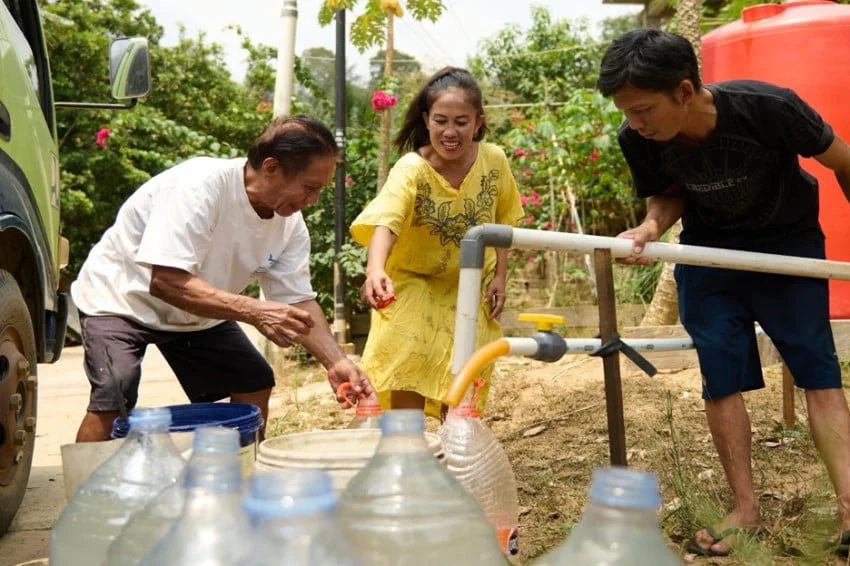
The Indonesian Ministry of Public Works has mobilized an extensive emergency relief operation in Samarinda, East Kalimantan, as the region grapples with the severe hydrological consequences of the El Nino climate phenomenon. Between October 1 and November 3, 2026, the ministry successfully distributed 104,000 liters of clean water to residents across eight sub-districts, addressing a critical shortage triggered by the depletion of essential raw water sources and the encroachment of seawater into local freshwater reservoirs.
The Anatomy of the Samarinda Water Crisis
The ongoing drought has exerted significant pressure on Samarinda’s water management infrastructure. The primary catalyst for the current scarcity is the dramatic decline in water levels at the Lempake Dam, a vital facility that serves as the backbone for the city’s water supply. As the dam’s capacity dwindled under the relentless heat and lack of precipitation associated with El Nino, the local municipal water utility struggled to maintain standard pressure and supply volumes.
Compounding this environmental challenge is the phenomenon of saltwater intrusion. As freshwater reserves in the upstream areas diminished, saline water from the Mahakam River delta began pushing further inland, contaminating the intake points for water treatment plants. This dual-threat scenario—reduced raw water volume and decreased water quality due to salinity—has left thousands of households in the capital of East Kalimantan facing acute shortages, necessitating urgent federal intervention.
Chronology of Emergency Response
The Ministry of Public Works, acting through the Balai Penataan Bangunan, Prasarana dan Kawasan (BPBPK) of East Kalimantan, launched its response in early October as monitoring data indicated that reservoir levels had breached critical thresholds.
- October 1, 2026: Official commencement of the emergency water distribution program. The ministry deployed a tactical team to map the most severely affected zones.
- October 5 – October 20, 2026: Integration of operations with the Samarinda City Disaster Management Agency (BPBD). A joint Task Force for Drought Disaster Management was established to streamline logistics.
- October 21 – November 3, 2026: Expansion of distribution routes. The operation reached 22 distinct delivery points across eight administrative kelurahan (sub-districts). During this period, the deployment of three specialized tanker trucks was formalized to ensure a consistent, rolling supply of clean water to vulnerable communities.
Strategic Deployment and Operational Logistics
The distribution mechanism is not a random delivery system but a data-driven approach designed to maximize efficiency. According to the BPBPK, the selection of the 22 distribution points was determined by real-time assessments of local needs, proximity to affected residents, and the feasibility of access for heavy-duty tanker trucks.
By utilizing three dedicated tanker units, the task force managed to sustain a daily average output that ensured no community was left without service for extended periods. This logistical feat involved coordinating with local neighborhood leaders (RT/RW) to ensure that the distribution schedule reached the households most impacted by the drop in piped water pressure.
Ministerial Directive and Official Policy
Minister of Public Works, Dody Hanggodo, underscored that the provision of clean water is a non-negotiable state responsibility during climate-induced emergencies. During a briefing on November 5, 2026, Minister Hanggodo emphasized the necessity of a proactive rather than reactive stance.
"We are committed to ensuring that our citizens do not have to endure prolonged hardship while waiting for long-term infrastructure solutions. The response on the ground must be characterized by speed, precision, and a deep understanding of the unique requirements of each affected locality," Minister Hanggodo stated.
The minister’s directive also reflects a broader shift in the national strategy. Recognizing that El Nino cycles are becoming more frequent and intense, the Ministry of Public Works is currently pivoting from simple emergency relief toward a more robust, long-term framework of "water sovereignty." This includes exploring inter-regional water piping systems and reinforcing local water storage capacities, not just in Kalimantan but across the archipelago from Papua to the Nusa Tenggara islands.
Socio-Economic Implications
The crisis in Samarinda highlights the vulnerability of urban water systems in Indonesia to climate volatility. The reliance on single-source reservoirs like Lempake has proven to be a structural weakness. Experts suggest that the current drought serves as a wake-up call for the municipal government to accelerate the diversification of water sources, potentially including groundwater management and the development of desalination plants if saltwater intrusion becomes a perennial issue.
Beyond the immediate public health concern—preventing water-borne diseases and maintaining basic hygiene—the drought has economic ripples. Small-scale enterprises, such as local food vendors and laundry services, which rely heavily on consistent water access, have reported a significant downturn in productivity. The government’s intervention, while essential for household survival, also acts as a temporary economic buffer for these small businesses.
Coordination Efforts and Future Outlook
Evry Biaktama Meliala, Head of BPBPK East Kalimantan, highlighted that the success of the initiative lies in the synergy between central government resources and local government intelligence. "We are working hand-in-hand with the BPBD and the regional government to ensure that our operations are transparent and equitable. The objective is to bridge the gap between supply and demand until the hydrological conditions stabilize," Meliala noted.
Looking forward, the Ministry of Public Works is expected to conduct a comprehensive audit of the water supply infrastructure in East Kalimantan. This audit will likely inform future budgetary allocations for climate-resilient engineering. As the dry season persists, the task force remains on high alert, with contingency plans ready to scale up operations should meteorological forecasts indicate a prolonged period of moisture deficit.
The 104,000-liter delivery represents a significant milestone in disaster relief, yet it also serves as a stark reminder of the challenges posed by climate change. For the residents of Samarinda, the presence of the blue tanker trucks has become a vital lifeline, symbolizing the state’s capacity to provide essential services in the face of environmental unpredictability.
Data Summary: Distribution Metrics
- Total Volume Distributed: 104,000 Liters.
- Operational Window: 34 Days (Oct 1 – Nov 3, 2026).
- Distribution Points: 22 locations.
- Coverage: 8 administrative sub-districts.
- Logistical Assets: 3 heavy-duty water tankers.
- Primary Collaborators: Ministry of Public Works (BPBPK) and BPBD Samarinda.
This comprehensive response strategy sets a precedent for how Indonesian regional administrations can manage the nexus of climate change, urban planning, and public welfare. As the ministry continues to monitor the situation, the focus remains on sustaining the flow of clean water while transitioning toward more permanent, resilient infrastructure solutions that can withstand the increasingly volatile climate patterns of the 21st century. The government’s continued presence in the field serves as a crucial component in maintaining public confidence and mitigating the social unrest that often accompanies resource scarcity.
