
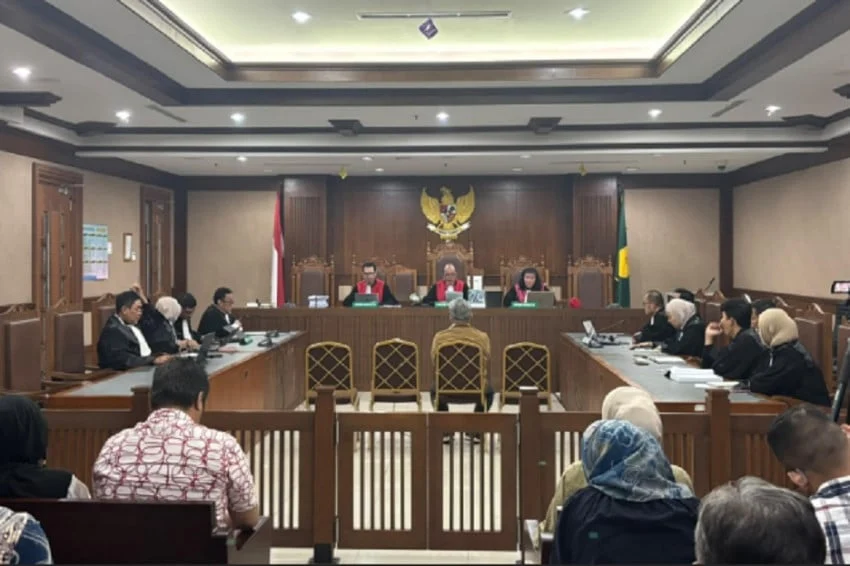
The Jakarta Corruption Court at the Central Jakarta District Court has handed down a significant verdict in one of Indonesia’s high-profile financial scandals, sentencing four former officials of the Sharia Financing Division at the Indonesia Eximbank, or Lembaga Pembiayaan Ekspor Indonesia (LPEI), to six years in prison each. The high-stakes legal proceeding concluded on Monday, September 21, 2026, marking a critical milestone in the ongoing investigations and judicial actions surrounding systemic financial irregularities within state institutions.
Presiding Judge Brelly Yuniar Dien Wardi Haskori delivered the verdict, which also included a subsidiary penalty of a Rp200 million fine for each of the convicted individuals. The four defendants were found legally and convincingly proven to have jointly committed continuous corruption offences related to the national export financing programs administered between 2015 and 2020. This landmark judicial ruling highlights the judiciary’s increasing firmness in handling white-collar crimes within the banking and state-owned enterprise (SOE) sectors, especially those involving the mishandling of public funds earmarked for strategic economic development.
Identification of the Convicted Former LPEI Officials
The legal repercussions have directly impacted a tier of mid-to-upper management personnel who held critical supervisory and operational roles within LPEI’s Sharia division during successive periods. The four convicted former executives are:
- Andi Maulana Adjie, who served as the Head of the Department of the LPEI Sharia Financing Division from 2011 to 2017.
- Intan Apriadi, who held the position of Head of the LPEI Sharia Financing Division from 2007 to 2016.
- Gamaginta, who functioned as the Head of Sharia Department I at LPEI during the 2017–2018 period.
- Komaruzzaman, who served as the Head of the LPEI Sharia Financing Department II from 2011 to 2016.
According to the panel of judges, these individuals abused their administrative authority and managerial positions to bypass stringent verification protocols, enabling the disbursement of substantial export financing funds that failed to comply with standard risk assessment frameworks. The court determined that their actions directly contributed to substantial financial losses for the state, undermining the foundational purpose of LPEI as an instrument designed to boost national economic growth through controlled and sustainable export expansion.
Background and Context of the LPEI Financing Scandal
The Lembaga Pembiayaan Ekspor Indonesia, operating under the mandate of Law Number 2 of 2009, functions as a Special Mission Vehicle (SMV) under the Ministry of Finance. Its primary objective is to accelerate national export growth and assist business entities—including cooperatives and small-to-medium enterprises—that possess viable export potential but face constraints in securing conventional commercial credit.
However, the institution has faced rigorous scrutiny following revelations of a massive accumulation of non-performing loans (NPLs) and allegedly fraudulent credit disbursements spanning several years. The case involving the Sharia Financing Division is merely one facet of a broader, multi-layered investigation conducted by law enforcement authorities, including the Attorney General’s Office (AGO) and the Jakarta High Prosecutor’s Office (Kejati Jakarta).
Investigators have pointed out that during the 2015–2020 window, various financing facilities were granted to corporate debtors without adequate collateral, rigorous financial health checks, or compliance with internal governance standards. This compromised portfolio eventually resulted in staggering financial deficits, triggering audits by supreme audit institutions and subsequent criminal probes. The misuse of Sharia-compliant financing facilities is particularly sensitive, as such schemes are bound by both conventional banking regulations and specific ethical frameworks that demand heightened transparency and asset-backing integrity.
Chronology of Investigations and Legal Proceedings
The legal trajectory leading to the September 2026 verdict has been protracted and complex, involving multiple investigative phases, asset tracing initiatives, and successive indictments:
- 2021–2022: Initial audits by regulatory bodies and internal reviews at LPEI highlight irregularities in several major financing accounts, prompting preliminary inquiries by law enforcement agencies into potential state financial losses.
- 2023: The scope of the investigation widens significantly as the Attorney General’s Office and regional prosecutorial branches identify systemic vulnerabilities across both conventional and Sharia financing divisions. Dossiers are compiled regarding specific corporate debtors who received massive capital injections without fulfilling contractual repayment obligations.
- 2024–2025: Formal investigative steps intensify, leading to the naming of multiple suspects, including high-ranking executives, division heads, and corporate beneficiaries linked to the questionable disbursements. Case files for Andi Maulana Adjie, Intan Apriadi, Gamaginta, and Komaruzzaman are finalized and transferred to the Jakarta Corruption Court.
- Early 2026: The trial proceedings commence at the Central Jakarta District Court. Prosecutors present extensive documentation, expert testimonies from financial forensic specialists, and internal audit reports detailing how credit approvals were allegedly manipulated.
- September 21, 2026: The panel of judges, led by Brelly Yuniar Dien Wardi Haskori, delivers the primary verdict, sentencing the four defendants to six years in prison and ordering them to pay the subsidiary fines.
Implications for State-Owned Enterprises and Banking Governance
The conviction of the four former LPEI officials carries deep implications for corporate governance within Indonesia’s state-owned enterprises and specialized financial institutions. Observers note that the verdict underscores the personal liability of management personnel who authorize credit facilities outside regulatory boundaries, even if acting under institutional pressure or hierarchical directives.
Financial sector analysts emphasize that the LPEI case serves as a cautionary tale for risk management and compliance divisions across the banking industry. Ensuring strict adherence to the "prudent banking principle" is essential not only for maintaining institutional liquidity but also for protecting public finances from systemic exposure. The involvement of the Sharia division also places a spotlight on the governance of Islamic financial instruments within state-backed bodies, where public trust relies heavily on adherence to both regulatory and ethical mandates.
Furthermore, the legal actions have not stopped with the sentencing of these four executives. Recent developments indicate that prosecutorial bodies, such as the Jakarta High Prosecutor’s Office, continue to widen their net. Additional suspects have been named in parallel investigations concerning other clusters of LPEI export financing discrepancies, signaling that the broader judicial cleanup of the institution is far from over.
Reactions and Institutional Response
While formal appellate steps from the defense teams remain a possibility as defense counsels review the verdict and consider filing appeals, institutional stakeholders have largely framed the court’s decision as a necessary step toward accountability. Representatives from anti-corruption watchdog organizations have welcomed the rulings, though some civil society groups continue to advocate for more aggressive asset recovery measures to recapture the state funds lost during the fraudulent disbursement cycles.
For LPEI as an organization, the ongoing legal fallout has prompted internal restructuring and enhanced compliance measures designed to insulate modern credit-granting processes from political interference and administrative lapses. As Indonesia seeks to bolster its export competitiveness on the global stage, restoring absolute integrity and transparency to its primary export financing agency remains a paramount economic and regulatory priority.
