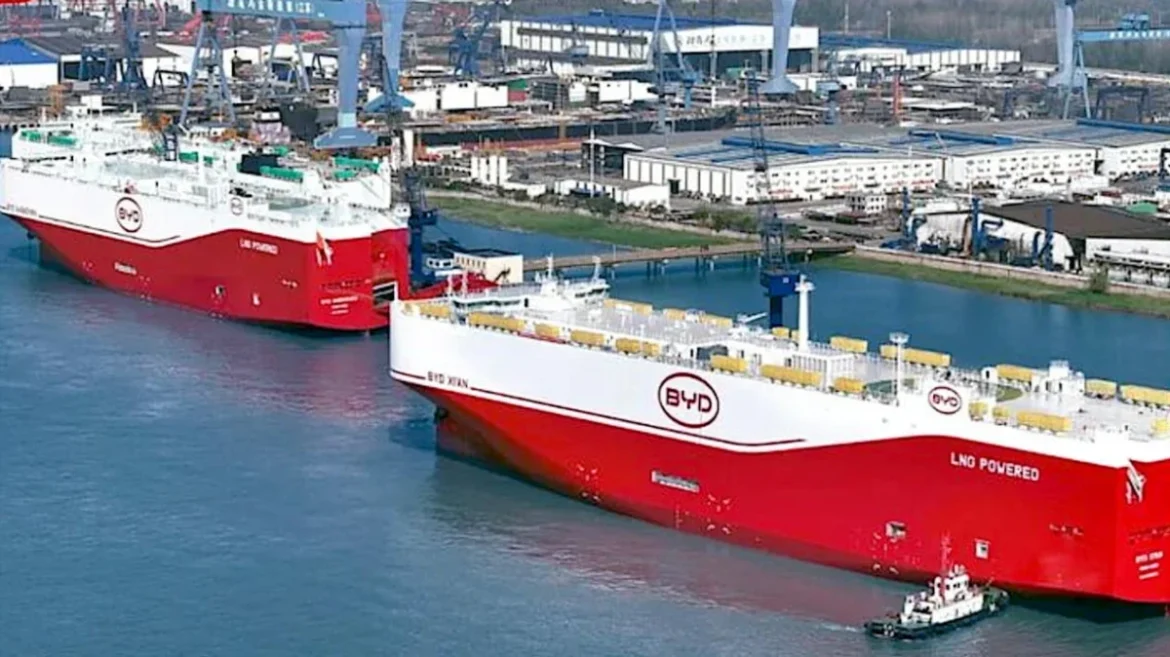
Beijing, VIVA – Chinese electric vehicle (EV) giant BYD is reportedly orchestrating a significant expansion of its maritime logistics capabilities, signaling an aggressive push to solidify its footprint in the international automotive market. According to industry reports originating from Beijing, the automaker has placed an order for ten additional roll-on/roll-off (RoRo) vehicle carrier ships, each designed to accommodate approximately 9,200 vehicles. This strategic move, which would see the company’s total fleet size reach 18 vessels, underscores BYD’s ambition to transition from a China-centric manufacturer to a dominant global force in the clean energy mobility sector.
The projected acquisition of these ten vessels would add a staggering 92,000 car equivalent units (CEU) of capacity to BYD’s internal shipping network. Should the order be finalized and executed as planned, the cumulative capacity of the company’s fleet could theoretically exceed 130,000 CEUs. This infrastructure investment serves as a critical buffer against the volatile costs and limited availability of third-party shipping services that have plagued many global automakers in the post-pandemic era.
The Strategic Shift Toward Vertical Integration
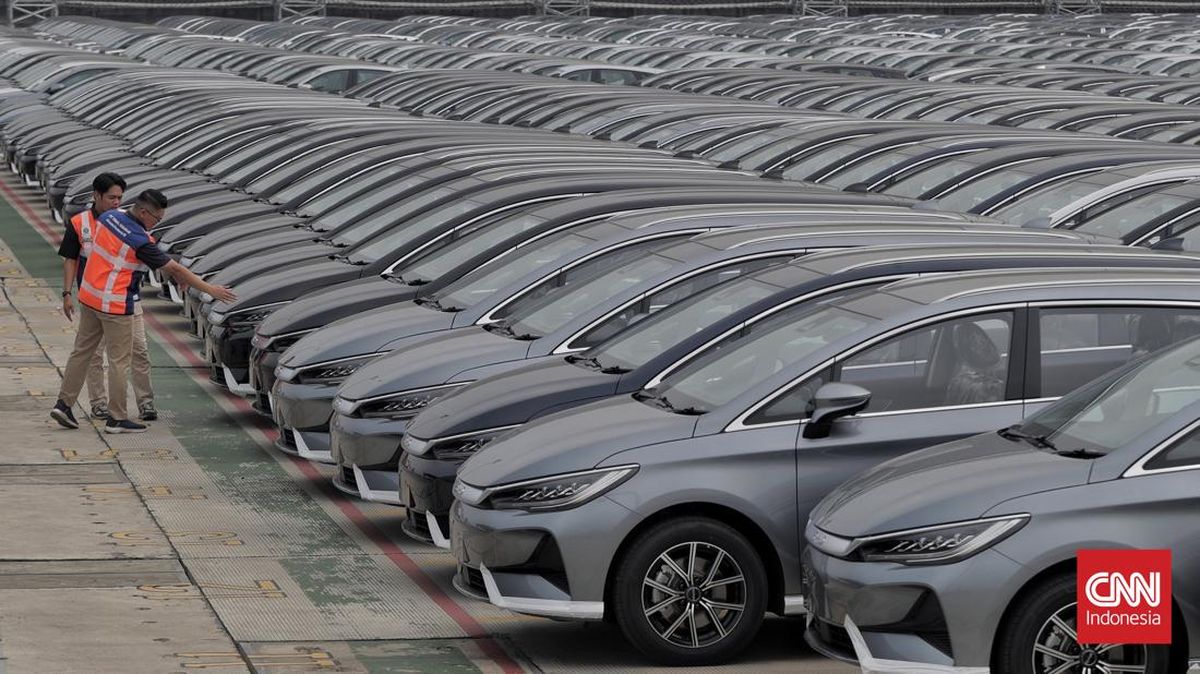
The automotive shipping industry has faced significant disruption over the last three years. The rapid rise of Chinese EV exports has led to a acute shortage of specialized RoRo vessels, driving up shipping rates and causing logistical bottlenecks at major ports. By building its own fleet, BYD is effectively bypassing these market constraints, ensuring that its products reach key markets in Europe, Southeast Asia, Latin America, and the Middle East with greater frequency and lower operational costs.
Unlike standard container ships, RoRo vessels are specifically engineered for the automotive industry. They feature built-in ramps that allow vehicles to be driven directly onto and off the decks, significantly reducing loading times and minimizing the risk of damage during the transit process. For a high-volume manufacturer like BYD, this efficiency is vital for maintaining a consistent supply chain in overseas markets.
Chronology of BYD’s Maritime Ambitions
BYD’s entry into the shipping sector was not an overnight decision but a calculated evolution of its supply chain strategy. The timeline of this expansion reflects the company’s accelerated growth:
- Early 2023: Recognizing the bottleneck in vehicle logistics, BYD begins discussions with domestic shipyards to secure construction slots for specialized car carriers.
- January 2024: The "BYD Explorer No. 1," the company’s first self-owned carrier, completes its maiden voyage. Measuring 219 meters in length, the vessel showcases the company’s commitment to high-capacity logistics.
- Late 2024–2025: BYD continues to add vessels to its fleet, optimizing routes to key export hubs.
- September 2026: Reports emerge detailing a new order for ten additional vessels, aimed at fulfilling long-term export projections for the 2027–2029 period.
The scheduling of these deliveries suggests that BYD is preparing for a sustained increase in international demand. By the time the final ships from the new order are commissioned in 2029, the company expects to have a fully integrated logistics network capable of supporting millions of annual export units.
Market Implications and Competitive Analysis
The implications of this move extend far beyond simple transportation logistics. By controlling the shipping lanes, BYD gains a distinct competitive advantage over legacy automakers who remain largely dependent on established shipping conglomerates.
Analysts note that this vertical integration allows for "just-in-time" delivery models on an international scale. Furthermore, as BYD continues to diversify its portfolio—incorporating both battery-electric vehicles (BEVs) and plug-in hybrid electric vehicles (PHEVs)—the demand for specialized transport that complies with strict safety regulations regarding lithium-ion battery transit becomes paramount. BYD’s vessels are reportedly equipped with advanced fire-suppression systems and climate-controlled storage to ensure the safety and integrity of these high-voltage batteries during long sea voyages.
The move also places pressure on other major Chinese EV manufacturers, such as SAIC Motor and Chery, who are also investing in their own shipping fleets. The "Great Ocean Race" among Chinese automakers is fundamentally changing the global shipping landscape, forcing traditional carriers to modernize or risk losing significant market share to these "captive" fleets.
Economic Impact and Global Distribution
The geographic focus of BYD’s expansion is clear. As the company faces increasing regulatory scrutiny and potential trade barriers in North America and parts of Europe, the ability to rapidly shift distribution strategies is essential. With 18 ships at its disposal, BYD can pivot between markets with relative ease, reallocating supply based on regional demand surges or local regulatory changes.
From an economic perspective, the ownership of these vessels acts as a hedge against inflation. By stabilizing transport costs, BYD can maintain competitive pricing in international markets, which remains the company’s strongest weapon against established Western and Japanese incumbents. Industry experts estimate that operating its own fleet could potentially reduce the logistics cost per vehicle by as much as 15% to 20% compared to reliance on the spot market.
Official Stance and Industry Caution
While the news of the ten-vessel order has sent ripples through the maritime and automotive sectors, BYD has yet to release an official statement confirming the specific contract details. Industry watchers caution that, as with any major industrial procurement, the final number of vessels, delivery timelines, and the total financial investment remain subject to change due to shipyard capacity, global steel prices, and shifting geopolitical trade policies.
"The order is a strong signal of intent," says one maritime logistics analyst. "However, the lead time for building such sophisticated vessels is significant. Between regulatory approvals, the actual shipbuilding process, and the integration of these ships into existing global port networks, there is a considerable amount of work to be done between now and 2029."
The Road Ahead: 2027 and Beyond
Looking toward the remainder of the decade, the integration of these ten new ships will mark a definitive turning point for BYD. The company is moving away from being a mere exporter and is instead becoming a comprehensive logistics operator. This evolution is mirrored in the company’s broader strategy of establishing local assembly plants in countries like Brazil, Hungary, and Thailand, while using its fleet to transport components and high-value finished vehicles.
As BYD continues to scale, the role of these 18 vessels will be to serve as the backbone of its global distribution network. By the end of 2029, the company will likely possess one of the most efficient and technologically advanced car-carrying fleets in the world, further cementing its position as a dominant leader in the global transition to sustainable transportation.
For now, the automotive world waits for confirmation of the contract details. However, the trajectory is clear: BYD is not content with simply making the cars; it is determined to control every mile of the journey from the factory floor to the customer’s driveway. Whether this massive gamble on physical infrastructure will pay off remains to be seen, but for now, it represents a bold, multi-billion dollar bet on the future of global automotive commerce.